
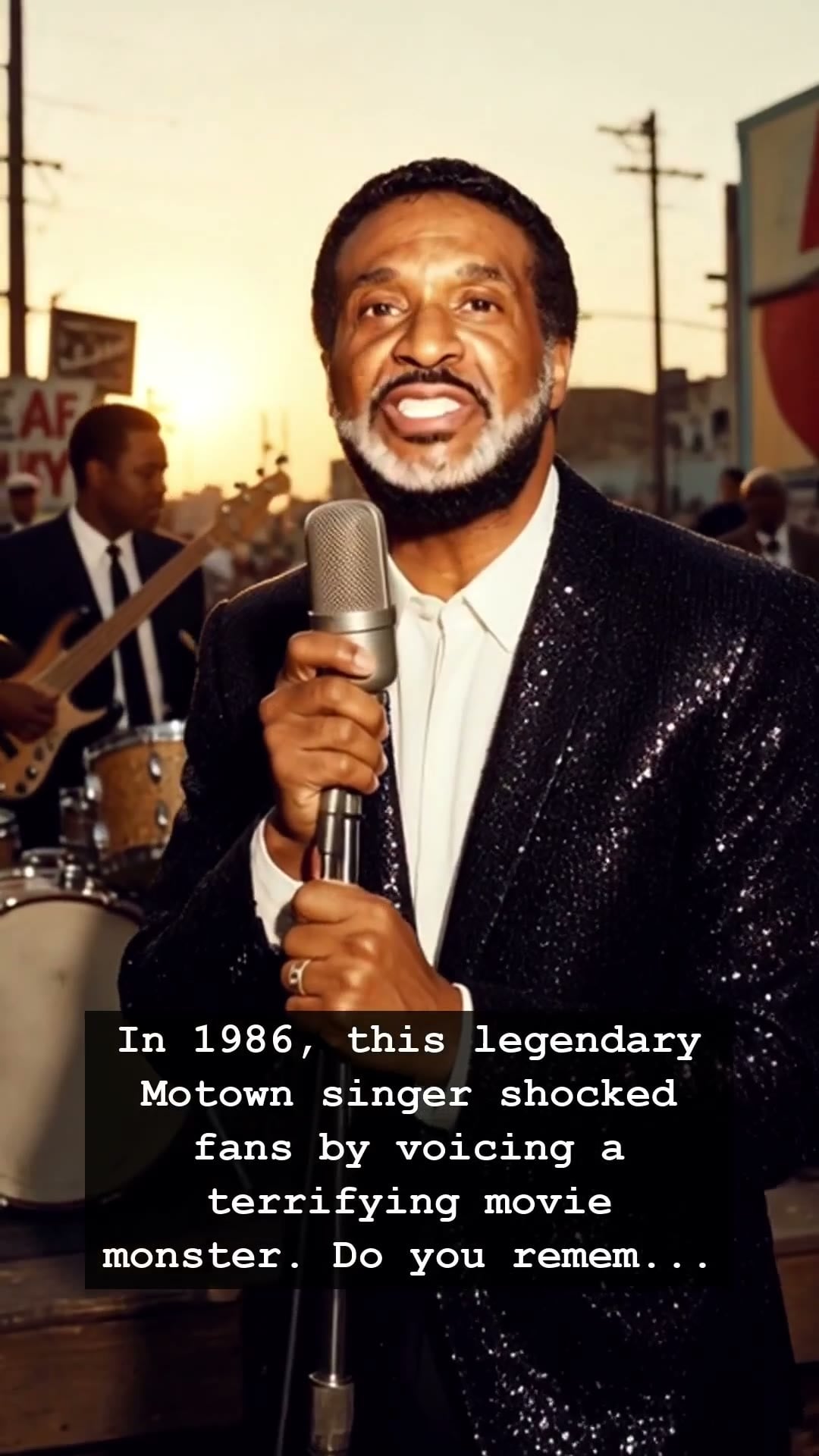
It was 1986, a year defined by the neon pulse of synth-pop and the burgeoning influence of MTV, when music fans were jolted by a cinematic spectacle that felt entirely out of place. The film was Little Shop of Horrors, and lurking in the shadows of its skid row set was a voice so commanding, so textured, and so undeniably soulful that it felt like an intrusion of Motown royalty into a campy musical nightmare. That voice belonged to none other than Levi Stubbs, the powerhouse lead singer of the Four Tops, who had traded his signature velvet croon for the gravelly, carnivorous growl of Audrey II, the man-eating plant that terrorized the screen.
For those who grew up in the golden era of Detroit soul, hearing Levi Stubbs was like hearing the heartbeat of American music. As the driving force behind hits like Reach Out I’ll Be There, his voice was the gold standard for emotional intensity. He didn’t just sing lyrics; he wrung them out of his soul with a desperation and grit that perfectly captured the spirit of the sixties. Yet, by the mid-eighties, the landscape of the music industry had shifted dramatically. The jukeboxes that once spun Four Tops records were being replaced by digital synthesizers, and legends like Levi Stubbs were often pushed toward the peripheries of the pop charts, even though their vocal prowess remained unmatched.
When director Frank Oz tapped Levi Stubbs to voice the alien plant, it was a stroke of genius that bridged the gap between Broadway nostalgia and the cult-classic kitsch of the eighties. In the studio, Stubbs didn’t hold back. He brought the same level of discipline and dramatic flair he had mastered while touring with the Four Tops. He understood that whether he was singing about heartbreak or demanding that his victims feed him, the delivery had to be absolute. The result was a performance that transformed a puppet into one of cinema’s most memorable villains. It was a bizarre, shocking pivot that left fans of the Motown era both bewildered and strangely delighted.
Looking back, this transition from the soul charts to the silver screen highlights the immense versatility of these mid-century icons. While many of his peers struggled to find relevance as the industry turned toward the cold, robotic sounds of the late eighties, Levi Stubbs proved that a truly great vocalist is a storyteller first and a musician second. He brought a terrifying, visceral depth to a monster that could have easily been a joke, proving that even a carnivorous plant could possess the soulful grit of a Detroit legend.
Today, the memory of Levi Stubbs serves as a bridge to a time when musicians were more than just polished images; they were raw, unfiltered artists who could survive anything, even a leading role as a botanical nightmare. His contribution to the film remains a cult phenomenon, a strange artifact of 1986 that continues to intrigue new generations. Whenever you hear the iconic, menacing growl of Audrey II in that basement, remember that it is the voice of a man who helped build the very foundation of American soul. Do you still hear the echoes of Motown in that monster’s roar?