
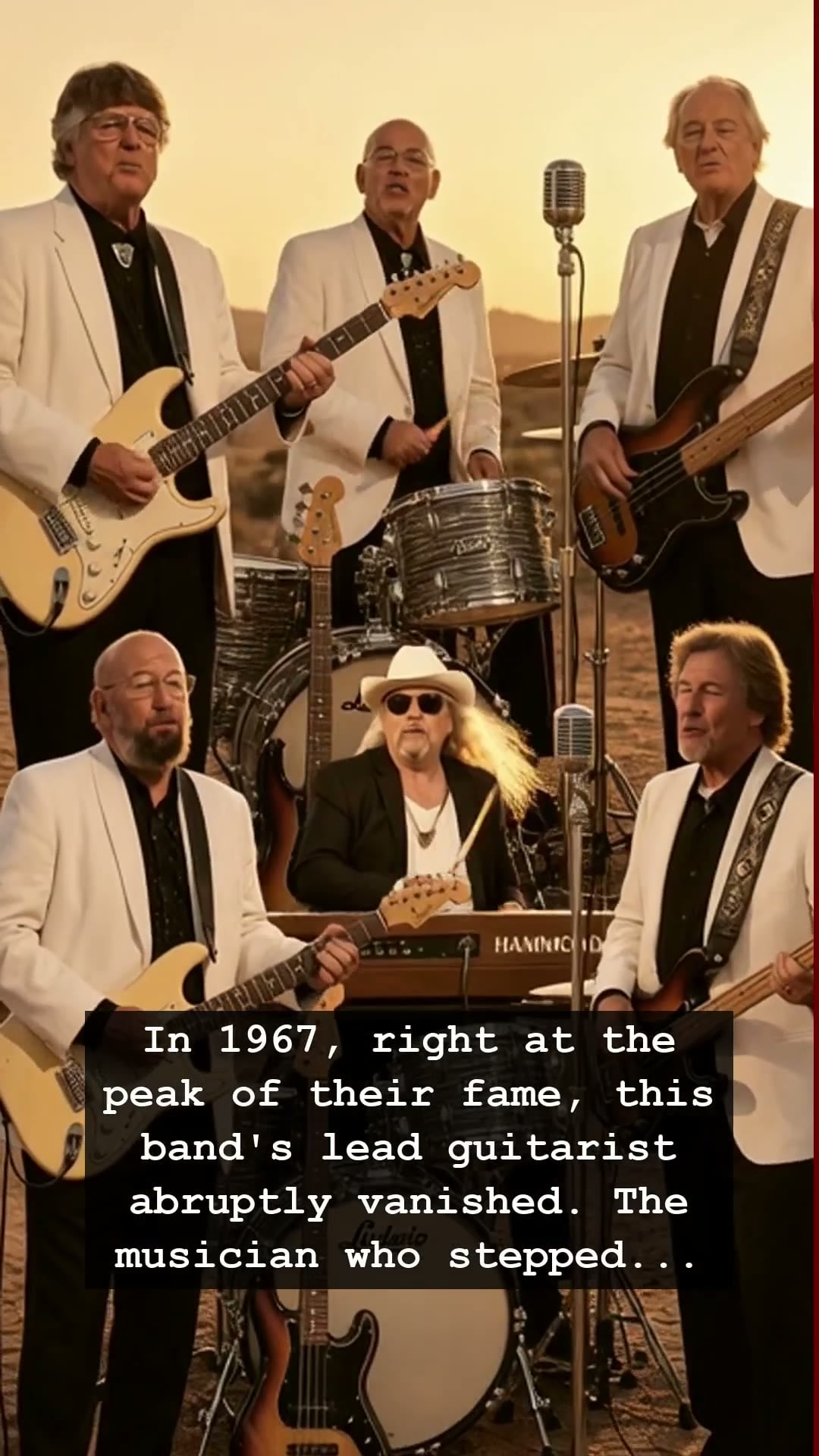
It was 1967, the Summer of Love was in full swing, and The Association was riding the crest of a massive cultural wave. With hits like Windy and Never My Love dominating the radio, they were the darlings of the sunshine pop era, a group whose vocal harmonies defined the optimistic mood of the late sixties. But behind the scenes, the polished facade of the band was about to crack in a way that remains one of music’s most intriguing footnotes. At the absolute peak of their chart-topping fame, their lead guitarist, Jim Yester, was momentarily eclipsed by an unexpected departure that sent shockwaves through the band’s tight-knit lineup, setting the stage for a quiet, historic shift in the landscape of American rock.
The drama began when a key member abruptly vanished, trading the bright lights of California television appearances for a spiritual quest in India. In the rigid, often exclusionary rock environment of the mid-sixties, the void left behind could have easily derailed a lesser band. Instead, it opened the door for a musician who would quietly shatter glass ceilings. Enter Larry Ramos, a talented performer who stepped into the spotlight, unknowingly becoming a trailblazer for Asian-American representation in an industry that had never seen anyone quite like him at the forefront of a major pop-rock act.
To understand the significance of Larry Ramos joining The Association, one must remember the context of the era. This was a time when the jukeboxes of American diners were saturated with the sounds of Motown and the British Invasion, yet the faces behind the instruments were overwhelmingly monolithic. Ramos, born in Hawaii, brought more than just technical precision to the band; he brought a different cultural perspective that subtly redefined the identity of The Association. He wasn’t just a replacement guitarist; he was a pioneer who helped dismantle the unspoken racial barriers that often relegated musicians of color to the background of the rock music industry.
His tenure with the band was marked by a smooth transition that defied the typical rock star narrative of ego and infighting. While other bands of the late sixties were tearing themselves apart with internal conflicts or succumbing to the dark excesses of fame, Larry Ramos integrated seamlessly into The Association. His contributions helped sustain the group’s legacy long after the flower power movement faded, proving that talent and adaptability could bridge gaps that society was only just beginning to acknowledge. It is a story that feels both remarkably personal and deeply emblematic of the shifting cultural tides of the time.
Reflecting on that era now, the story of The Association and the quiet integration of Larry Ramos serves as a reminder of the quiet revolutions that occurred during the most iconic years of music history. While the era is often remembered for stadium anthems and the rise of MTV, the human stories of inclusion remain the most enduring. If you find yourself spinning an old vinyl copy of their greatest hits today, listen closer to the guitar lines. You are hearing more than just a pop melody; you are hearing the sound of a pioneer who changed the face of rock music forever.