
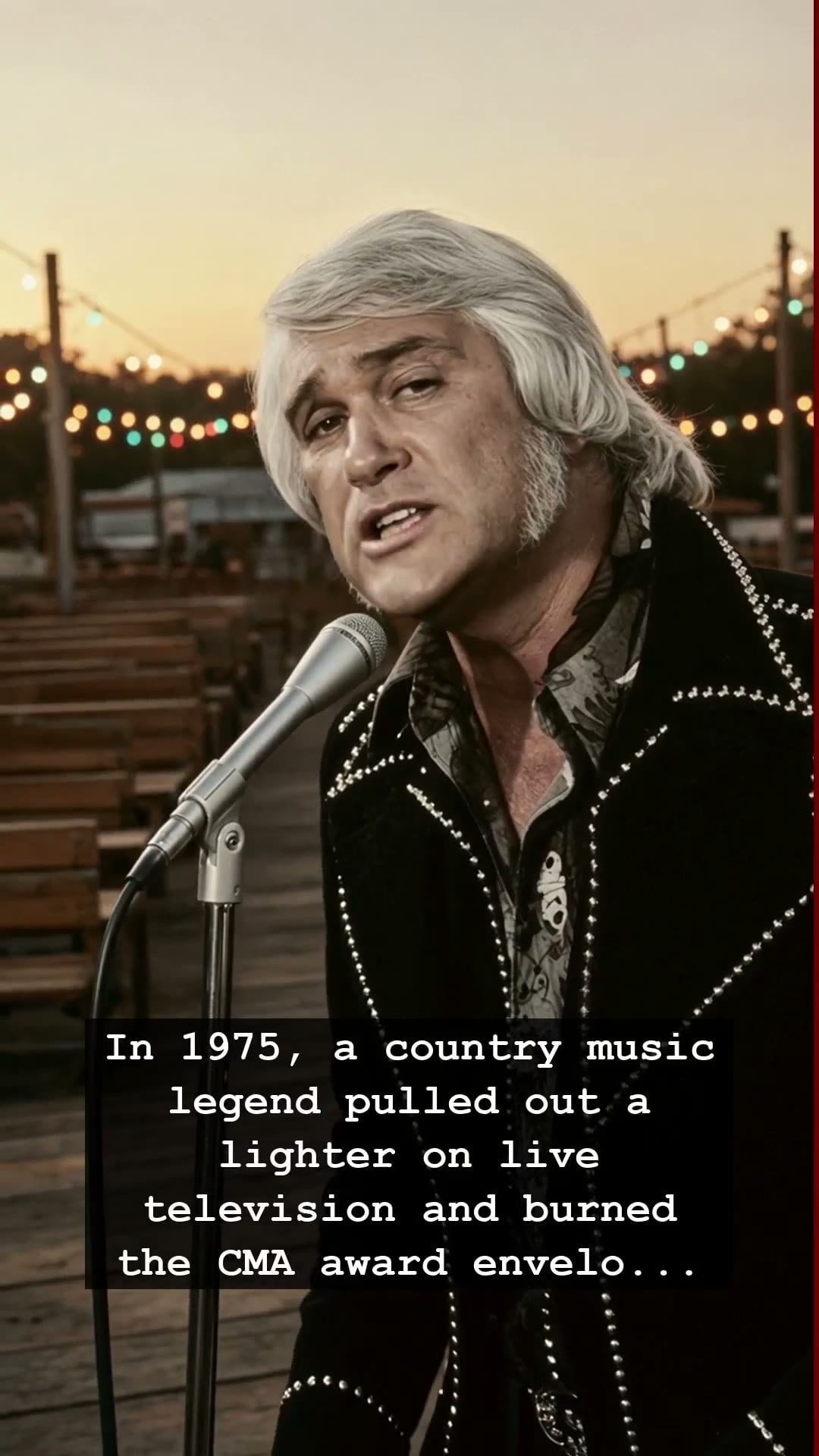
The year was 1975, a golden era when the television glowed with the warm, static-filled magic of prime-time awards ceremonies. Across America, families gathered around their wooden-console sets, waiting to see who would claim the night’s highest honors. Yet, at the Country Music Association Awards, the air turned ice-cold in a matter of seconds. Charlie Rich, a man known for his velvet, soulful voice that bridged the gap between jazz, blues, and country, stood on that stage with a flickering flame in his hand. Instead of reading the name of the ‘Entertainer of the Year’ winner, he ignited the envelope, watching the paper curl into black ash right before the eyes of millions.
It was a moment of pure, unadulterated defiance that felt like a lightning strike in the heart of the Nashville establishment. Charlie Rich had been riding high on the massive success of hits like The Most Beautiful Girl, a song that had cemented his status as a crossover sensation. He was the soulful crooner who brought a touch of Memphis heat to the polite stages of country music. But that night, the carefully curated facade of country superstardom crumbled. By burning the winner’s name—John Denver—Charlie Rich wasn’t just expressing a personal grievance; he was making a statement about the changing tides of the music industry that many traditionalists felt threatened by.
For those watching at home, the incident was shocking, raw, and deeply uncomfortable. It was the antithesis of the polished, scripted spectacle we expect today. In an era where the Jukebox was the heartbeat of every dive bar and the radio was the ultimate gatekeeper of taste, such a public outburst was career suicide. The industry that had embraced him turned its back almost instantly. Within a heartbeat, the man who was once the darling of the airwaves found himself on the outside looking in, his once-promising momentum halted by a single, scorching act of rebellion that the Nashville elite would never forgive.
Looking back through the lens of history, the act feels like a tragic climax to a complex artistic struggle. Charlie Rich was a musician’s musician, a man whose roots ran deep into the soil of the South, finding it difficult to reconcile his identity with the rapidly shifting expectations of the seventies. His protest against the inclusion of pop-leaning artists like John Denver was a symptom of a deeper cultural divide. It serves as a stark reminder of the immense pressure that fame placed on the icons of that era—an era defined by high-stakes televised events and the unforgiving nature of public opinion.
Today, the memory of Charlie Rich remains tinted with the melancholy of what could have been. His music still possesses that haunting, emotive quality that resonates with anyone who loves the grit of classic country soul. While the industry moved on and eventually embraced the very sounds he tried to push away, his story serves as a cautionary tale of the fragility of fame. When we listen to his records now, we don’t just hear the smooth vocals of a legend; we hear the echoes of a man who chose to burn his reputation to ashes rather than play a part he no longer believed in. It remains one of music’s most unforgettable, fiery chapters.