
It is one of the most jarring ironies in rock history. While half a million people were descending upon Max Yasgur’s dairy farm in Bethel, New York, to witness the defining moment of the counterculture, Joni Mitchell was sitting in a quiet Manhattan apartment, watching it all unfold on television. She had been advised by her manager to skip the festival to fulfill a television appearance, but the images flickering across her screen—the sea of bodies, the mud, the raw yearning for peace—struck a chord so deep it birthed a masterpiece. She penned a song that would become the definitive anthem of the event, yet she never actually set foot on the stage herself.
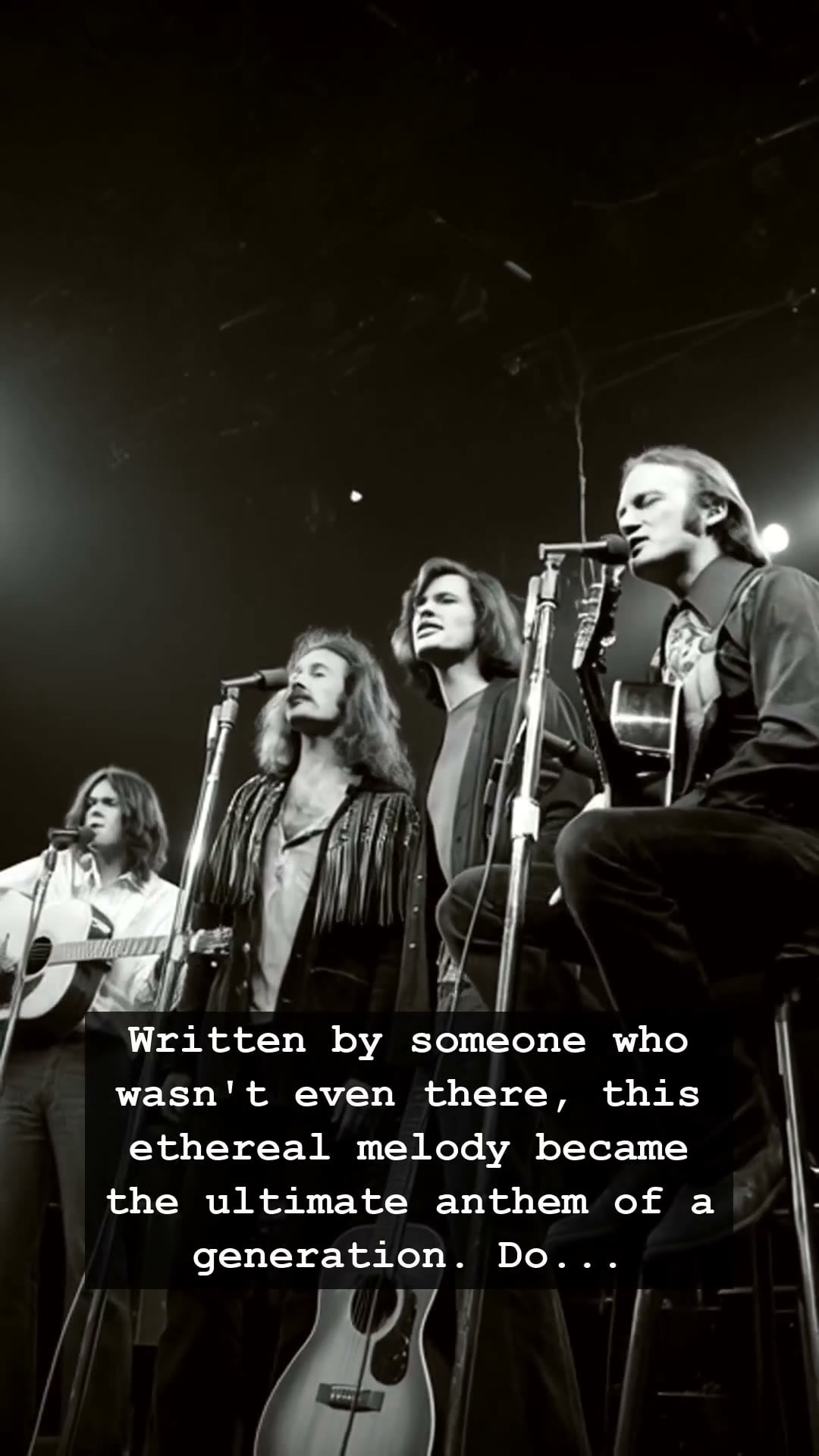
That song, Woodstock, would later be immortalized by the supergroup Crosby Stills Nash and Young. When the band took this ethereal, haunting melody and infused it with their signature vocal harmonies, they transformed a personal confession of regret into a massive, generation-defining cultural beacon. For Crosby Stills Nash and Young, this track became more than just a hit; it was a testament to the collective consciousness of the late sixties. It captured a fleeting moment where a generation believed, however briefly, that they could change the world before the idealism of the decade dissolved into the cynicism of the seventies.
Behind the scenes, the dynamic within Crosby Stills Nash and Young was rarely as harmonious as their four-part vocal arrangements. The band was a volatile experiment of massive egos and clashing creative visions. David Crosby’s unpredictable nature, Stephen Stills’ perfectionism, Graham Nash’s steady pop sensibility, and Neil Young’s restless, nomadic artistry made for a pressure cooker environment. They were the architects of a sound that defined the era, yet their internal turmoil was a constant undercurrent that mirrored the instability of the society they sang about. Their music was the calm center of a personal storm that often threatened to tear the group apart.
Despite the drama, the magic of Crosby Stills Nash and Young was their uncanny ability to tap into the zeitgeist. They were the sonic backdrop to a world transitioning from the raw energy of Woodstock to the corporate polish of the later decade. They bridged the gap between the acoustic introspection of the folk scene and the electric ambition of arena rock. When you hear that opening guitar chime, you are instantly transported back to a time of Walkmans, vinyl records, and a genuine, naive hope that music could serve as a vehicle for social revolution.
Today, the legacy of that anthem remains untarnished by the passing decades. Whether you were there in the mud or you discovered it years later through your parents’ scratched record collection, the song continues to resonate because it speaks to the universal human desire to return to the garden. It is a reminder of a time when the stakes felt impossibly high and the music felt like a lifeline. Do you remember where you were when you first heard it, and did it change the way you looked at the world?