
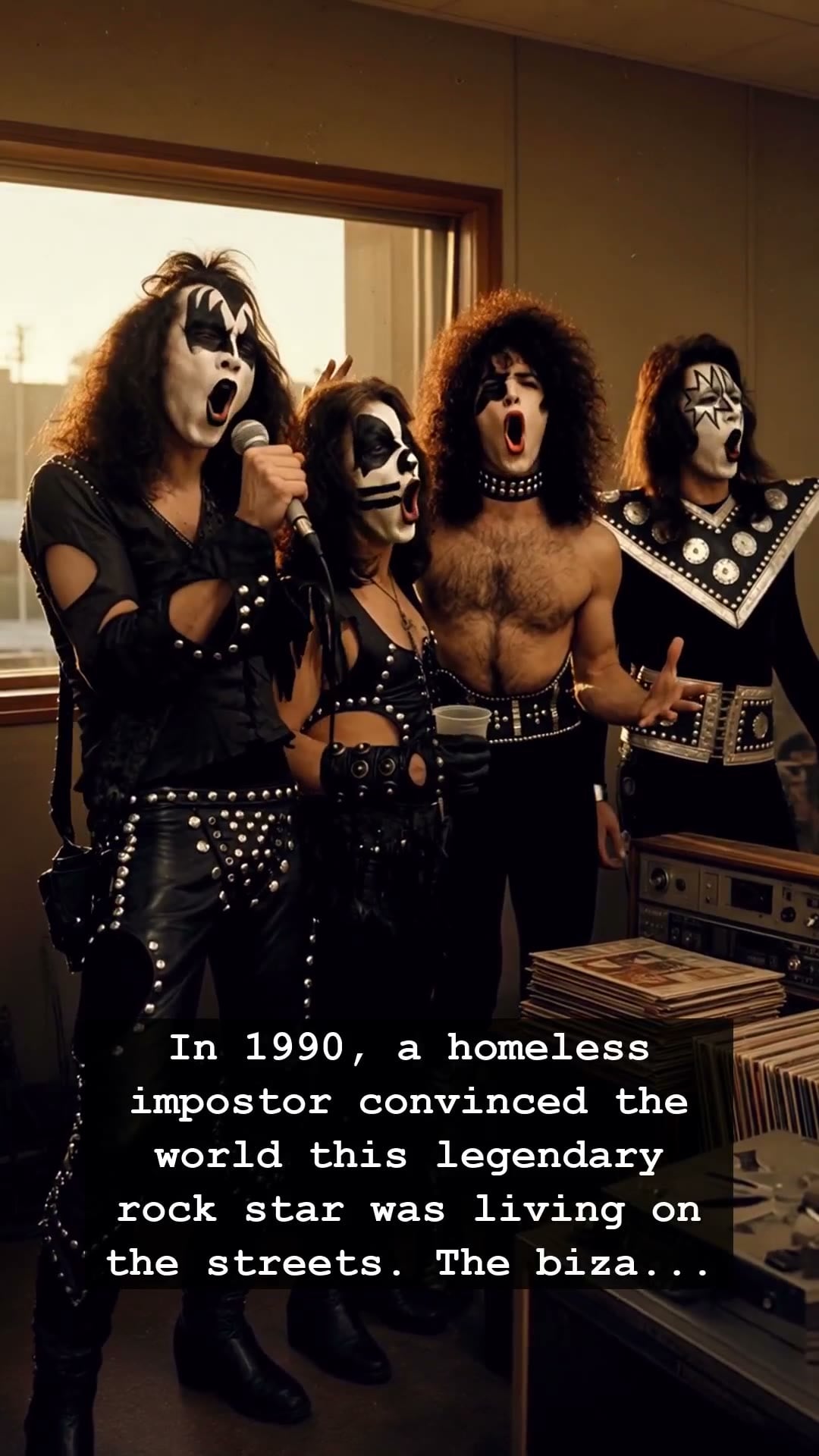
The year was 1990, a time when the MTV generation was shifting gears from the excess of the eighties toward the grit of the nineties. For the world of glam rock, the legends of the seventies felt like distant ghosts. Among those icons was Peter Criss, the legendary Catman drummer of the band KISS. While the band had famously ditched their iconic makeup years earlier, the mystique of the original lineup still held a tight grip on the collective consciousness of fans who grew up worshipping the face-painted gods of rock. Then, a chilling rumor began to circulate: the man who provided the heartbeat to Rock and Roll All Nite was living on the streets, destitute and dying. It was a headline that sent shockwaves through the rock community, painting a portrait of a fallen idol consumed by the very industry that once built him up.
The deception was sophisticated in its cruelty. A homeless man, bearing a passing resemblance to Peter Criss, had successfully convinced several news outlets that he was indeed the drummer. In an era before the instant verification of social media, the story took on a life of its own. It tapped into a deep, uncomfortable cultural fear: that the rock stars we idolized were not immortal, but fragile beings destined for tragic endings. The tabloids feasted on the narrative, spinning tales of substance abuse and the cruel cycle of fame that left stars rotting in the gutters of Los Angeles. For a short, breathless moment, the world mourned a man who was very much alive, tucked away in the quiet of his own life, completely oblivious to his own public execution.
The farce reached a fever pitch, forcing the real Peter Criss to step out of the shadows. He had to appear on national television, sitting under the harsh glare of studio lights to prove his existence. It was a bizarre, surreal moment that underscored the strange relationship between fans and the icons they project their dreams onto. Watching him there, stripped of the elaborate feline makeup and the theatrical costumes, you could see the frustration and the humanity of a man tired of the myth. The incident exposed the darker side of fame, where a person’s identity becomes public property, susceptible to being stolen or distorted by anyone with a convincing lie and a tragic enough story.
Looking back, this 1990 incident serves as a strange time capsule of the pre-internet age, where gossip traveled via telephone wires and television screens. It highlights the vulnerability of the legends who defined the seventies and eighties, men who were caught between the decadence of the past and the uncertainty of the future. Peter Criss, through no fault of his own, became the center of a media circus that questioned everything we thought we knew about the icons of our youth.
Today, the memory of that hoax lingers as a reminder of how quickly the narrative of a life can be rewritten. We hold onto the records and the memories of the stadium tours, yet we are often haunted by the legends that never really went away. The next time you drop the needle on a classic KISS record and hear the steady, driving beat of the Catman, remember the man behind the makeup—a survivor who had to prove he was alive in a world that was all too eager to see him fade away into legend.