
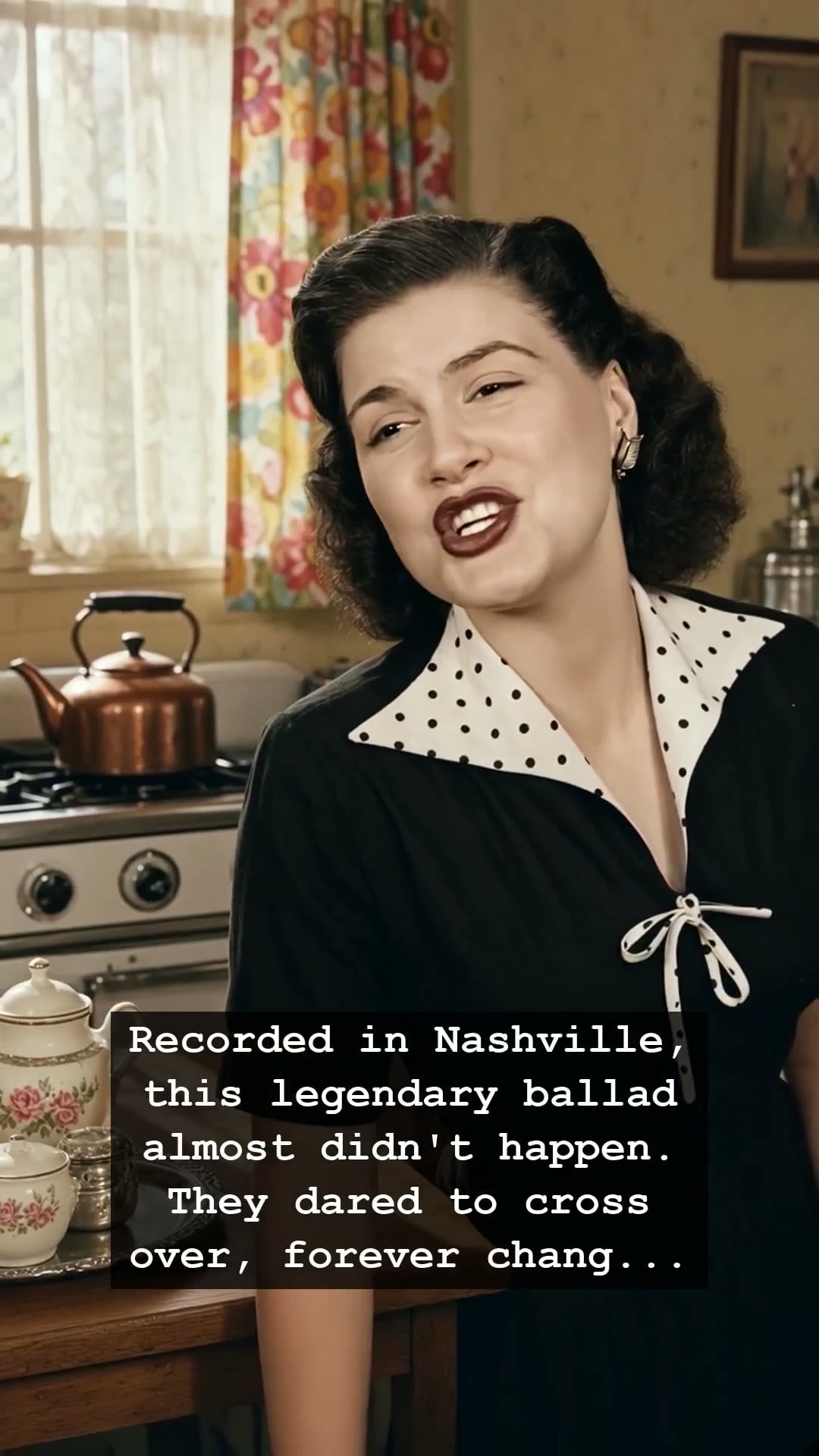
It was 1961 in a dimly lit Nashville studio, where the air hung heavy with the smell of stale coffee and cigarette smoke. A young woman with a voice like velvet and heartache stood before the microphone, ready to commit a song to tape that would either seal her fate or destroy her career. That woman was Patsy Cline, and the producer watching her from the glass booth was the legendary Owen Bradley. At the time, the powers that be in the country music establishment were terrified. They believed the song, a mournful ballad titled I Fall to Pieces, was too pop, too lush, and far too risky for their traditional, fiddle-heavy audience. They dared to cross the invisible line between rural roots and mainstream pop, a gamble that would forever change American music history.
Owen Bradley was a visionary, a man who saw past the rigid boundaries of the genre. He envisioned a sound that bridged the gap, layering strings and polished production over the raw, sobbing sincerity of Patsy Cline. When they first brought the track to the label, the reception was chillingly cold. Many felt that by drifting away from the honky-tonk sound, they were abandoning their heritage. Yet, Patsy Cline possessed a soul that defied categorization. She sang not just with her voice, but with a visceral, haunting pain that demanded to be heard by everyone, not just those huddled around a jukebox in a roadside bar. The friction between her artistic evolution and the conservative Nashville establishment created a palpable, dramatic tension that permeated every note of the session.
As the song hit the airwaves, the backlash was immediate but short-lived. Radio stations that had never touched a country track found themselves unable to resist the pull of her voice. It was a moment of cultural rupture; the traditionalist gatekeepers were swept aside by the sheer power of an emotional connection. The sound of that era was shifting, moving away from the sparse arrangements of the past toward a richer, more cinematic landscape that would eventually pave the way for the golden age of crossover stars. For those who remember the sound of a crackling radio in the early sixties, the song served as a sonic postcard from a time when music felt dangerous, personal, and utterly transformative.
Beyond the glitz of the charts, the collaboration between Patsy Cline and Owen Bradley remains a testament to the resilience of true artistry against corporate doubt. Their partnership was a volatile mix of creative genius and stubborn determination. They navigated the pressures of the industry with a grit that today’s polished stars often lack, surviving on nothing but the conviction that their music mattered. The studio was their sanctuary, a place where drama was transmuted into melody and where the personal tragedies of their lives became the anthems for millions of listeners around the world.
Looking back at that golden era, it is clear why the legacy of Patsy Cline endures. She was the pioneer who proved that vulnerability could be a superpower, and Owen Bradley was the architect who built the stage for her to shine. Whenever I hear those opening chords, I am instantly transported back to a time when songs were meant to be felt in the marrow of your bones. It was a different world then, a time before the digital age stripped away the human element, leaving us with only the ghost of a song that refused to be forgotten. Do you still remember where you were the first time you heard it?