
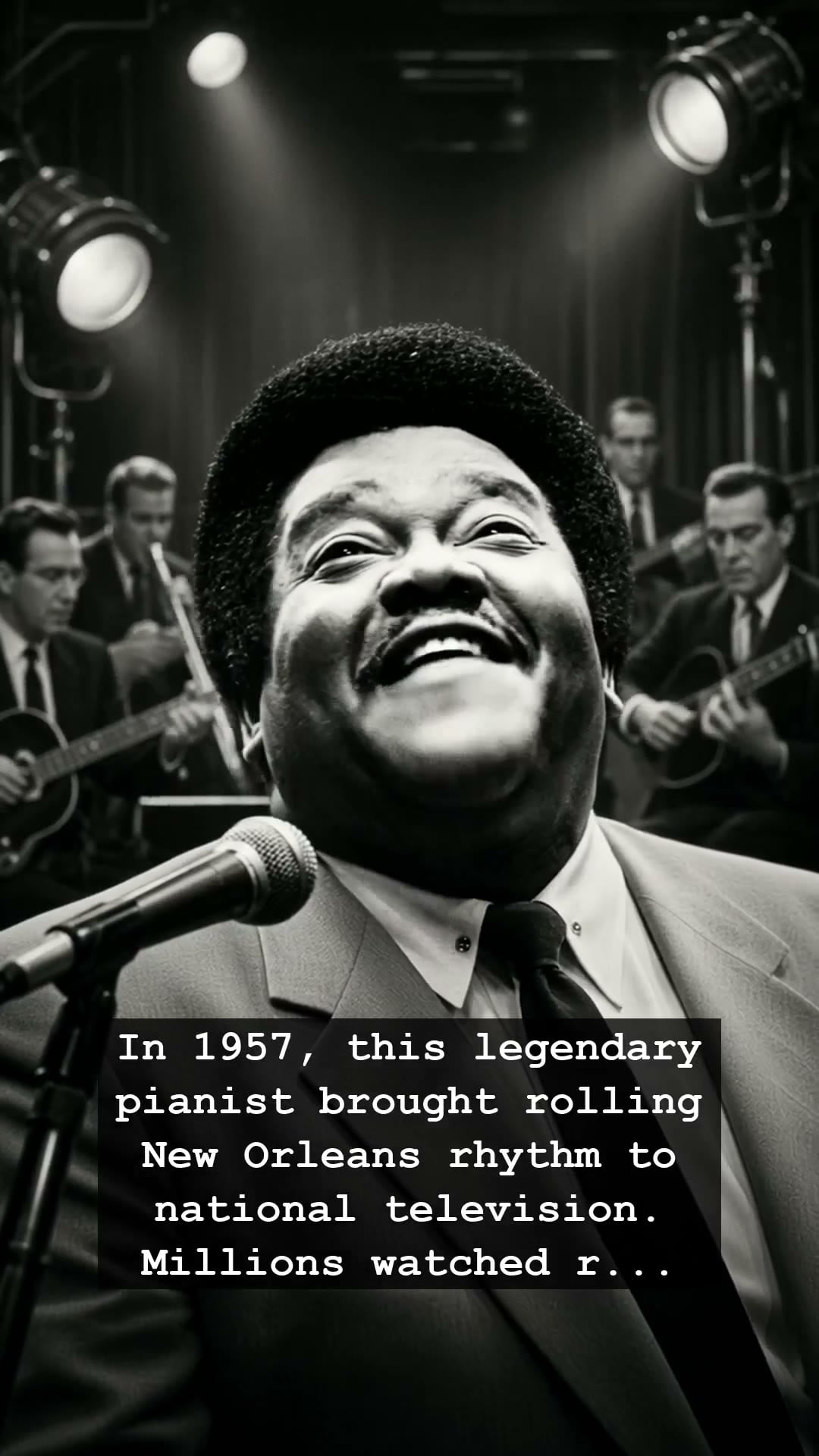
It was 1957, and the average American living room was a quiet place where the glow of the television set served as the family hearth. Families sat in rigid posture, accustomed to the polite performances of jazz crooners and orchestral ensembles. Then, Fats Domino walked onto the Ed Sullivan stage. With a wide, warm smile that masked the raw power of his fingers, he sat down at the piano and began to hammer out a rhythm that had been brewing in the humid, soulful corners of New Orleans. In that singular, electric moment, the veneer of 1950s conformity cracked. Millions of viewers across the nation were suddenly introduced to the thumping heartbeat of true rhythm and blues, forever altering the trajectory of rock and roll.
Fats Domino was not your typical television icon. He didn’t carry the sleek, dangerous edge of Elvis Presley or the rebellious brooding of James Dean. Instead, he radiated a genuine, hummable joy that made the rhythm feel accessible to everyone. Yet, do not let that gentle exterior deceive you. When he leaned into the keys, he brought the grit of the Crescent City directly into the mainstream. This was the era of the Jukebox, when music was a physical experience—a sound you felt in your shoes as much as you heard with your ears. By bringing his roaring New Orleans style to national television, Fats Domino effectively bridged the gap between local barroom blues and the global pop charts.
The atmosphere behind the scenes was anything but calm. The television producers of that era were notoriously wary of this new, wild sound that was sweeping through the youth culture like wildfire. Rock and roll was viewed by the establishment as a dangerous influence, a seismic shift that threatened the social order. Yet, the sheer charisma and undeniable talent of Fats Domino made him impossible to ignore. His performance was a cultural earthquake, a moment where the invisible walls separating different corners of the American experience began to crumble. He proved that you didn’t need to fit the Hollywood mold to capture the hearts of a generation.
Looking back, it is easy to forget just how revolutionary that broadcast was. Before the world of music videos or the massive, stadium-shaking tours that would define later decades, there was simply the artist, the instrument, and the live connection to an audience. Fats Domino transformed the television screen into a window looking directly into a smoky, vibrant New Orleans club. He brought the soul of the South to the suburbs, teaching a nation that rock and roll was a force of liberation, not just a passing fad.
Today, the legacy of Fats Domino persists, echoing in every piano-driven rock anthem that followed. He remains a pillar of the golden age of American music, a reminder of a time when melody was king and the piano was the ultimate weapon. Even as the decades have shifted from the era of vinyl to the digital age, the impact of that 1957 appearance remains a testament to the power of authentic rhythm. When you close your eyes and listen to his records today, you can still hear the rumble of that historic night, a timeless reminder of the man who invited us all to join the dance.