
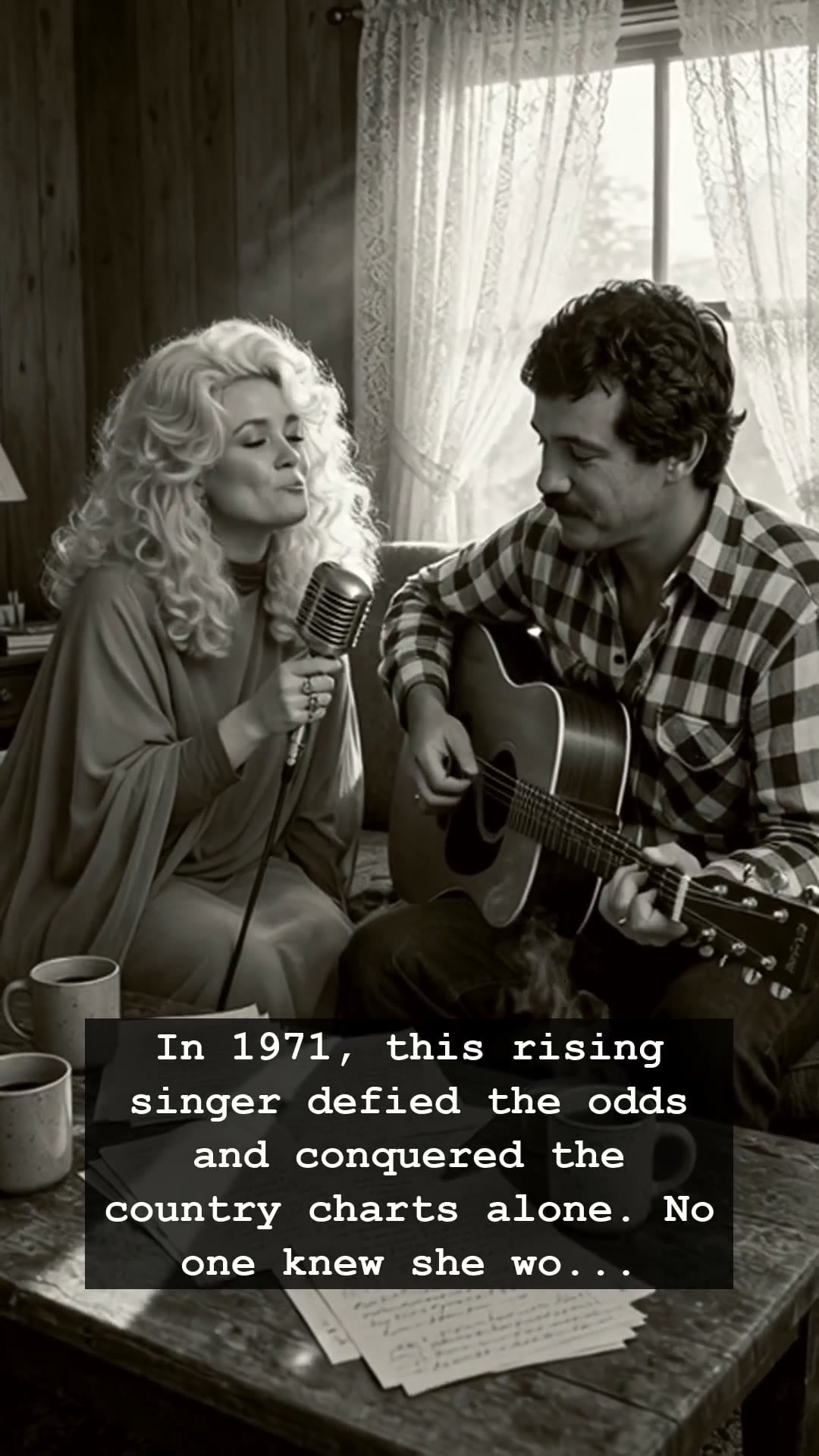
In 1971, the airwaves were dominated by the scratchy, warm crackle of vinyl spinning on turntables, and the country music scene was a fortress guarded by aging male titans. For years, Dolly Parton had been tethered to the shadow of Porter Wagoner, a man who saw her potential but demanded she remain his submissive sidekick. They were the television darlings of the day, their performances a staple of the Saturday morning jukebox ritual. Yet, beneath the rhinestone-studded suits and the polite on-screen banter, a quiet rebellion was brewing. Dolly was not merely a pretty face with a high-pitched trill; she was a songwriter with a razor-sharp pen and an ambition that refused to be silenced by the Nashville establishment.
The year 1971 serves as the definitive turning point in this saga of defiance. It was the moment Dolly Parton stepped away from the safety of her mentor’s spotlight to record the anthem that would forever change her trajectory: Joshua. The song was a gritty, atmospheric narrative that felt miles away from the polished, cookie-cutter radio hits of the era. When she fought to release it, the industry whispered that she was making a mistake, that the public would never accept her as a solo powerhouse. They were wrong. As the track climbed the charts, it became clear that the girl from the Smoky Mountains had outgrown the role of a mere assistant.
This success was more than just a musical victory; it was a psychological liberation. To understand the gravity of this moment, one must remember the atmosphere of early 70s country radio, a landscape where women were often expected to decorate the stage rather than own it. Dolly Parton shattered that glass ceiling with nothing but her voice and a steely resolve. Her decision to strike out on her own was a high-stakes gamble that could have ended her career, yet it proved that true talent is self-sustaining. The tension between her and Wagoner grew palpable, a drama that played out in hushed studio meetings and cold glares, eventually leading to the heart-wrenching penning of I Will Always Love You, her emotional goodbye to the man who gave her a start but couldn’t keep up with her soaring trajectory.
The cultural footprint of that era remains indelible, a time when stars were built in smoky studios and sold through the glow of television sets. Dolly Parton emerged not just as a country singer, but as a cultural icon who understood how to navigate the pitfalls of fame without losing her authentic voice. She survived the cutthroat world of 1970s celebrity, the pressures of constant touring, and the industry’s attempts to box her in. Her journey is a testament to the raw grit required to survive the golden age of American music.
Even today, her 1971 breakthrough resonates as a blueprint for artistic autonomy. Every time you drop the needle on an old record or hear that iconic, vibrato-rich voice on the radio, you are hearing the echo of a woman who dared to demand her own seat at the table. Dolly Parton did not just conquer the charts; she conquered the industry’s limitations to become the enduring legend we celebrate today. As we look back at the history of country music, it is impossible to ignore the moment she chose to walk alone into the light, leaving the shadow of her past exactly where it belonged: behind her.