
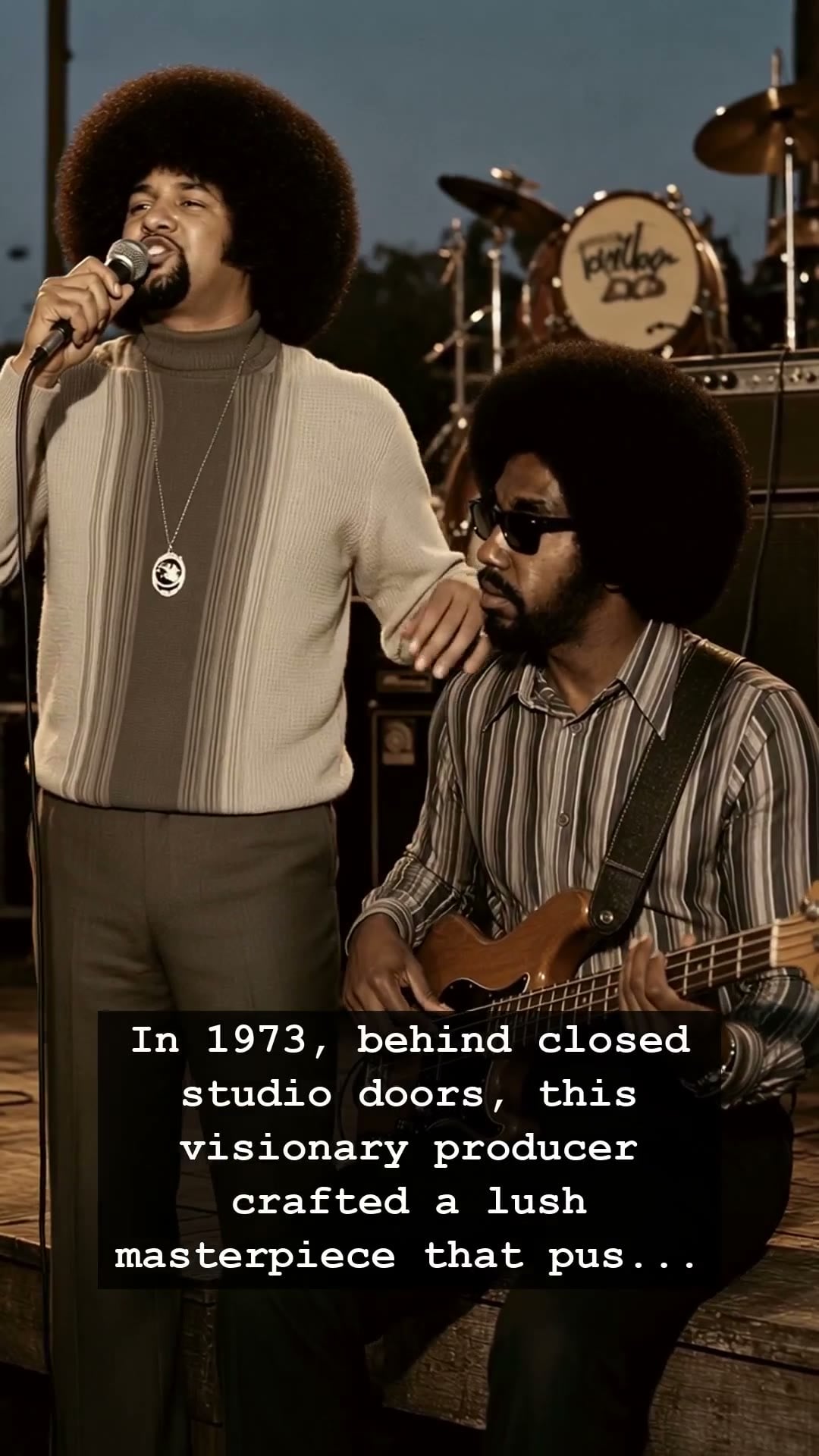
The year was 1973, and the air inside Motown’s legendary Studio A felt heavy with the weight of expectation. Outside, the world was changing rapidly—the Vietnam War was winding down, the grit of the streets was infiltrating the charts, and the polished veneer of early soul was cracking under the pressure of a new, turbulent decade. Behind locked doors, producer Norman Whitfield was orchestrating a sonic shift that would redefine the boundaries of rhythm and blues. Standing at the microphone, a weary and emotionally raw Marvin Gaye prepared to navigate the lush, atmospheric soundscape that Whitfield had meticulously constructed, pushing the legendary vocalist to his absolute psychological limit.
Norman Whitfield was never one for subtlety. Known as the architect of the psychedelic soul movement, he had already proven his genius with The Temptations, but his work with Marvin Gaye felt different. It was an interrogation of the soul. Whitfield demanded a vocal performance that was both fragile and explosive, layering intricate strings and hypnotic percussion until the song became a claustrophobic, beautiful masterpiece. For Marvin Gaye, the process was grueling. He was an artist who felt every note in his marrow, and under the watchful eye of Whitfield, he poured his personal disillusionment into the recording booth, capturing a level of vulnerability that few in the music industry dared to touch at the time.
This era was defined by the transition from the simple, infectious charm of the jukebox hits of the fifties to the deeply introspective, socio-political narratives of the early seventies. As the needle dropped on the vinyl, listeners weren’t just hearing a song; they were experiencing a catharsis. The collaboration between Norman Whitfield and Marvin Gaye bridged the gap between the Motown machine and the authentic, tortured genius of the individual artist. It was a friction that produced diamonds, even if it scorched the souls of those involved in the creation process.
Despite the tension and the legendary ego clashes that often fueled their studio sessions, the final product stood as a testament to their mutual pursuit of perfection. When you listen to the tracks from this period, you can almost smell the cigarette smoke and stale coffee lingering in the studio air. There is a sense of impending history in every chord progression—a feeling that these men were fully aware they were crafting something that would outlast them both. It was the sound of a man confronting his own demons while his producer demanded he sing through the pain.
Decades later, the haunting resonance of that 1973 collaboration remains as potent as ever. It serves as a reminder of a time when the recording studio was a sanctuary for radical creativity and emotional truth. We look back at Norman Whitfield and Marvin Gaye not just as icons of a genre, but as architects of a feeling that continues to haunt the modern listener. Their music remains a lush, atmospheric map of the human heart, still waiting for you to press play and get lost in the storm all over again.