
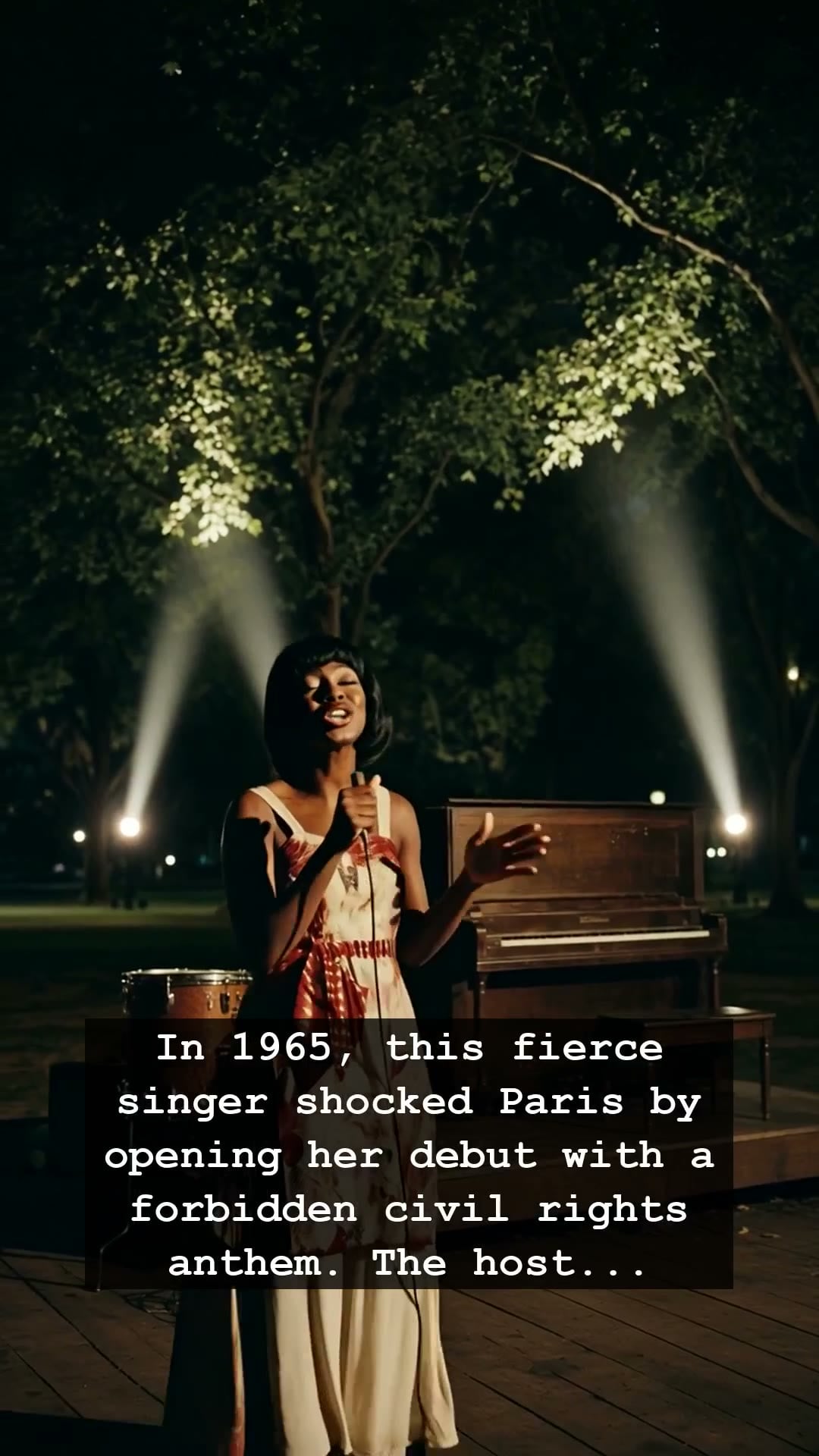
The year was 1965, and the glamorous, glittering air of a Parisian concert hall was thick with expectation. The audience, accustomed to the soft, rhythmic hum of lounge jazz and the polished standards of the era, sat in their velvet seats, waiting for entertainment. Then, Nina Simone walked onto the stage. She did not open with a soothing ballad or a familiar show tune. Instead, she sat at the piano, her face a mask of iron resolve, and launched into a blistering, forbidden civil rights anthem. The air in the room seemed to shatter. In an instant, the chatter of the sophisticated elite died away, replaced by a heavy, suffocating silence. Nina Simone was not just performing; she was confronting them with the raw, bleeding reality of the American struggle, turning a room full of strangers into a spellbound, shaken congregation.
To understand the gravity of that moment, one must look back at the era of the Jukebox and the burgeoning influence of the protest song. While many artists of the 1960s chose to hide behind safe melodies to ensure radio play, Nina Simone chose the path of the firebrand. Her music was a weapon, forged in the heat of the civil rights movement. She understood that her voice was not merely for pleasure but for truth-telling. In Paris, thousands of miles away from the brutal clashes of the Deep South, she brought the searing heat of the American political crisis into a space that had hoped to ignore it. It was a bold, dangerous act of artistic defiance that cemented her status as a cultural icon.
Nina Simone carried the weight of a generation in her hands whenever she touched the keys. Her style transcended the boundaries of soul, jazz, and folk, weaving them into a tapestry of complex human emotion that felt deeply authentic. Back home, while the world was distracted by the rise of television and the changing tides of the youth culture, Nina was dealing with the psychological toll of her advocacy. She lived in the shadow of fame, often battling the demons of mental health and the relentless pressures of a society that wanted her to be a entertainer rather than a revolutionary. Her life was a constant tug-of-war between the artist who sought beauty and the woman who demanded justice.
Today, the legacy of Nina Simone resonates more than ever. We listen to her recordings now with the benefit of hindsight, knowing the tragedy and the triumph that fueled every note. Whether she was pouring her soul into a live performance or recording in a smoke-filled studio, her authenticity remained her greatest asset. She never apologized for her anger, and she never lowered her standards for an easy paycheck. She stood tall in the face of hostility, proving that music could indeed change the world.
When we look back at the giants of the mid-20th century, we see stars who shined bright, but few burned with the intensity of Nina Simone. She taught us that performance is a sacred act of honesty. As the final notes of her legacy continue to echo through modern music, we are reminded that true art is not meant to comfort; it is meant to provoke, to challenge, and ultimately, to set us free. Let her music play on, and let the truth she spoke continue to ripple through time.