
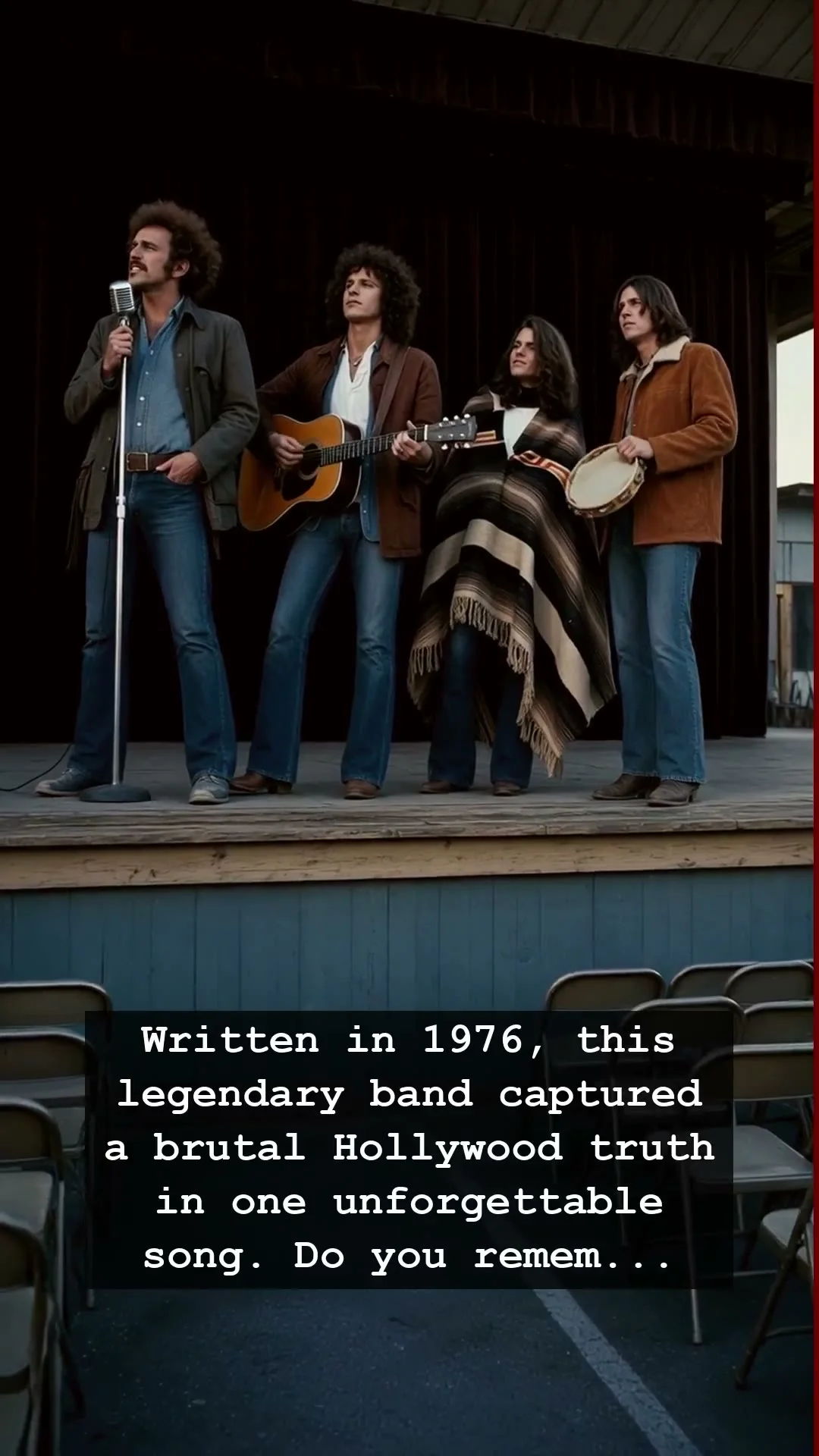
The year was 1976. The world was spinning to the rhythm of the disco era, the Walkman was about to change how we consumed melodies forever, and the Sunset Strip in Los Angeles was a den of excess and shattered dreams. Amidst this backdrop, The Eagles released a masterpiece that would haunt the collective consciousness for decades: Hotel California. While fans across the globe memorized the intricate guitar interplay between Don Felder and Joe Walsh, few understood that the song was not just a catchy anthem, but a brutal, biting indictment of the Hollywood machine that chewed up rising stars and discarded legends like yesterday’s trash.
To understand the song, one must understand the environment that birthed it. The Eagles were the kings of the 1970s, but they were also victims of the very industry they dominated. During the mid-seventies, the glitz and glamour of the music business had a parasitic underside. Young, wide-eyed musicians would arrive in Southern California with dreams of gold records and stadium tours, only to be seduced by the dark allure of fame. The Eagles captured this perfectly, crafting a narrative of a gilded cage where you could check out any time you liked, but you could never leave. It was a metaphor for the transactional nature of fame—the feeling that once you trade your soul for the spotlight, the spotlight owns you entirely.
Don Henley once described the song as a journey from innocence to experience, but the raw reality was far more visceral. It was born from a quiet, brutal Hollywood whisper that echoed through the hallways of every major record label. The industry was a carousel, and it relied on the constant turnover of talent. As soon as a performer reached their peak, the whispers began about who would replace them. The Eagles were observing their peers, the fading icons of the sixties, being pushed aside by the shiny, manufactured pop stars of the coming decade. The studio was a place where artistic integrity often took a backseat to the bottom line.
Beyond the haunting lyrics, the song stands as a relic of an era defined by excess and existential dread. It was the antithesis of the flower-power idealism that had defined the previous decade. By the time the final notes faded, the listener was left with a sense of unease that lingered long after the record stopped spinning. It was a stark reminder that even in the land of sunshine and palm trees, the price of admission to stardom was often one’s own humanity. This tension defined the band’s legacy and propelled them to the top of the charts for years to come.
Decades later, Hotel California remains more than just a classic rock radio staple; it is a time capsule of a specific, cynical moment in cultural history. Every time that iconic opening riff rings out, we are transported back to that smoky room in the hills, hearing the echoes of a band that saw the rot behind the velvet curtain. The Eagles managed to turn a brutal Hollywood truth into an immortal melody, ensuring that their warning would be heard by generations who never even saw the Sunset Strip in its prime. As we look back at the history of music, we realize that the most beautiful songs are often the ones that expose the ugliest realities of the human heart.