
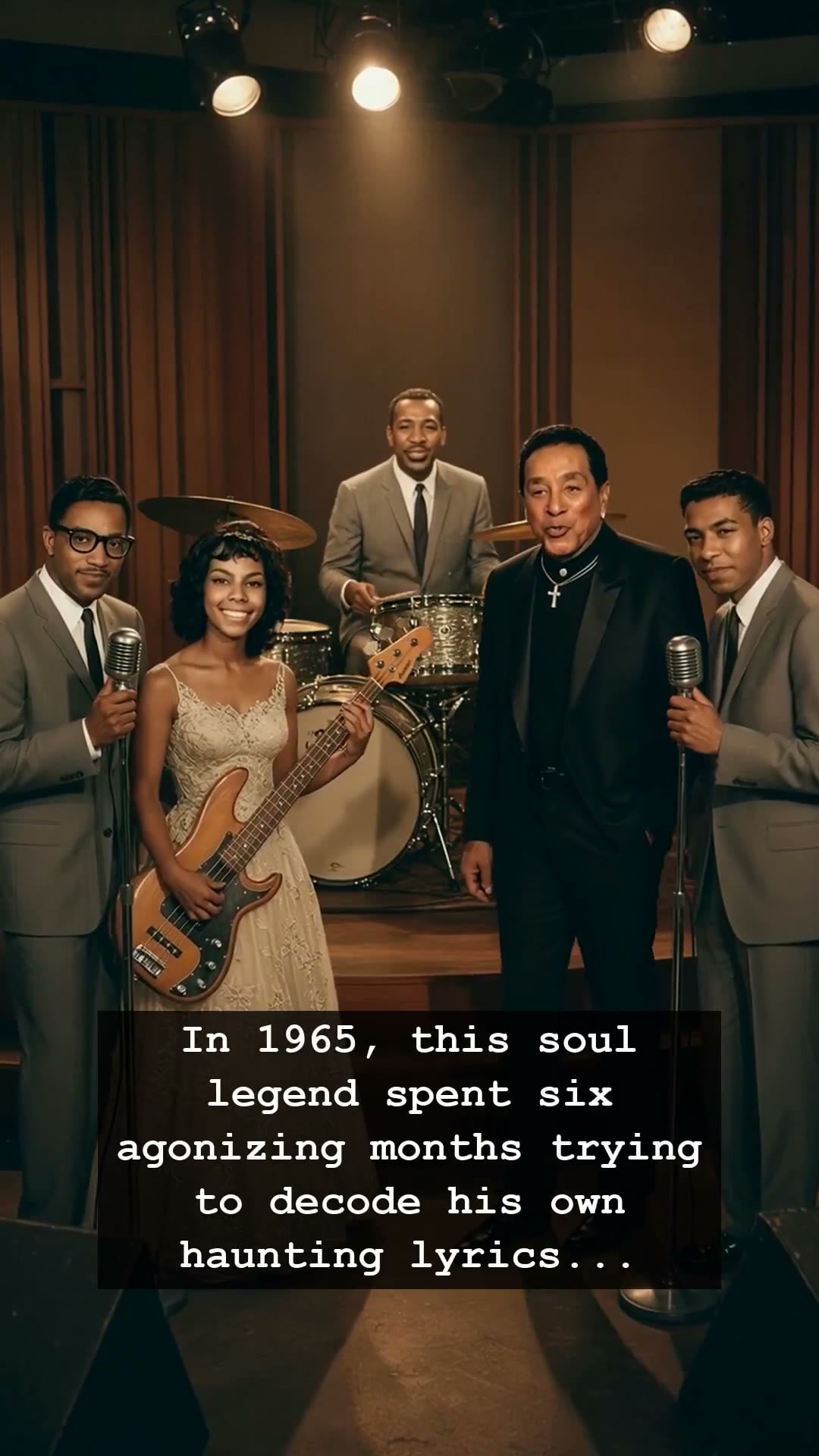
In the golden era of Motown, where the dance floors of the 1960s were constantly pulsating with joy and rhythmic optimism, Smokey Robinson stood as a master poet of the human heart. Yet, beneath the polished veneer of his signature falsetto and the impeccable production of the Hitsville U.S.A. studios, a profound melancholy simmered. In 1965, the legendary Smokey Robinson found himself locked in a creative struggle that would haunt him for six agonizing months. He was obsessively trying to decode the lyrics to what would become an immortal classic, The Tracks of My Tears. It was a song that felt like it was born from a place of genuine, hidden agony that the world was not yet prepared to fully witness.
Most listeners of that time viewed the song as another quintessential soul ballad, but the reality was far more jagged. Smokey Robinson had been wrestling with the internal weight of his own public persona versus his private sorrow. The simple, iconic guitar riff that opens the track acts as a mask, masking the lyrical confession of a man who smiles to keep from crying. During those six months of refinement, Smokey Robinson meticulously sculpted every syllable, ensuring that the melody didn’t just convey a heartbreak—it lived it. He was writing about a man who puts on a brave face for the world, a sentiment that resonated deeply with anyone who had ever felt the crushing weight of performing happiness while their internal world was falling apart.
This was the period when Motown dominated the airwaves, moving from the juke joints to the suburban living rooms via the glowing screens of television sets. Smokey Robinson understood that music was not just about the beat; it was about the storytelling. By 1965, the cultural landscape was shifting, and the depth of soul music was becoming the heartbeat of a generation trying to navigate the complexities of love and loss. When the record finally hit the shelves, the raw honesty embedded in the lyrics transformed it into an instant anthem. It was a testament to the fact that even at the height of fame, the isolation of the human experience remains universal.
Even today, the song remains a haunting piece of history, an echo from a time when analog studios and tape reels captured the imperfections that made music human. The genius of Smokey Robinson lay in his ability to take a personal, agonizing secret and transform it into a shared experience. As the song plays, you can almost smell the hairspray of the era and hear the crackle of the vinyl, a sensory time machine that transports us back to a moment of pure, unfiltered emotion. It is a reminder that some of the greatest art is forged in the fire of genuine internal conflict.
Looking back at that era, it is clear that Smokey Robinson did more than just write a song; he created a mirror for the soul. The Tracks of My Tears remains an essential chapter in the book of American music, a poignant reminder of the tears we all try to hide behind our brightest smiles. The next time you find yourself listening to those opening chords, remember the six months of silence and soul-searching that led to those words. It is more than just a melody; it is the lingering echo of a legend who dared to be vulnerable when the world only asked for a dance.