
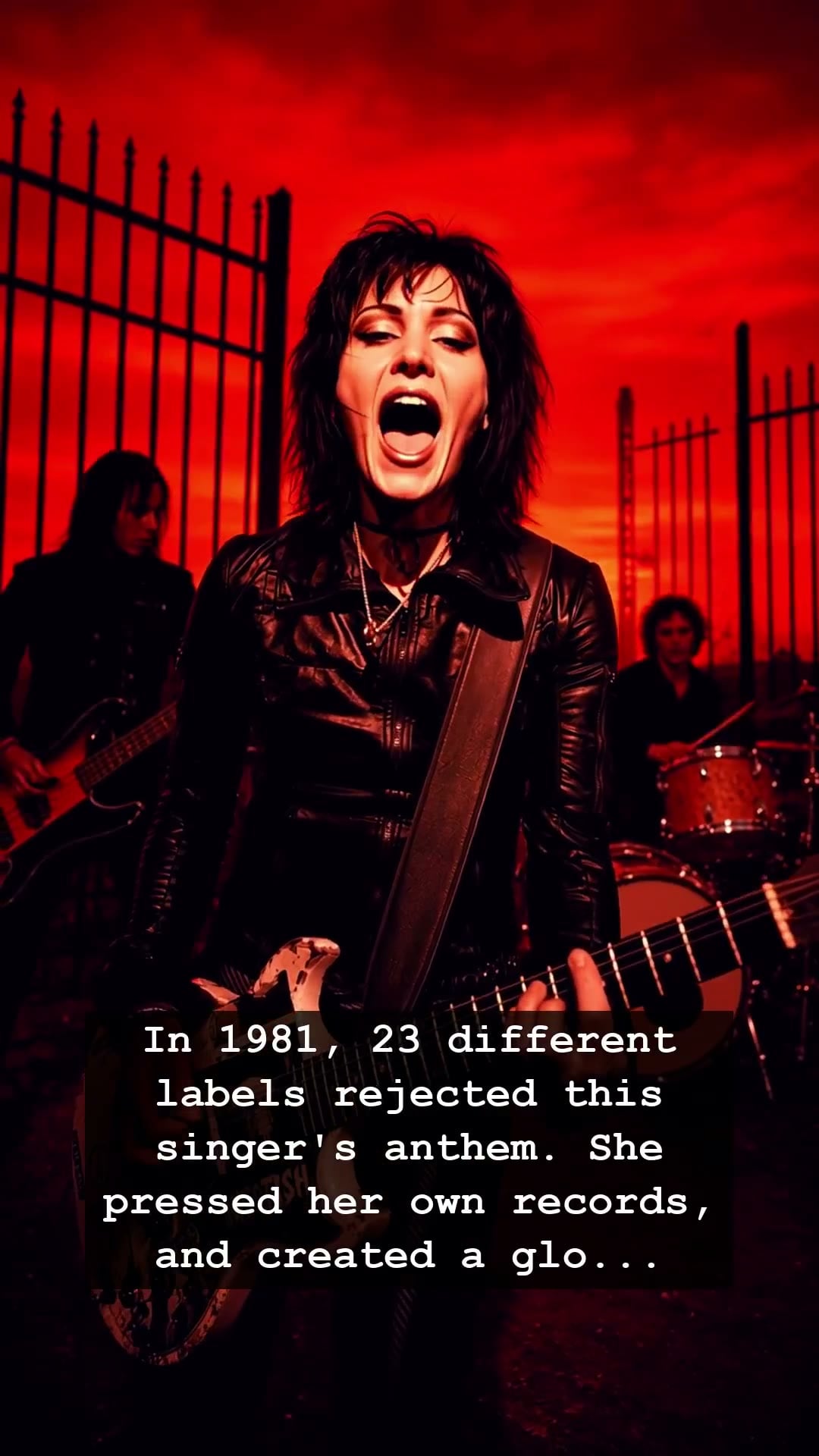
The year was 1981, a time when the music industry was obsessed with manufactured sounds and safe, radio-friendly hooks. In the hallowed halls of major record labels, executives sat behind polished mahogany desks, deciding what the youth would listen to next. They were looking for the next disco sensation or synth-pop craze, not a raw, snarling dose of reality. Then came Joan Jett. She walked into meeting after meeting, armed with a guitar and an anthem that would eventually define a generation: I Love Rock ‘n’ Roll. To her disbelief, she was shown the door twenty-three separate times. The gatekeepers of the industry didn’t just dislike the song; they fundamentally failed to understand the cultural shift that Joan Jett was about to ignite.
Most artists would have crumbled under the weight of such massive professional rejection, retreating to the shadows to rethink their sound. But Joan Jett was never built for conformity. She possessed a grit forged in the fires of the burgeoning punk scene and a defiant spirit that had already seen her navigate the wreckage of The Runaways. Rather than begging for a seat at their table, she decided to build her own. She took the radical step of pressing the records herself, selling them out of the trunk of her car after shows. It was a gamble that smelled of desperation to the suits, but to the kids in the audience, it was the purest form of rock and roll rebellion.
When that record finally hit the airwaves, it didn’t just climb the charts; it obliterated them. The song became a global monster, a snarling, unapologetic powerhouse that made every person who had ever been told ‘no’ feel like a giant. Joan Jett had bypassed the traditional gatekeepers entirely, proving that talent and tenacity were more powerful than a corporate marketing budget. The era of the jukebox and the arena rock spectacle was shifting, and Joan Jett was at the vanguard, showing the world that you didn’t need permission to change the course of music history.
Looking back at that era of vinyl and cassette tapes, it is easy to forget how much power the labels held. To go independent in 1981 was an act of profound bravery. Joan Jett turned the industry’s greatest weakness—its arrogance—against itself. She transformed her anthem into a cultural touchstone that still resonates in dive bars and stadiums today. It remains a testament to the fact that authentic, soul-searing rock music cannot be contained by the narrow visions of executives who are afraid of the sound of real, snarling humanity.
Today, the legacy of Joan Jett remains etched into the bedrock of music history. She didn’t just record a song; she sparked a revolution that paved the way for every independent artist who dares to bet on themselves. When you hear those opening chords blast through the speakers, you aren’t just hearing a hit record. You are hearing the sound of twenty-three slammed doors flying open, and one woman who refused to stop until the whole world was singing along.