
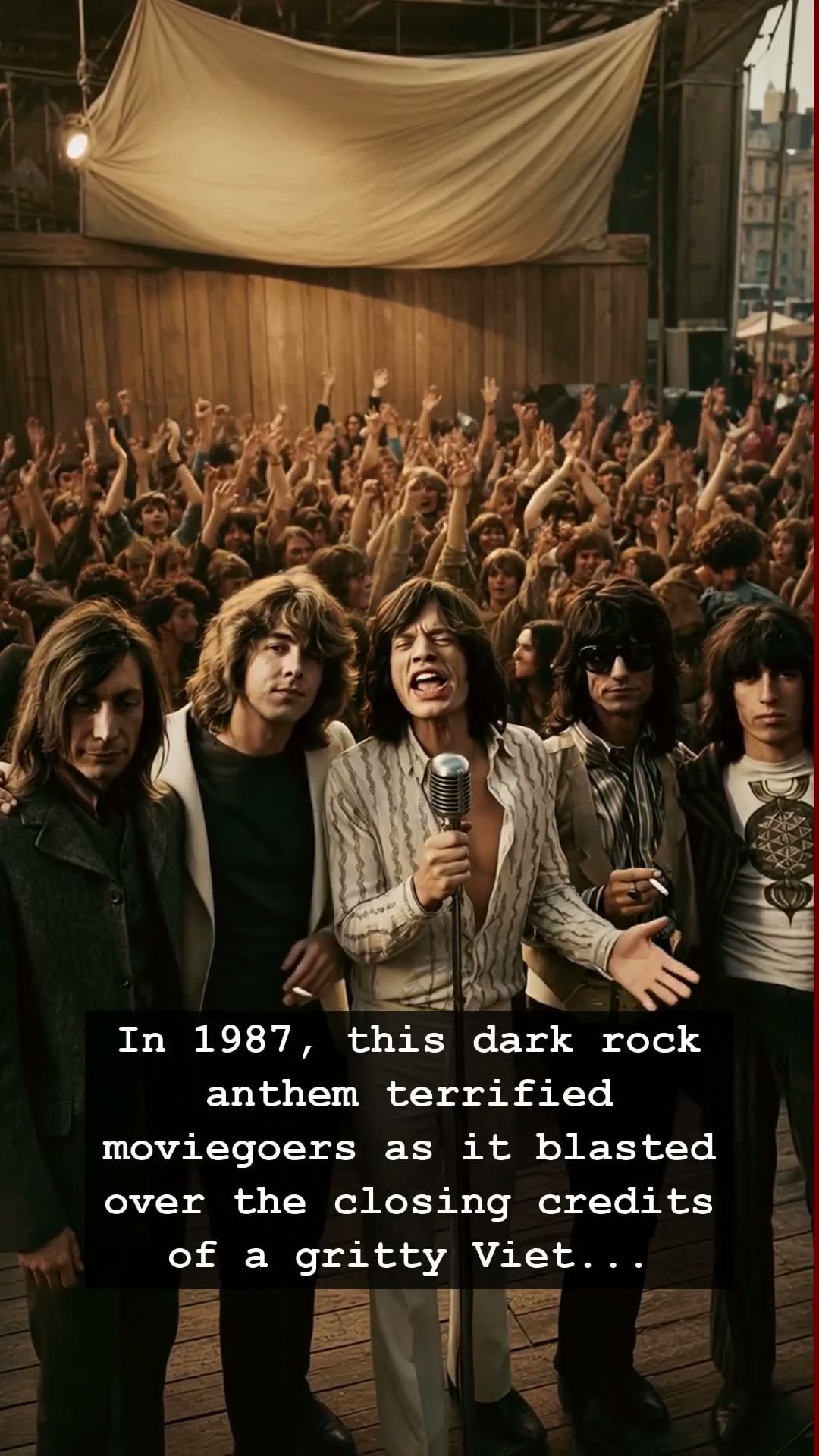
The year was 1987. As the neon lights of the cinema flickered and the credits rolled for the brutal Vietnam war masterpiece Full Metal Jacket, the theater did not go silent. Instead, it was filled with the jagged, hypnotic, and undeniably sinister pulse of The Rolling Stones. For many, that final scene was not just a cinematic moment; it was a visceral encounter with the dark, jagged soul of rock and roll. The song was Paint It, Black, and in that precise second, a generation of moviegoers realized that the haunting legacy of the 1960s had finally caught up to the reality of the 1980s. It was a chilling marriage of sound and vision that cemented the band’s darker reputation forever.
To understand why The Rolling Stones were the only ones who could soundtrack such a descent into madness, you have to look back at their trajectory. While their contemporaries were singing about peace and love, Mick Jagger and Keith Richards were busy tapping into the primitive, moody undercurrents of the blues. By the time the late 1960s hit, they were no longer just a band; they were the dangerous antithesis to the wholesome image projected by their peers. They were the architects of the rock and roll mystery, a group that thrived in the shadows of fame, substance, and high-stakes artistic ego. Their music felt like a warning, a jagged edge that demanded your full attention.
Throughout the 1970s and into the 80s, the band transformed from young rebels into an arena-rock juggernaut. They were regulars at the world’s most decadent hotspots, rubbing shoulders with the elite at Studio 54 while simultaneously struggling to maintain their creative brotherhood through decades of relentless touring and personal friction. The Rolling Stones were the ultimate survivors of the rock era, having weathered the storms of the counterculture, the rise of disco, and the looming shift toward the synthesizer-heavy sounds of the MTV generation. Yet, despite the changing times, they never lost that raw, primitive hook that defined their early work.
When director Stanley Kubrick chose their track for his war epic, he wasn’t just picking a hit; he was selecting a mood that felt like a psychological scar. That is the magic of The Rolling Stones. Their music has always carried a weight, a heavy, hypnotic gravity that resonates long after the last chord fades. Whether you were hearing it on a crackling jukebox in a dimly lit bar or through the tinny speakers of a Walkman on a subway ride, their presence was unmistakable. They were the soundtrack to the grit of history, the voices behind the drama that defined an entire generation of Americans.
Even today, the legacy of this dark anthem continues to haunt our collective memory. It reminds us that behind the glitter of the stage and the roar of a stadium, there was always a sense of mystery and danger. The Rolling Stones did not just make records; they captured the chaotic spirit of a world in flux. As the decades drift further into the past, their influence remains anchored in our culture, serving as a reminder that some songs are truly timeless. Do you remember where you were when that final, iconic riff first pierced through the silence?