
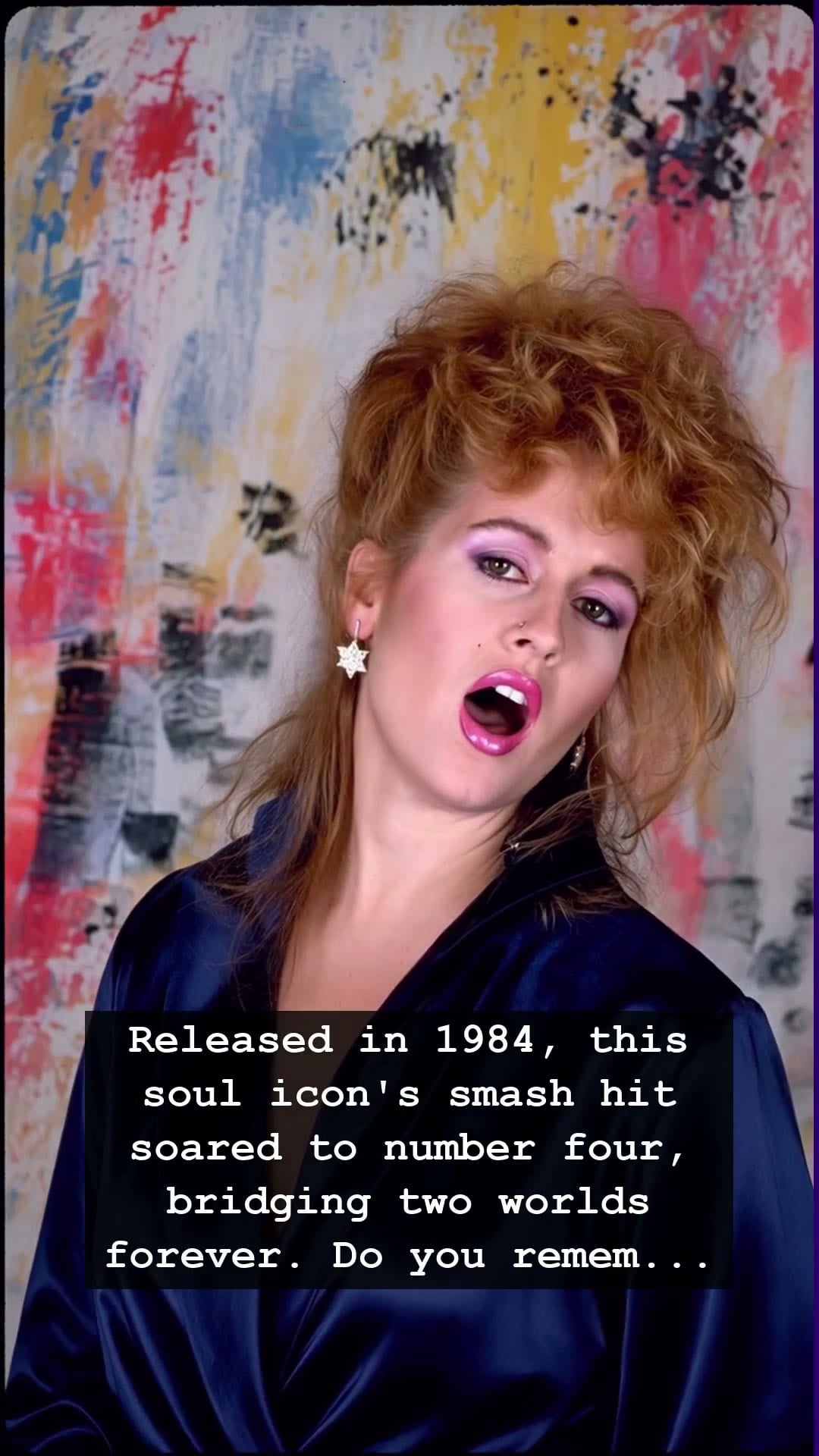
It was 1984, the year when neon synthesizers collided with the raw, gut-wrenching soul of the past. As the world became obsessed with the shiny new visual language of MTV, a powerhouse icon stepped into the spotlight to deliver a performance that defied every industry expectation. Teena Marie, the woman they called Ivory Queen of Soul, proved that true artistry has no color, only feeling. When she dropped her smash hit Lovergirl that year, it didn’t just climb to number four on the Billboard charts; it shattered the glass ceiling of the R&B world, bridging two worlds forever in a whirlwind of synthesizers and unmatched vocal grit.
To understand the magic of Teena Marie, you have to look back at her unique trajectory. Mentored by the legendary Rick James, Teena was a protege who quickly outgrew the shadow of her master, carving out a lane that was entirely her own. In an era where genres were strictly policed by radio gatekeepers and record labels, she navigated the Motown landscape with a ferocity that few of her peers possessed. She was a songwriter, a producer, and a vocalist who could command a stage with the same intensity as the rock gods who performed at Woodstock a decade prior. Yet, she often fought internal battles against a music industry that struggled to categorize her.
The creation of Lovergirl remains one of those pivotal moments in pop history. The track was a masterpiece of 1980s production, blending infectious funk basslines with the high-energy dance pulse that defined the club scene at places like Studio 54. Behind the scenes, the recording sessions were fueled by an relentless drive for perfection. Teena Marie was notorious for staying in the studio until the early hours of the morning, fine-tuning the layered harmonies that would eventually become her signature. It was this obsessive attention to detail that made her voice cut through the static of the era’s increasingly electronic soundscapes.
Despite her massive success, her career was marked by the kind of drama that makes the music industry so fascinating. From high-stakes legal battles that led to the landmark ‘Teena Marie Law’—which prevents labels from holding artists under contract without releasing their music—to her volatile yet deeply creative partnership with Rick James, her life was a testament to survival. She lived through the highs of platinum albums and the lows of personal exhaustion, always finding a way to pour that complex, lived-in reality into every note she sang. Her music wasn’t just entertainment; it was the soundtrack to a life lived without apology.
Decades later, the echo of her voice still resonates with those who remember the crisp sound of a needle hitting vinyl or the rhythmic snap of a cassette tape sliding into a Walkman. Teena Marie wasn’t just a singer; she was a force of nature who demanded that you listen. As we look back at the landscape of 1980s music, it is clear that she remains an essential pillar of soul history. Do you still remember that iconic voice? Close your eyes, put on the record, and let her take you back to the golden age of rhythm.