
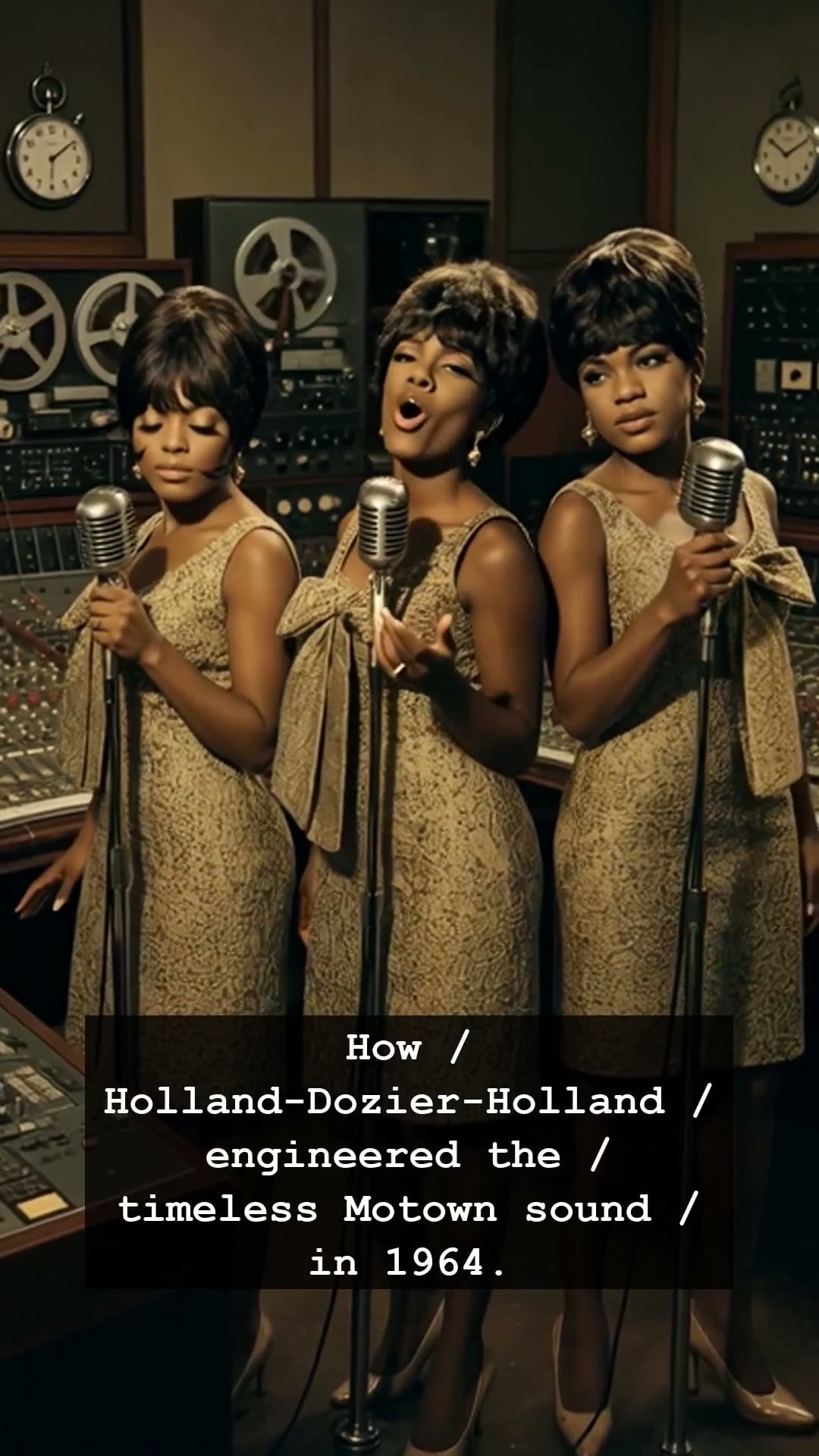
In 1964, a nondescript building on West Grand Boulevard in Detroit became the epicenter of a sonic revolution that would change the trajectory of American pop music forever. While the world outside was changing rapidly, inside the cramped, wood-paneled walls of the Hitsville U.S.A. studio, a legendary trio known as Holland-Dozier-Holland was busy sculpting the future. Lamont Dozier and brothers Brian and Eddie Holland were not just songwriters; they were sonic architects who engineered a rhythmic language that felt both intimate and grand. They were the heartbeat of the Motown sound, transforming young, raw talent into global icons while maintaining a strict, almost military-like precision behind the mixing console.
To understand the magic of Holland-Dozier-Holland, you have to picture the atmosphere of those mid-sixties sessions. There was no digital technology to hide behind. It was all about the groove, the tambourine’s sharp snap, and the relentless driving force of the Funk Brothers, the studio’s house band who provided the musical backbone. Holland-Dozier-Holland possessed an uncanny ability to craft melodies that tapped directly into the human nervous system. Whether it was the pulsating urgency of Martha and the Vandellas or the polished perfection of The Supremes, the trio knew that every beat had to resonate in the jukeboxes of diners and the living rooms of suburban homes across America. They understood that the Motown sound was built on repetition, soul, and a relentless focus on the hook.
The pressure inside the studio was immense, fueled by the visionary but demanding leadership of Berry Gordy. Holland-Dozier-Holland were constantly pitted against time and their own high standards, often spending countless hours perfecting a single snare hit or a vocal inflection. This was the era of the Walkman’s spiritual predecessor—the transistor radio—and they were obsessed with how their songs cut through the static of the airwaves. They were the ones who perfected the formula that made Motown synonymous with the sound of young America. It was an intense, high-stakes environment where genius was manufactured daily under the bright lights of the recording booth.
Yet, this golden era was not without its shadows. The creative friction between the songwriting trio and the label management eventually led to legal battles and bitter departures, proving that even the most beautiful music can emerge from the heat of professional conflict. Despite these fractures, their legacy remains untarnished. They didn’t just write hits; they defined an entire generation’s emotional landscape. When you listen to those tracks today, you are not just hearing a melody; you are hearing the tension, the ambition, and the accidental brilliance of three men who changed how the world danced.
Even decades later, the craftsmanship of Holland-Dozier-Holland feels remarkably fresh. Their influence is woven into the DNA of modern soul and R&B, a testament to their genius. If you close your eyes and let the rhythm take over, you can almost feel the humidity of that 1964 Detroit summer and hear the scratch of the tape machine. Take a moment today to step back into that golden age and rediscover the music that defined an era.