
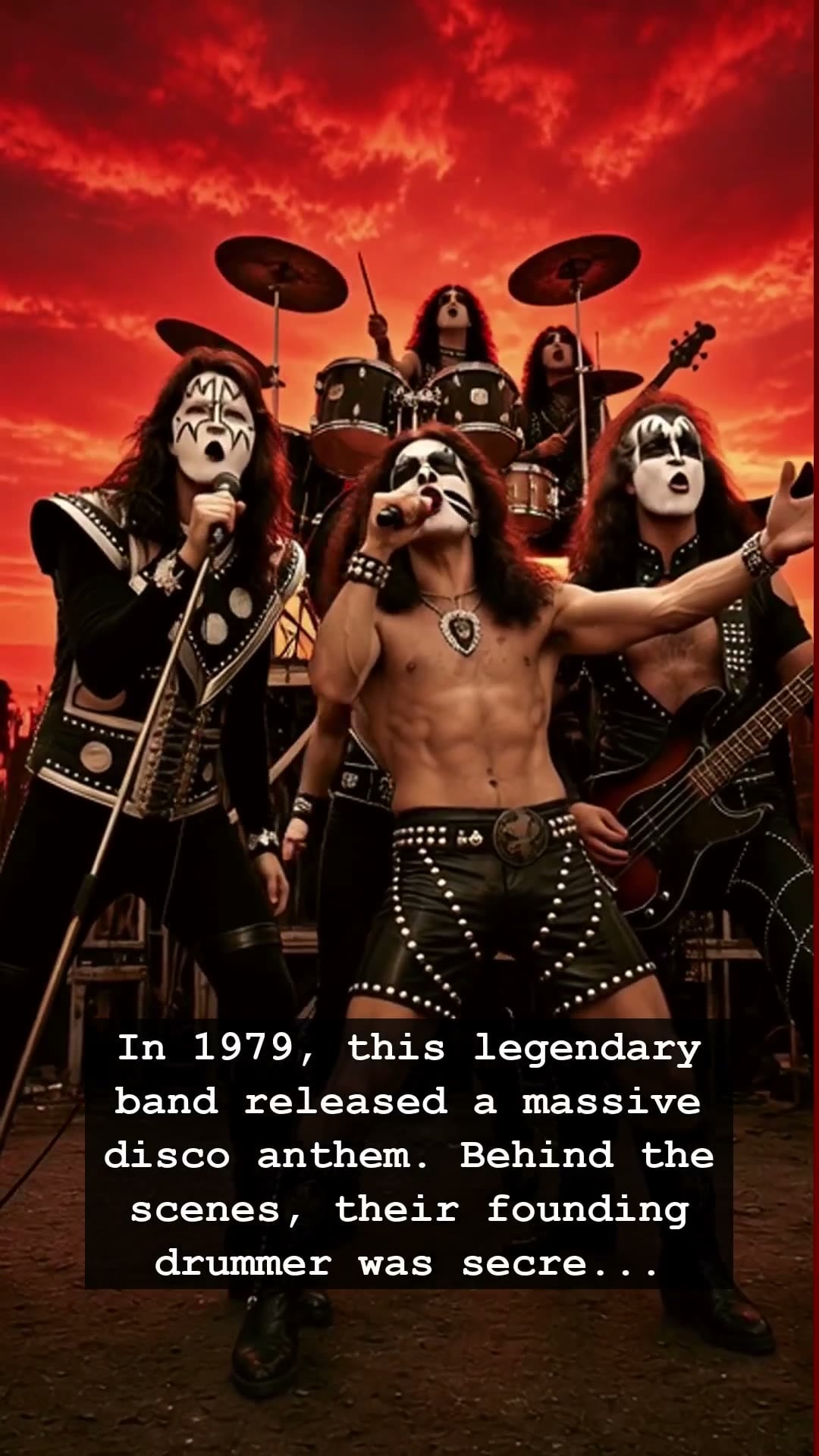
The year was 1979. The world was gripped by the neon-drenched fever of Studio 54, where the thumping bass of disco threatened to drown out the raw, distorted guitar chords of traditional rock. Even the kings of greasepaint and pyrotechnics, Kiss, couldn’t ignore the seismic shift in the musical landscape. They entered the studio to record what would become their global anthem, I Was Made for Lovin’ You, a track that would define an era of experimentation. Yet, behind the polished, high-energy beat that kept millions dancing under the glitter balls, a bitter, silent betrayal was unfolding in the shadows. The founding drummer of Kiss, Peter Criss, was not the man keeping the rhythm for this legendary hit.
While the public saw the four iconic personas they had come to worship, the internal reality of Kiss was beginning to fracture under the weight of ego and substance abuse. Peter Criss, the man behind the Catman mask, was physically present but mentally and musically drifting away. As the band pushed to embrace a slicker, radio-friendly sound, producer Vini Poncia made a decision that would forever haunt the band’s legacy. During the recording sessions, Criss found himself systematically sidelined. Locked out of the studio’s creative core, he was replaced by an uncredited ghost musician, session drummer Anton Fig. The pounding disco beat that defines the song was not the heartbeat of the original lineup, but a calculated, clinical substitution that signaled the beginning of the end for the original Kiss brotherhood.
For those of us who grew up clutching our Walkmans and trading cassette tapes, this revelation feels like a crack in the foundation of our favorite memories. We remember where we were when the radio first played that song; we recall the way it felt to see the band on MTV, larger than life and seemingly untouchable. But the history of rock and roll is rarely as seamless as a studio recording. The tension between the band’s desire for commercial dominance and the fraying personal bonds of the four founding members turned their music into a battlefield. The replacement of Peter Criss was a cold, professional maneuver that laid bare the dark reality of fame: in the relentless pursuit of the next big hit, brotherhood was often the first casualty.
It is fascinating to look back at the 1979 era, a time when the lines between genres were being violently erased. Kiss was desperate to stay relevant in a world dominated by disco, and this experiment, while commercially massive, created deep, lasting scars. The secret of the ghost drummer remained a whisper in the industry for years, a scandalous footnote to a career defined by excess. Today, I Was Made for Lovin’ You remains a dancefloor staple, still capable of igniting a crowd, yet it carries the weight of a painful, hidden history. It reminds us that behind every classic anthem, there is often a story of human drama that the stage lights were never meant to illuminate.