
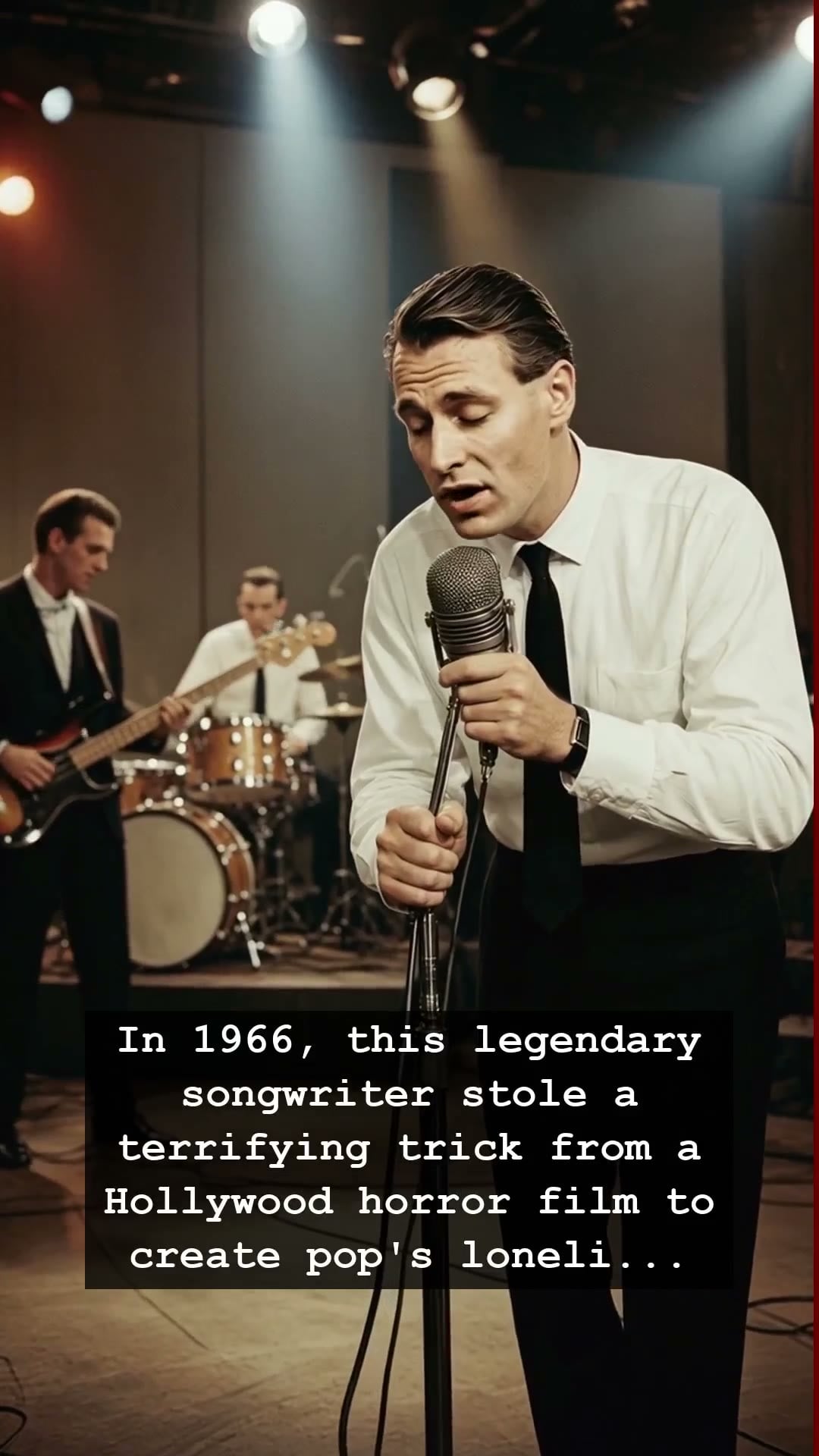
In 1966, the world was vibrating with the color of the Swinging Sixties, but behind the curtains of Abbey Road, Paul McCartney was retreating into a haunting silence. While the jukeboxes in London were spinning upbeat tracks, McCartney was busy crafting a song that would forever change the anatomy of a pop ballad. He did not look to his peers for inspiration; instead, he borrowed a chilling, claustrophobic trick from the world of Hollywood horror cinema to anchor his greatest lyrical confession. The resulting song, Eleanor Rigby, remains pop music’s most profound study of human isolation.
At the height of Beatlemania, Paul McCartney felt the crushing weight of global fame. The screaming fans and the blinding flashbulbs were no longer a dream; they were a prison of noise. Seeking to capture the soul-crushing silence of a lonely life, McCartney insisted on a production style that defied the era’s glossy standards. He stripped away all the comforting reverb that defined the sound of 1960s pop records. By removing the air and space from the audio, he forced the listener into an intimate, suffocating proximity with the string quartet and his own raw vocals. It was a terrifying sonic choice, designed to make the listener feel the cold, dry reality of a life forgotten by time.
This artistic pivot was not merely a musical experiment; it was a reflection of the era’s hidden cracks. While the mainstream was fixated on the psychedelic explosion and the rise of the counterculture, Paul McCartney was obsessed with the elderly, the invisible, and those left behind by the rapid pace of post-war modernization. He channeled the cinematic terror of isolation—the kind of psychological tension found in a dark Hitchcock frame—and distilled it into a melody that felt like a funeral march for the living. The track was a daring departure from the mop-top sunshine that launched the band, signaling a maturity that would eventually lead to their more experimental chapters.
There is a ghostly quality to how Eleanor Rigby still resonates today, echoing through the decades like a voice from a lost era. It brings us back to a time when a Walkman was a dream of the future and the needle on a vinyl record provided the only reliable sanctuary from a chaotic world. McCartney’s decision to bypass the lush production techniques favored by his contemporaries proved that he was not just a songwriter, but a master of sonic storytelling. He understood that to make a song linger, you had to make it hurt, even if just for a fleeting moment.
Even now, decades after the song first graced the charts, the simplicity of Paul McCartney’s arrangement haunts us. It serves as a stark reminder that in the grand history of music, the most powerful sounds are often those that refuse to hide behind a wall of sound. As the world continues to spin faster, we find ourselves returning to these quiet, lonely masterpieces. Do you still remember where you were the first time the violins cut through the silence and changed your understanding of what a pop song could be?