
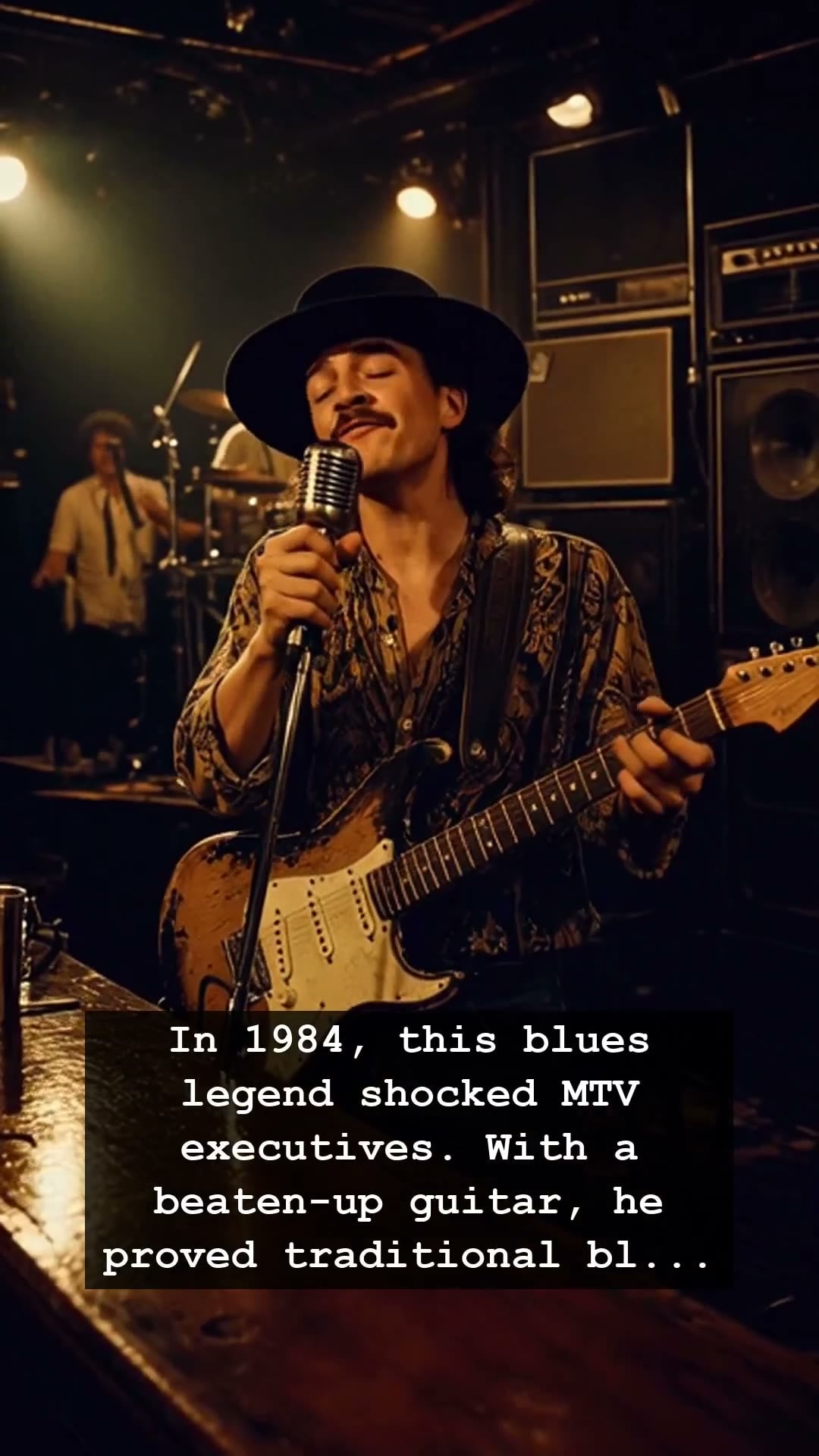
The year was 1984, a time when the music industry was obsessed with the synth-pop gloss of the MTV era. Executives were busy curating a future defined by neon lights, drum machines, and polished choreography. They believed the raw, dusty soul of the blues had been left behind in the back alleys of history, effectively buried by the rise of the Walkman and high-budget music videos. Then, Stevie Ray Vaughan walked into the light. With a beaten-up guitar that looked like it had survived a war and a style that felt like a punch to the gut of the status quo, the Texas bluesman did the unthinkable: he proved that the blues were not only alive but more lethal than ever.
Stevie Ray Vaughan was a force of nature, a man whose fingers seemed to bleed electricity whenever they touched the fretboard. When he appeared on television screens during that golden age of cable, the contrast was jarring. While his peers were hiding behind hairspray and synthesizers, Vaughan stood there in his signature wide-brimmed hat, draped in flamboyant silks, playing with a ferocity that bordered on the spiritual. He didn’t just play the blues; he channeled the ghosts of legends past, forcing a generation raised on dance-pop to sit down and listen to the blistering, unadulterated power of a Fender Stratocaster pushed to its absolute limit.
For those who were there, the image is burned into our collective consciousness. He didn’t fit the mold of an MTV star, yet he commanded the lens with such intensity that pop executives were left speechless. They were terrified because, for a few fleeting minutes, the carefully manicured facade of the mid-80s crumbled under the weight of genuine, lived-in pain and virtuosity. Stevie Ray Vaughan brought the spirit of the Texas roadhouse to a global stage, proving that you didn’t need a drum machine to move a crowd—you just needed soul, sweat, and a six-string weapon of mass destruction.
Behind that meteoric rise, however, were the shadows that often haunt the truly gifted. The life of Stevie Ray Vaughan was a high-stakes balancing act between extreme fame and the dark siren call of substance abuse, a common tragedy in the reckless atmosphere of the 1980s music scene. His struggle added an unmistakable layer of vulnerability to his performance, a haunting quality that made his music resonate far beyond the technical brilliance. He was a man fighting his own demons, and every note he played felt like a prayer for redemption, vibrating through every living room in America.
Even decades after his tragic passing, the legend of Stevie Ray Vaughan continues to loom large. He stands as a reminder that trends are temporary, but true artistry is timeless. Every time a young guitarist picks up an instrument and tries to emulate that unmistakable, stinging tone, the Texas bluesman lives again. He didn’t just conquer MTV; he secured a permanent place in the pantheon of music history, teaching us that no matter how loud the sirens of pop culture scream, the raw, honest, and unfiltered blues will always have the final word.