
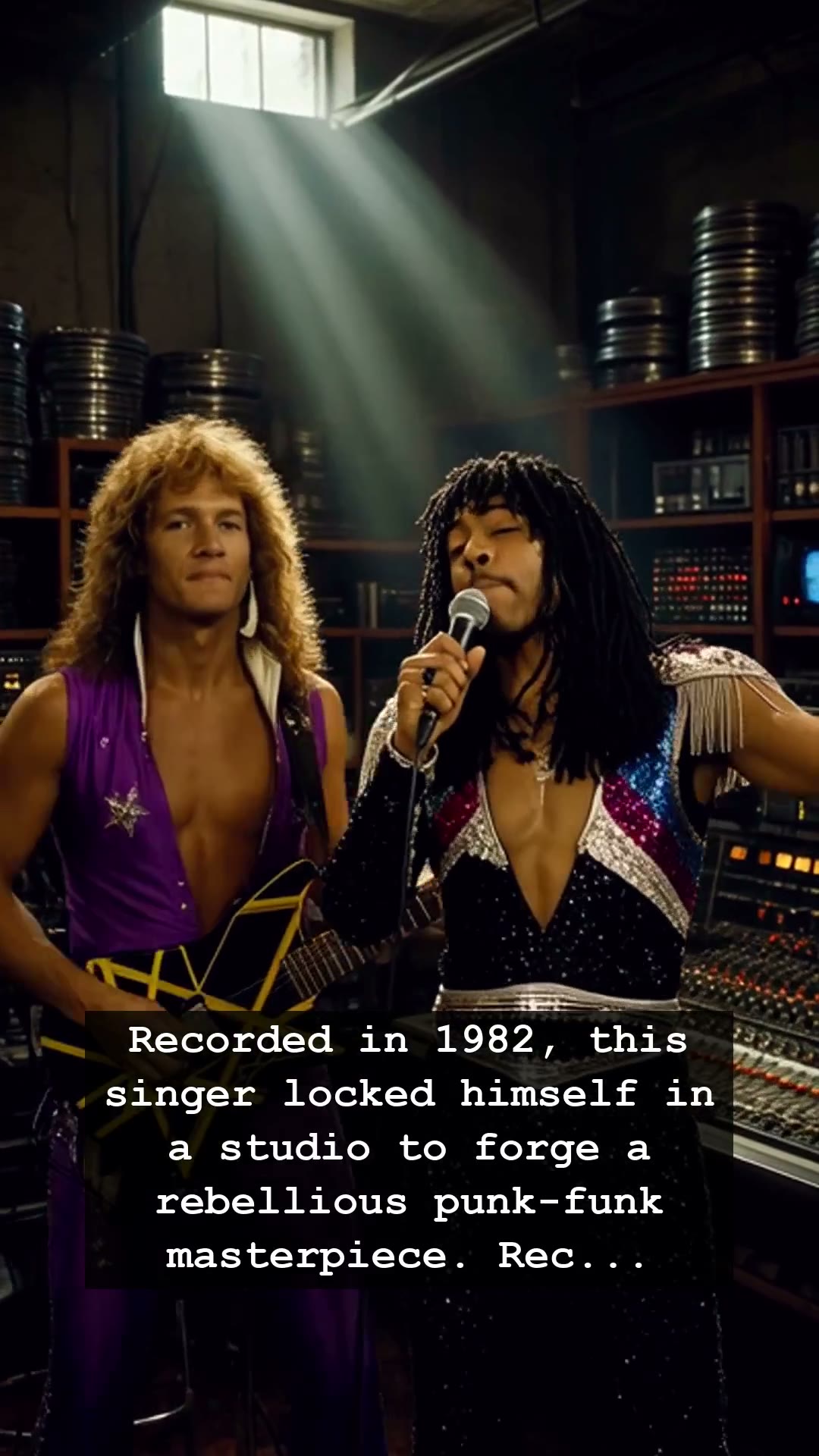
The air in the Los Angeles recording studio was thick with smoke, tension, and the unmistakable scent of rebellion in 1982. Outside those heavy, soundproof doors, the world of music was still playing by the polished, predictable rules of the disco era. But inside, Rick James was orchestrating a quiet revolution. He had locked himself away, vanishing from the view of label executives who were expecting another radio-friendly hit. Instead, Rick James was carving out a masterpiece that would redefine the boundaries of funk, injecting it with the raw, jagged energy of punk. He wasn’t just making a record; he was shedding his skin and preparing to set the entire music industry ablaze.
At the time, Rick James was already a titan of the stage, known for his flamboyant outfits and infectious grooves. Yet, this particular session felt different. It was an obsessive, high-stakes experiment where he insisted on total creative control, pushing his musicians to their absolute limits. The Motown executives were panicked, left in the dark while one of their biggest stars disappeared into a labyrinth of synthesizers and grit. They had no idea that Rick James was crafting a sonic collision—a punk-funk fusion that would capture the restless spirit of the early eighties. It was the moment he decided that fame was no longer enough; he wanted to change the very texture of sound.
When the resulting tracks finally escaped the studio, they were nothing like what the charts were peddling. The sound was menacing, aggressive, and undeniably cool. It felt like the streets of New York and the swagger of the Sunset Strip had merged into a singular, undeniable pulse. Rick James managed to bridge the gap between suburban listeners and the gritty urban reality of the era, creating an anthem that would soon blare from every boombox and Walkman across the country. It was a dangerous, seductive departure from the polished soul of the past decade.
This era was defined by the rise of MTV, where image was becoming as important as the melody itself. Yet, Rick James refused to be merely a product of the visual age. He used the studio as a fortress, proving that the heart of music still lived in the sweat and friction of live performance. His commitment to this unorthodox sound helped dismantle the barriers that had long kept funk and rock in separate, tidy boxes. He didn’t just play music; he lived it with a chaotic, unyielding intensity that left a permanent mark on the cultural consciousness of the eighties.
Looking back, the story of this 1982 recording session stands as a testament to the volatility of genius. It was a period where the line between artistic brilliance and total self-destruction was paper-thin. Rick James lived in that friction, and because of it, he left us with a legacy that refuses to fade. Today, when we hear those piercing synths and thunderous basslines, we aren’t just hearing a song; we are hearing the sound of a man who broke the rules to write his own history. The music lives on, a haunting echo of a night when funk changed forever.