
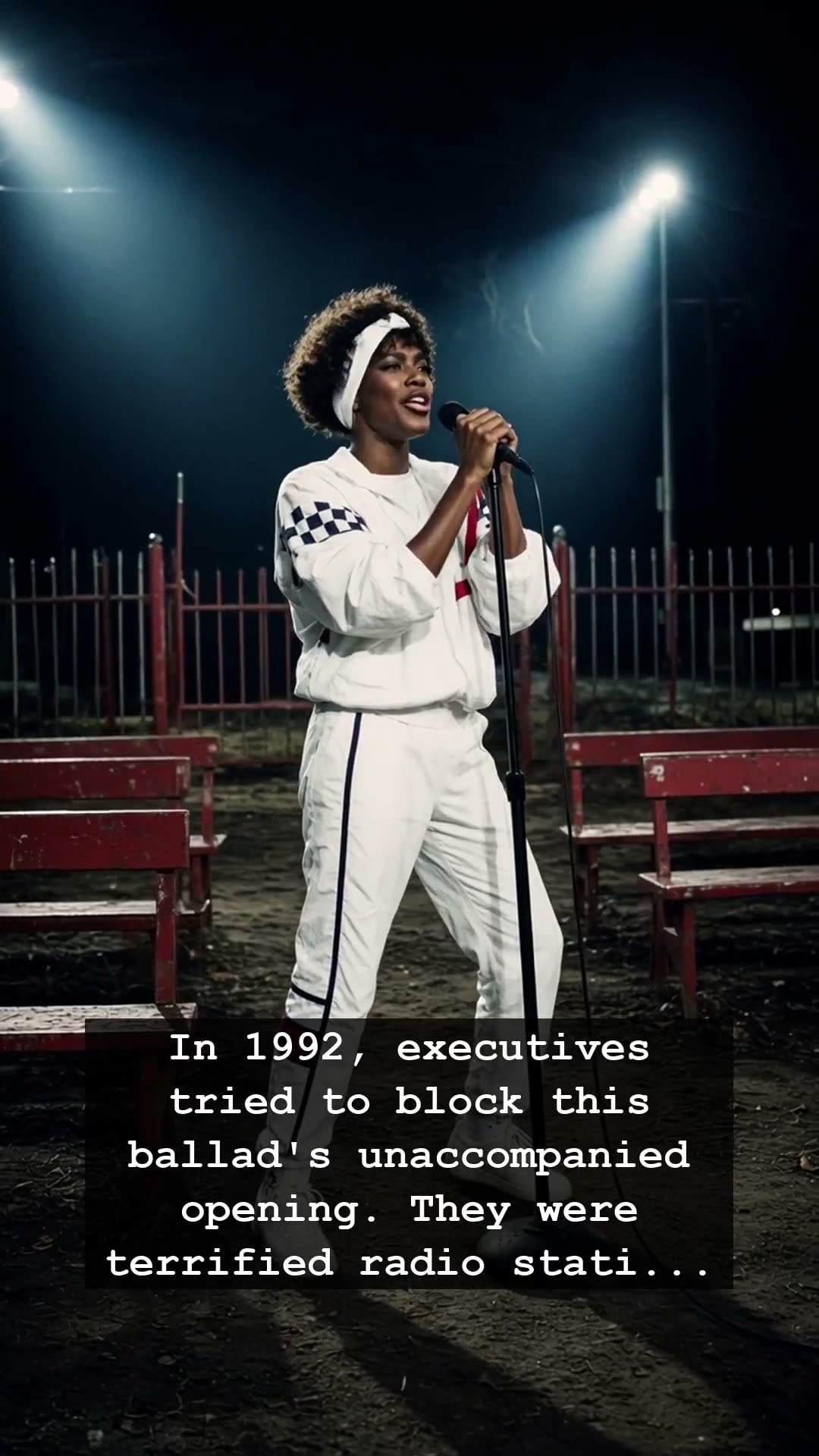
It was 1992, an era defined by the rise of the Walkman and the neon-soaked dominance of MTV, when a quiet, daring decision threatened to derail one of the greatest power ballads in history. Whitney Houston, the golden voice of a generation, was preparing to release her rendition of I Will Always Love You for the film The Bodyguard. Yet, behind the scenes, record executives were paralyzed with anxiety. They were terrified of the song’s opening. It started completely a cappella, without a single drum beat or synthesized hook to catch the listener’s attention. The suits believed radio programmers would hear that silence, panic, and cut the track before Whitney even reached the chorus. They deemed it commercial suicide in an age where instant gratification was the radio gold standard.
But Whitney Houston stood her ground, fueled by a singular, bold vision shared with her co-star Kevin Costner. Costner, an actor with an ear for the emotional weight of a scene, famously championed the idea of starting the song in total vulnerability. He argued that the human voice—raw, unaccompanied, and hauntingly beautiful—was the only instrument required to command a listener’s soul. This artistic clash between the boardroom’s demand for safe, radio-friendly structures and the artist’s desire for pure, unadulterated expression highlights the hidden battles that defined the music industry during the early nineties. It was a high-stakes gamble on the power of silence.
When the track finally hit the airwaves, the industry’s fears evaporated instantly. The gamble paid off with such magnitude that the song spent fourteen weeks at the top of the Billboard Hot 100. It wasn’t just a hit; it was a cultural monolith. For those of us who remember queuing at the local record store or waiting hours for the music video to play on MTV, that opening sequence became a defining memory of the decade. Whitney Houston’s voice, rising from that initial silence like a tidal wave, captured the heartbreak and resilience of an entire generation, proving that artistry often demands defiance of the status quo.
Beyond the chart success, the song remains a poignant reminder of the dark and bright sides of superstardom. Whitney Houston navigated a world where her immense gift was both her armor and her cage, surrounded by expectations that often stifled the very creativity that made her a legend. The story of this ballad is a testament to the fact that when an artist trusts their gut over the corporate machine, they create something that transcends time. It serves as a reminder of the raw, unfiltered talent that once dominated the airwaves before the digital age polished away the humanity in our music.
Even today, three decades later, hearing that opening a cappella line sends a shiver down the spine. It transports us back to a time when music felt larger than life and the voice of one woman could unite the globe in a shared moment of profound emotion. Do you remember where you were when you first heard it?