
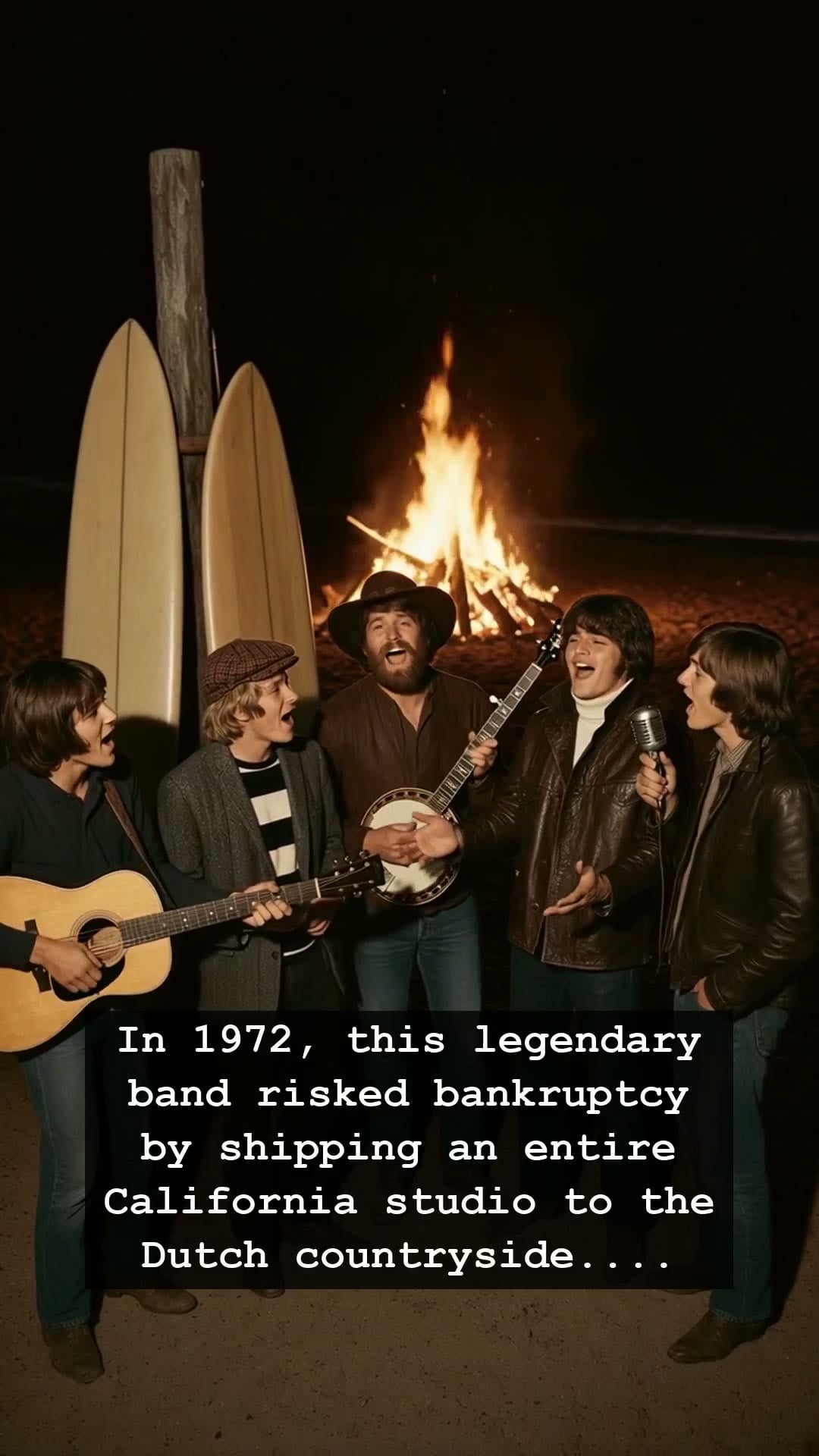
In 1972, the American Dream was starting to crack, and for The Beach Boys, the pressure of maintaining their sun-drenched, surf-rock image had become a suffocating weight. The band that once defined the California sound through the golden era of the jukebox was drifting into a state of creative and financial paralysis. Faced with bankruptcy and the crushing expectations of a fickle public, they made an irrational, desperate gamble. They packed up an entire professional recording studio and shipped it across the Atlantic to a remote, damp farmhouse in the Dutch countryside. It was an act of madness that defied logic, but it remains one of the most intriguing turning points in rock history.
Living in a Dutch farmhouse thousands of miles from the familiar scent of Pacific salt air, The Beach Boys were forced to confront their internal fractures. The disconnect between their idealized, harmonious image and their crumbling personal realities was palpable. Brian Wilson, the troubled genius behind their complex orchestrations, was descending into a dark haze, while the rest of the band wrestled with the loss of their relevance in an era rapidly moving toward the gritty textures of stadium rock. Yet, in that isolated environment, stripped of their California security blankets, something shifted. The silence of the rural Netherlands allowed them to hear themselves in a way they never could amidst the noise of the Los Angeles scene.
This chaotic experiment resulted in the album Carl and the Passions – So Tough and their subsequent masterpiece, Holland. It was not the surf-rock of their youth; it was a sprawling, sophisticated, and deeply melancholic exploration of the soul. The music mirrored the cold European wind outside that Dutch barn, providing a stark contrast to the sun-bleached harmonies of the past. It was an authentic, raw evolution that saved the band from the brink of total collapse. For those who grew up watching the evolution of music on the small flickering screens of early MTV, this chapter of The Beach Boys remains a haunting testament to the price of fame.
The genius of The Beach Boys has always been their ability to mask profound sadness with shimmering vocal arrangements. By transporting their studio, they weren’t just moving equipment; they were trying to relocate their identity. The experiment reminds us that even legends are susceptible to the pressures of their own myths. They survived the bankruptcy, the isolation, and the internal turmoil to produce a record that still resonates with anyone who understands the beauty of heartbreak.
Today, the legacy of this band continues to remind us that the most significant art often emerges from the deepest instability. Whether you remember them from your first transistor radio or are just discovering the complexities of Brian Wilson’s genius, the story of their Dutch exile remains a captivating lesson in persistence. As we listen to those timeless records, we are not just hearing music, but the echoes of a band that dared to lose everything to find their voice again. Take a moment to revisit their catalog today; you might find that the hidden depths of their sound hold more truth than you ever realized.