
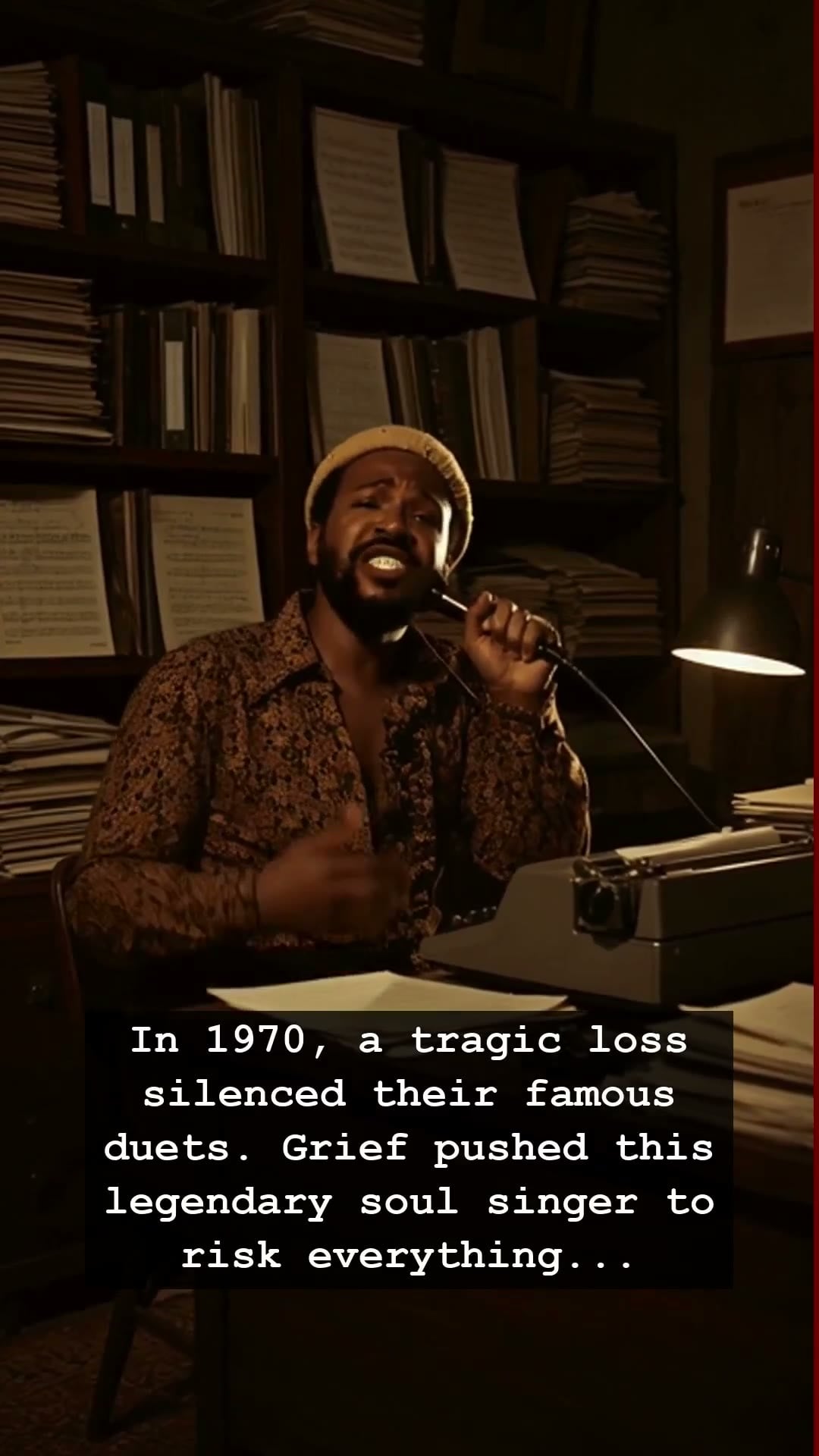
In the golden era of Motown, the stage was a kaleidoscope of velvet suits, synchronized dance steps, and the sweet, inescapable charm of Jukebox classics. No duo captured the world’s imagination quite like Marvin Gaye and Tammi Terrell. Their voices were like honey and velvet, intertwining in hits like Ain’t No Mountain High Enough, a testament to a musical chemistry that felt like pure, unadulterated joy. But behind the glossy production of the Detroit hit factory, a tragic silence was brewing that would eventually shatter the soul of a legend and alter the trajectory of American music forever.
Everything changed on that stage in 1967. While performing in Virginia, Tammi Terrell collapsed into Marvin Gaye’s arms, the first sign of a debilitating brain tumor that would haunt her for years. For Marvin Gaye, this was not just the loss of a professional partner; it was the crumbling of a soulmate. When Tammi passed away in 1970 at the age of 24, the grief was a physical weight that Marvin could not shake. He retreated from the public eye, disappearing into the shadows of his own mind, unable to reconcile the cheery, manufactured pop of the Motown machine with the darkness he felt in his heart.
It was this profound, bone-deep sorrow that pushed Marvin Gaye to the brink of a revolution. While the world still wanted the lighthearted R&B anthems they were famous for, Marvin was looking out at a changing nation. He saw the turmoil of the Vietnam War, the urban decay, and the systemic pain that was being swept under the rug. He took his grief, mixed it with a searing social conscience, and walked into the studio to create what would become the legendary album What’s Going On. It was a bold departure from his past—a soulful, psychedelic, and deeply personal critique of humanity that the suits at his record label originally feared would be a career-ending disaster.
He didn’t care about the risk. The man who once sang about mountains high enough to climb was now singing about the trenches low enough to drown in. By abandoning the safe, radio-friendly formula that had defined his career, Marvin Gaye transcended his status as a mere Motown star. He became the conscience of a generation. The transition from the bubbly duets with Tammi to the somber, reflective grooves of his solo work proved that even the deepest heartbreak could be transmuted into a message of universal empathy.
Decades later, the echo of that loss remains as potent as ever. We look back at their recordings not just as relics of a vanished decade, but as reminders of how art is born from the crucible of pain. Marvin Gaye showed us that to truly reach the soul of a nation, one must first be brave enough to confront the wreckage of their own. As we listen to those timeless tracks today, we don’t just hear the music; we hear the story of a man who turned his silence into a symphony that still resonates with every beat of our collective heart.