
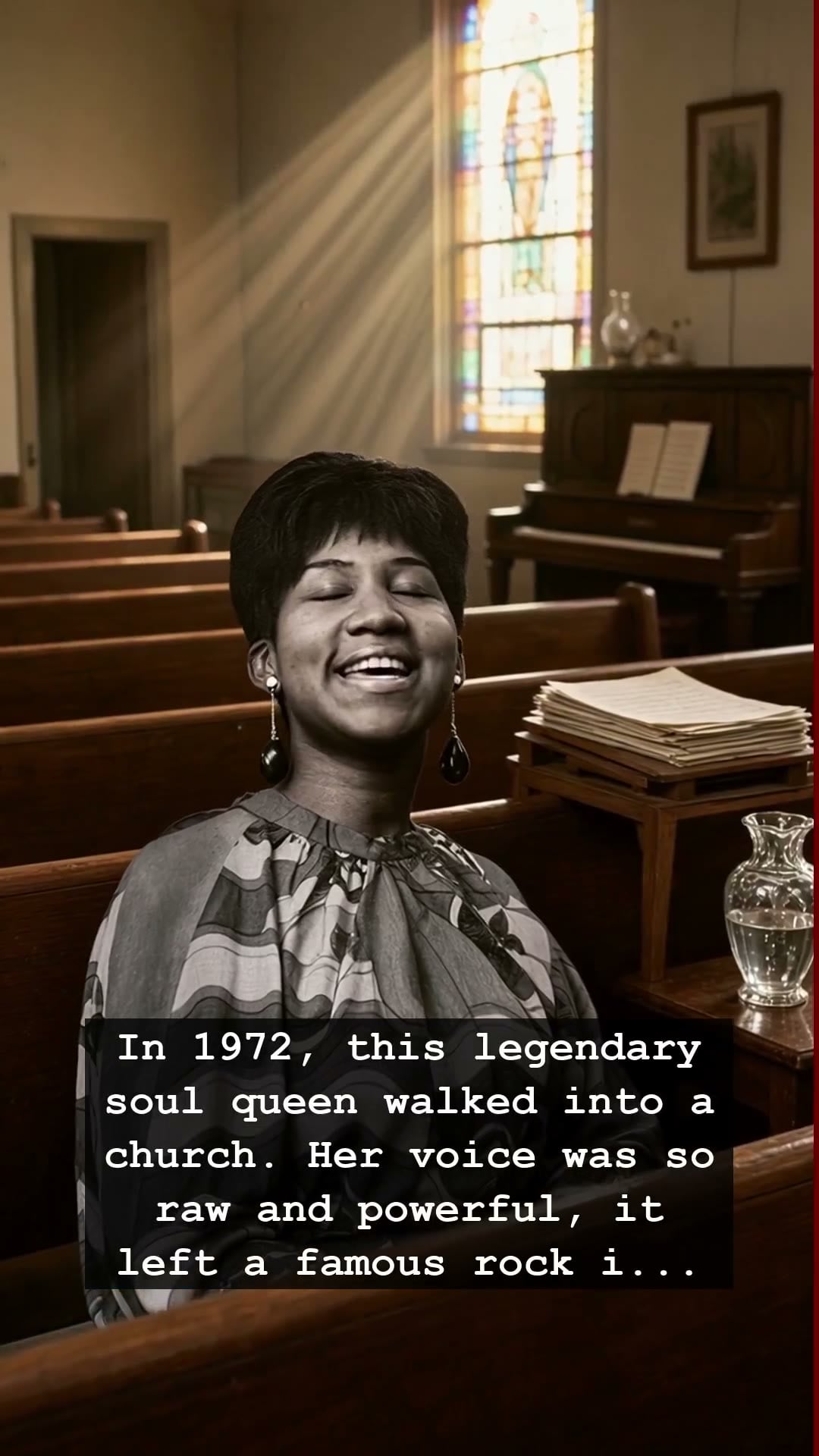
The air inside the New Temple Missionary Baptist Church in Los Angeles was thick with anticipation and the scent of southern humidity, despite being miles away from the deep South. It was January 1972, a time when the world was shifting, and the boundaries between musical genres were blurring under the weight of cultural revolution. Among the congregation sat a young, nervous Mick Jagger, who had traveled across the ocean to witness a force of nature. He was there to see Aretha Franklin, the undisputed Queen of Soul, as she prepared to record what would become the best-selling gospel album of all time, Amazing Grace. When she stepped toward the microphone, the room didn’t just go silent; it seemed to hold its breath, waiting for a miracle.
Aretha Franklin was already a titan of the charts, but this moment was different. She wasn’t singing for the polished, radio-friendly gloss of a studio production; she was returning to her roots in the pews where her voice had first been sharpened by the spirit. As she began the opening notes of the title track, the raw, sweat-drenched power of her delivery cut through the soul of everyone present. Mick Jagger, a man synonymous with the swagger of British rock, sat transfixed in the front row. Witnesses say he was left completely speechless, visibly moved by the sheer, unadulterated vulnerability of a woman who was turning her pain into a universal prayer.
This was the era of the Jukebox and the burgeoning influence of the counterculture, where Aretha Franklin acted as a bridge between the secular struggles of the civil rights movement and the divine comfort of the church. While the rest of the world was obsessed with the psychedelic haze of the late sixties or the polished arena rock that was beginning to take hold, Aretha demanded we return to the source. She was not merely performing; she was channeling history, trauma, and redemption. Her performance that night in 1972 remains a stark reminder that true greatness doesn’t require pyrotechnics or expensive stage design, but rather the courage to strip everything away.
Why does this moment still haunt us decades later? Perhaps it is because we live in a world of filtered perfection, yet we crave that same raw, unfiltered connection that Aretha Franklin provided. She was a woman who lived through immense personal turbulence and public scrutiny, yet whenever she touched a piano, the chaos vanished. That night in that crowded church, the Queen of Soul reminded the rock elite that soul music was not just a genre—it was a survival mechanism. It was the sound of humanity finding its footing on shaky ground.
Even today, listening to the recording of that performance, you can hear the foot-stomping and the fervent shouts of the congregation blending with her voice. It is a time capsule of an era when music was still a communal, sacred experience. Aretha Franklin wasn’t just a singer that night; she was a conduit for something much older and deeper than the charts. She proved that even the biggest rock legends could be brought to their knees by a voice that refused to compromise. As the final notes faded into the L.A. night, one thing was certain: music would never be the same again.