
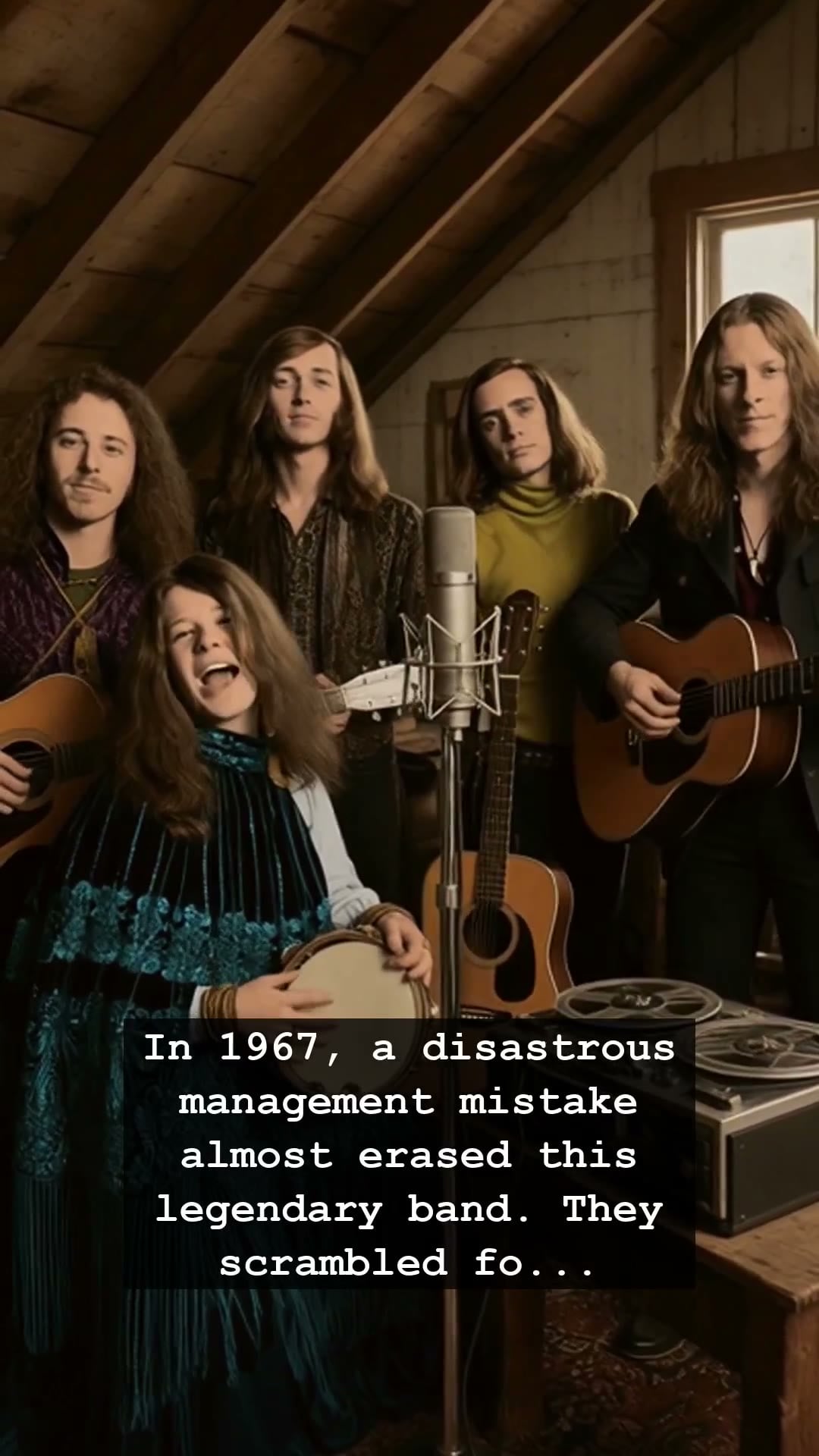
It was 1967, the Summer of Love, and the Monterey Pop Festival was supposed to be the launching pad for the next generation of American rock royalty. Among the lineup was Big Brother and the Holding Company, a blues-rock outfit from San Francisco fronted by a gravel-voiced, raw force of nature named Janis Joplin. But as they prepared for their big moment, a disastrous management mistake nearly erased them from the annals of music history before they even played a note. Due to a series of administrative oversights and a failure to secure professional filming rights, the band was initially refused a spot in the official documentary that would cement the festival’s legacy. It felt like a death sentence for a band trying to break out of the Bay Area underground.
Faced with the crushing reality that their performance might vanish into thin air, the band scrambled. They were desperate, angry, and fueled by a sense of injustice that only young, hungry musicians can possess. They demanded a second chance, a desperate second set that wasn’t on the original schedule. The organizers, perhaps sensing the brewing tension, relented. As they stepped onto the stage for that unscheduled performance, the atmosphere was thick with tension. The crowd, perhaps expecting just another local act, had no idea they were about to witness a seismic shift in musical history. There was no safety net, no guarantee of fame, only the raw, burning ambition of a group on the edge of oblivion.
When Janis Joplin leaned into the microphone to belt out Ball and Chain, the air in the arena seemed to stand still. Her voice was not just singing; it was a visceral, heartbreaking exorcism of pain and soul. She poured every ounce of her personal trauma and artistic yearning into that performance. The audience, previously lukewarm, was suddenly rendered completely spellbound. It was a masterclass in emotional vulnerability that transcended the standard tropes of the psychedelic rock era. In that moment, Big Brother and the Holding Company proved that talent and grit can overcome even the most incompetent bureaucratic failures.
The impact was immediate. That single, unscripted set catapulted the band from obscurity to international stardom almost overnight. It redefined what a frontwoman could be in a male-dominated rock landscape and left a permanent mark on the cultural consciousness of the late sixties. While the band would eventually fracture under the weight of their own meteoric rise and the internal conflicts that inevitably plague iconic groups, that night at Monterey remains their greatest triumph. It serves as a poignant reminder that history is often written in the moments of desperation, not the moments of calculated planning.
Today, the legacy of Big Brother and the Holding Company lives on, haunting our playlists and reminding us of a time when music felt dangerous, essential, and fiercely human. Whether you recall the golden age of Woodstock and the vibrant energy of the Fillmore or are just discovering the roots of blues-rock, the story of their Monterey miracle remains an essential chapter. It stands as a testament to the power of a single performance to alter the trajectory of rock and roll forever. Turn up your favorite record, close your eyes, and listen for the ghosts of 1967, waiting to be heard all over again.