
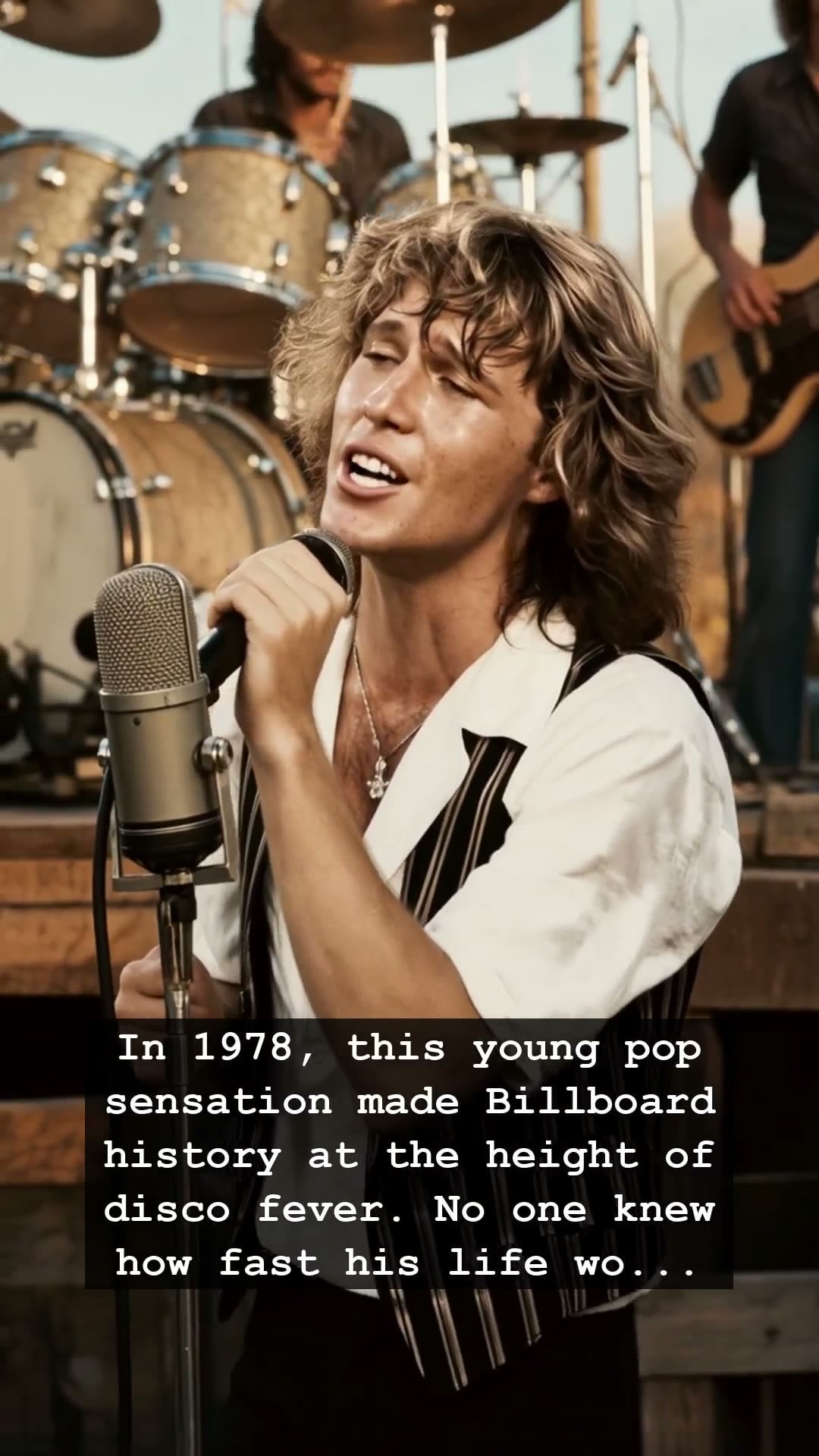
In 1978, the neon pulse of the disco era found its brightest, most fragile star in the form of Andy Gibb. With his flowing blonde hair and an infectious, wide-eyed smile, he didn’t just climb the Billboard charts; he shattered them. At the height of the dance-floor frenzy, he became the first solo male artist to have three consecutive number-one singles hit the top spot in the United States. To the millions watching from the golden glow of their television screens, he looked like a god of the Studio 54 era, a man who had successfully captured the lightning of pop stardom in a bottle. Yet, beneath the shimmering glitter of the disco ball, a dark and relentless shadow was already beginning to close in.
Andy Gibb was the younger brother of the legendary Bee Gees, living in the long, formidable shadow of Barry, Robin, and Maurice. While he possessed a vocal tone that was undeniably angelic, the pressure to maintain the family legacy proved to be a weight no young man could carry for long. During the late seventies, as the world moved from the organic sounds of the early decade to the synthesized, high-octane beat of disco, Andy became the face of a generation. Fans screamed his name at sold-out arenas, and his posters adorned bedroom walls from New York to London. He was the boy who had everything, yet he was quietly losing the most essential thing of all: himself.
The tragedy of Andy Gibb lies not in his failure, but in the crushing speed of his success. The music industry of the 1970s was a volatile beast, fueled by excess and a lack of boundaries. As the disco era reached its zenith, the lifestyle that accompanied it began to demand a heavy toll. For Andy, the glitz and glamour were merely masks for an escalating battle with substance abuse and deep-seated insecurities. The same industry that embraced him as a golden boy quickly turned cold when his personal struggles began to manifest as missed rehearsals and erratic public appearances. The transition from being a pop sensation to a tabloid headline was jarring and painful to watch.
We look back at his music today—tracks like Shadow Dancing or I Just Want to Be Your Everything—and we hear more than just catchy hooks. We hear the haunting vulnerability of a man who was desperately trying to find his own identity in a world that only wanted him to be a clone of his famous siblings. He was a symbol of an era defined by excess, and his sudden decline mirrored the burnout of the disco movement itself. By the time the synth-pop and new wave sounds of the mid-eighties began to take over, Andy had largely drifted into the periphery, left to grapple with the ghosts of his own golden years.
Even decades later, the story of Andy Gibb remains one of the most poignant cautionary tales in American music history. He was a talent taken far too soon, a victim of the very fame he chased so relentlessly. When we spin those old records today, the nostalgia is bittersweet. We remember the boy who could do no wrong, forgetting that behind every hit single was a human heart struggling to keep its rhythm. It is a reminder that the stars that burn the brightest often leave the longest, darkest shadows behind when they finally fade away.