
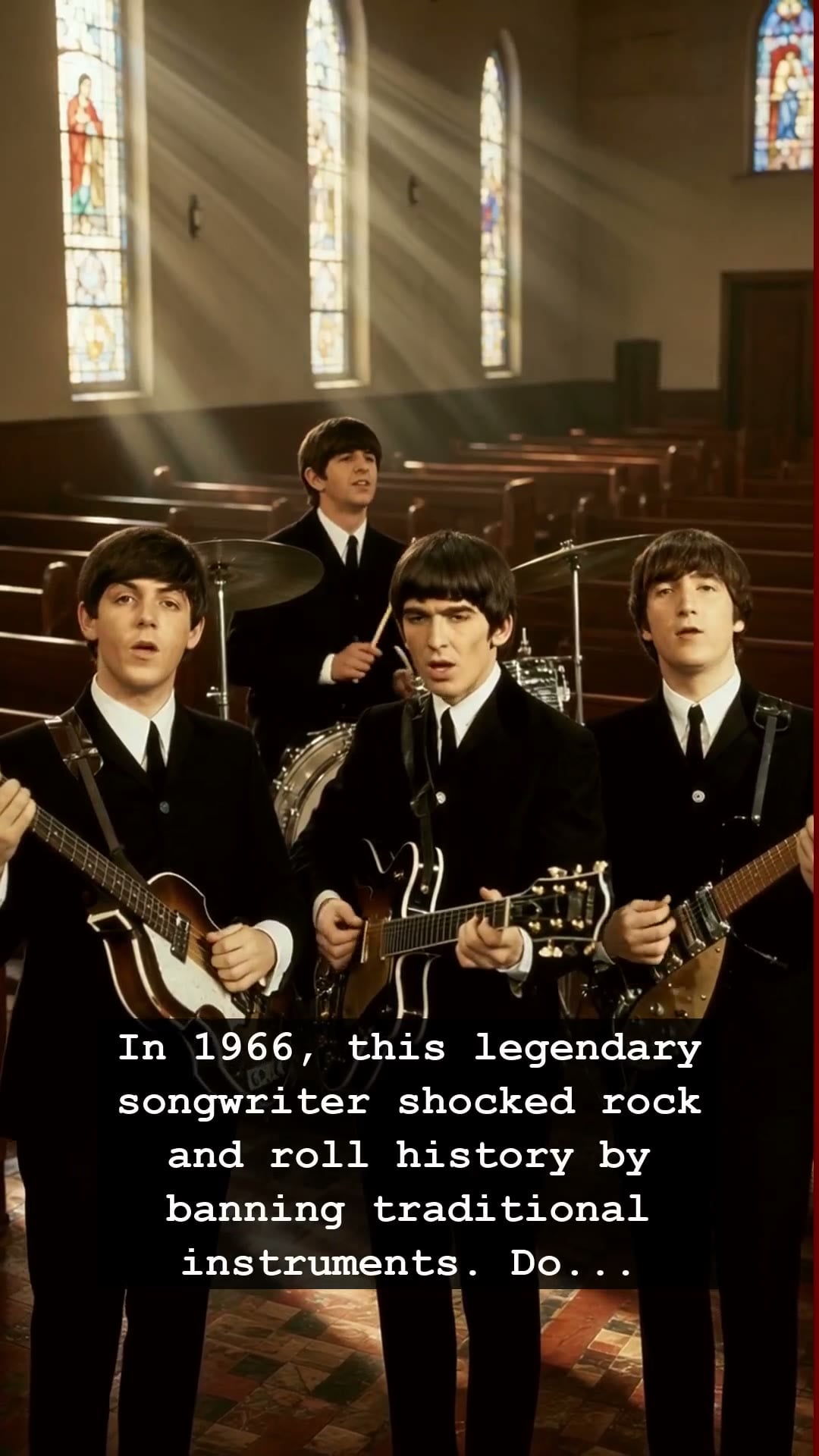
It was 1966, a year when the air in London felt thick with change and the boundaries of what pop music could achieve were being shattered. Amidst the swirling psychedelic revolution, Paul McCartney made a daring, almost blasphemous decision that would echo through the decades. In the hallowed halls of Abbey Road, he chose to silence the electric guitars and drums that defined the era. Instead of the familiar roar of the rock and roll circuit, he introduced a sharp, mournful classical string octet to anchor a song that would become a standard for generations to come. When listeners first heard the opening bars of Eleanor Rigby, they did not hear a standard pop ballad; they heard a haunting, cinematic soundscape that dared to blur the lines between high art and the jukebox hits of the time.
The genius of Paul McCartney lay in his refusal to play it safe. While his contemporaries were busy chasing the surf-rock craze or embracing the loud, distorted grit of emerging garage bands, McCartney turned inward. He wanted to strip the song to its bare, existential bones. The decision to record with a string octet—arranged by George Martin—was a radical act of rebellion against the status quo of the mid-sixties. There were no synthesizers, no complex studio trickery, just the raw, weeping vibration of violins, violas, and cellos. It was a bold move that left many in the industry breathless, wondering if the man who helped define the pop melody had finally lost his mind or discovered something entirely new.
Looking back from the digital age, it is hard to fathom the sheer shock this caused. In an era dominated by the growing influence of the transistor radio and the early buzz of the counterculture, a song about lonely, forgotten people struck a nerve that resonated far deeper than any dance track. Paul McCartney was not just writing a melody; he was crafting a miniature operatic tragedy. The lyrics, detailing the isolation of Eleanor Rigby and Father McKenzie, mirrored the alienation felt by a generation caught in the transition between the post-war order and the unpredictable chaos of the late sixties. It was a masterclass in storytelling that transformed the humble pop song into a literary piece of art.
This pivotal moment in 1966 serves as a reminder of why we remain so obsessed with this golden age of music. The tension, the artistic risk, and the willingness of icons like Paul McCartney to dismantle their own sound to find something more authentic is what keeps these records spinning on our turntables today. Behind the fame and the flashbulbs, there was a relentless drive for innovation that defined the soul of mid-century rock. That single experiment with a string octet forever changed the sonic landscape of the world, proving that true legends do not just follow trends; they rewrite the rules of music history entirely.