
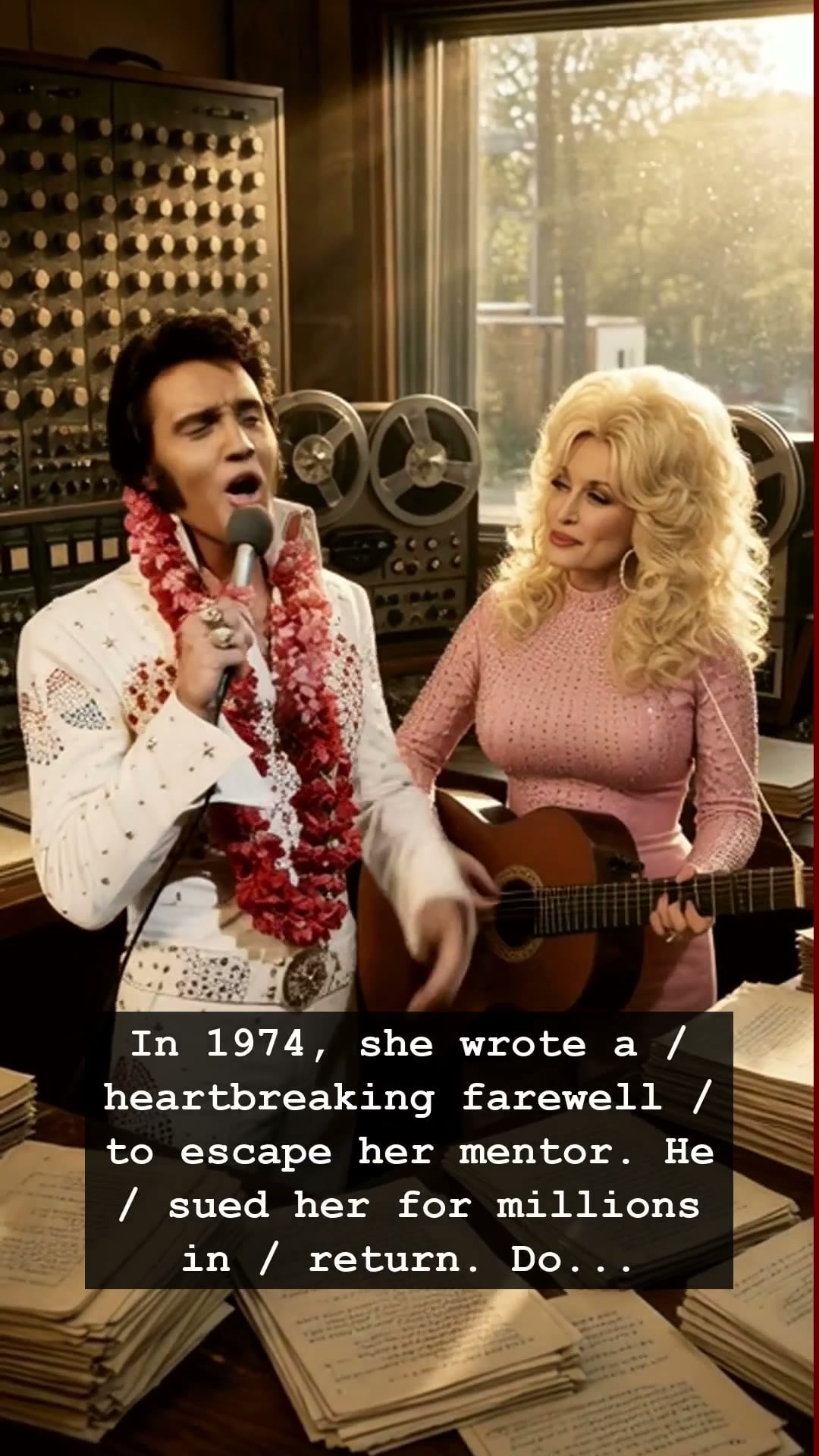
In the golden era of country music, where the neon lights of the Grand Ole Opry dictated the boundaries of fame, one woman was quietly orchestrating the greatest escape in music history. By 1974, Dolly Parton was no longer just a rising star under the wing of her mentor, Porter Wagoner. She was a powerhouse talent suffocating under the weight of a professional and personal dependency that threatened to extinguish her creative fire. The story of her departure is not just a footnote in a biography; it is a dramatic masterclass in reclaiming one’s own narrative amidst the rigid structures of the Nashville establishment.
For years, Porter Wagoner had been the gatekeeper of the Dolly Parton image. He had plucked her from obscurity, giving her a platform on his television show, yet as her popularity soared, the mentor-mentee dynamic curdled into a stifling cage. Dolly Parton knew that to evolve, she had to leave. When she finally handed him a handwritten note—a farewell composed of pure emotion—she wasn’t just quitting a show; she was severing a tether that defined her public existence. The fallout was swift and bitter. Wagoner, feeling betrayed by the protégé he had built, slapped her with a three million dollar lawsuit, a staggering sum in the mid-seventies that was clearly intended to break her spirit.
But the story of 1974 is not defined by the lawsuit; it is defined by the song she left behind. Sitting down with her guitar, Dolly Parton channeled the profound pain of the separation into a track that would become one of the most recognizable ballads in history: I Will Always Love You. It was an unconventional goodbye. It wasn’t a bitter protest song or a declaration of war, but a gentle, heartbreaking acknowledgment that some paths simply must diverge. When she played the song for Wagoner, it was so deeply moving that even he was reportedly reduced to tears. It stands as a testament to the fact that grace can be the ultimate act of rebellion.
This era, sandwiched between the fading influence of the jukebox and the rising dominance of pop-country crossover, was a time when artists were beginning to demand autonomy. While the world was dancing in the mirrors of Studio 54 or getting lost in the synth-heavy sounds of the changing decade, Dolly Parton was fighting a very personal, very high-stakes battle. She chose the music over the lawsuit, and in doing so, she taught her audience that your legacy is determined not by those who claim to own you, but by the art you create when you are finally free.
Decades later, that 1974 moment still resonates with anyone who has ever had to leave a place, a person, or a dream that no longer fit. Her transition from a country protégé to a global icon serves as a reminder that the most difficult goodbyes often lead to the most enduring legacies. Dolly Parton didn’t just walk away from the lawsuit; she walked toward a future where she was the undisputed master of her own song. It is a story of resilience that continues to capture the hearts of every generation that listens.