
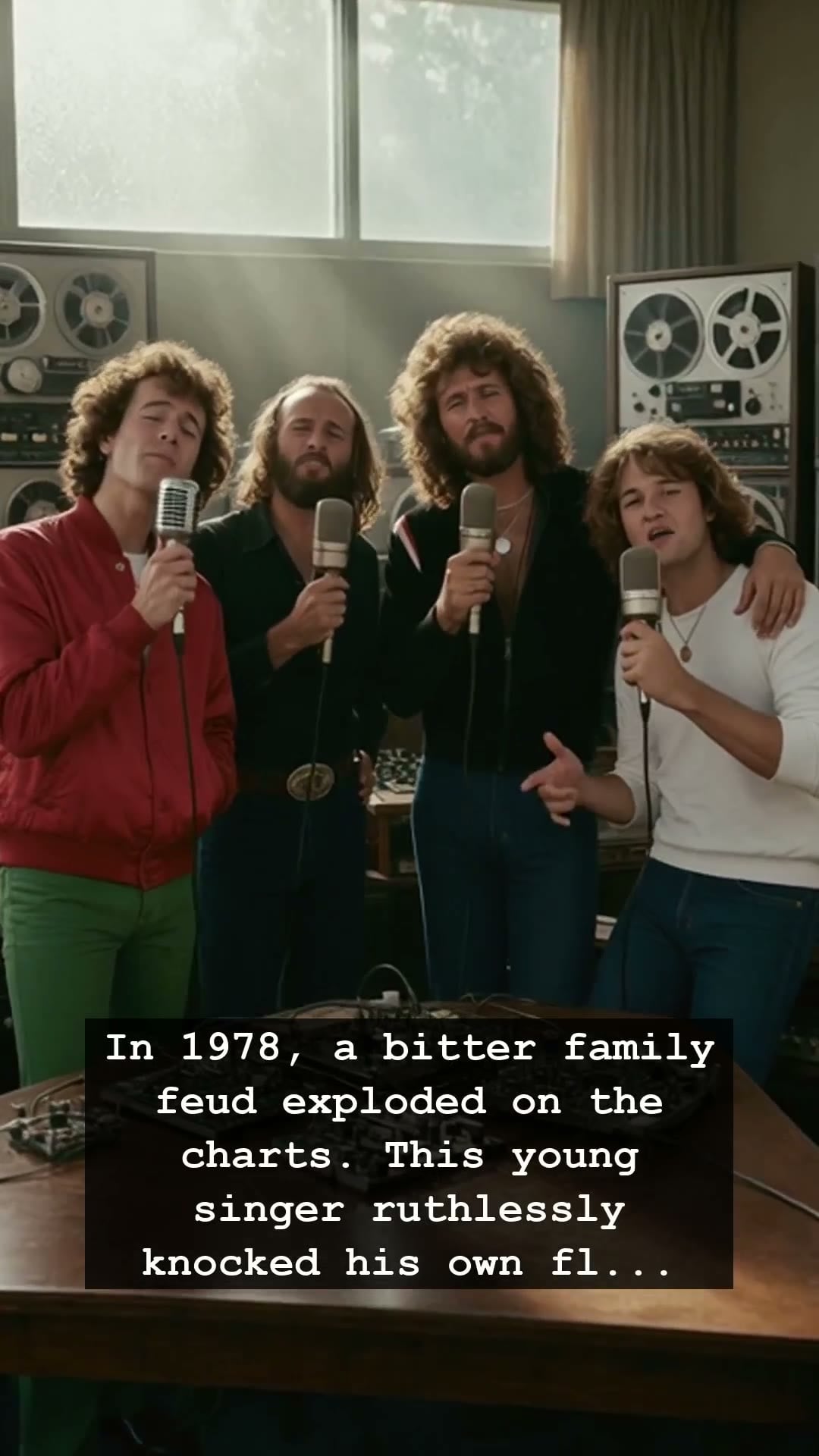
It was 1978, the golden age of the Bee Gees, and the world was spinning to the beat of the disco craze. Glittering mirror balls turned the dance floors of Studio 54 into constellations of light, while the Bee Gees reigned supreme over the Billboard charts. But beneath the polished harmonies and the infectious rhythm of the Saturday Night Fever soundtrack, a strange, internal drama was unfolding. A young, golden-haired sensation was about to do the unthinkable: he was going to knock his own brothers, the legendary Bee Gees, off the number one spot.
That young star was Andy Gibb. He was the younger brother of Barry, Maurice, and Robin, yet he possessed a charisma and a boyish charm that felt tailor-made for the teen idol phenomenon of the late seventies. While his brothers were busy cementing their status as the titans of disco, Andy was busy recording his debut album, Flowing Rivers. He was a force of nature, driven by a desperate need to carve out his own identity in the massive shadows cast by his siblings. It was a rivalry not born of malice, but of the crushing pressure to prove he was more than just a footnote in his brothers’ extraordinary musical journey.
When Andy Gibb released his smash hit (Love Is) Thicker Than Water, it climbed the charts with terrifying speed. In March 1978, he accomplished a feat that felt like a Shakespearean tragedy played out through synthesizers and radio airwaves. He dethroned the Bee Gees’ Stayin’ Alive, securing the top position for himself. It was a historic moment, a family feud that played out in living rooms across America, with fans tuning in to the radio, unaware that the chart battle was essentially a private clash of bloodlines. The media buzzed with speculation about the tensions this caused, but for the Gibb family, it was a complex dance of pride and competition.
Behind the glitz, however, the life of Andy Gibb was far from the perfect portrait of a pop star. The era was defined by the excess of the seventies, where the lines between stardom and self-destruction were frequently blurred by the fast-paced lifestyle of touring and recording. Andy struggled significantly under the weight of his meteoric rise. His story serves as a poignant reminder of the dark side of fame, where the pressure to maintain a number-one status can leave even the most gifted artists feeling isolated, despite the screams of adoration from sold-out arenas.
Decades later, we still look back at the 1978 chart takeover as one of the most fascinating intersections of family and fame. Andy Gibb remains a tragic, yet incredibly talented figure, a relic of a time when the radio was the pulse of our culture and the Bee Gees were the architects of our sound. His brief but brilliant shine reminds us that even when you reach the very top, the climb is often fueled by battles we choose to fight with those we love the most. Do you remember where you were when you first heard the voice of the young man who broke his own brothers’ hearts?