
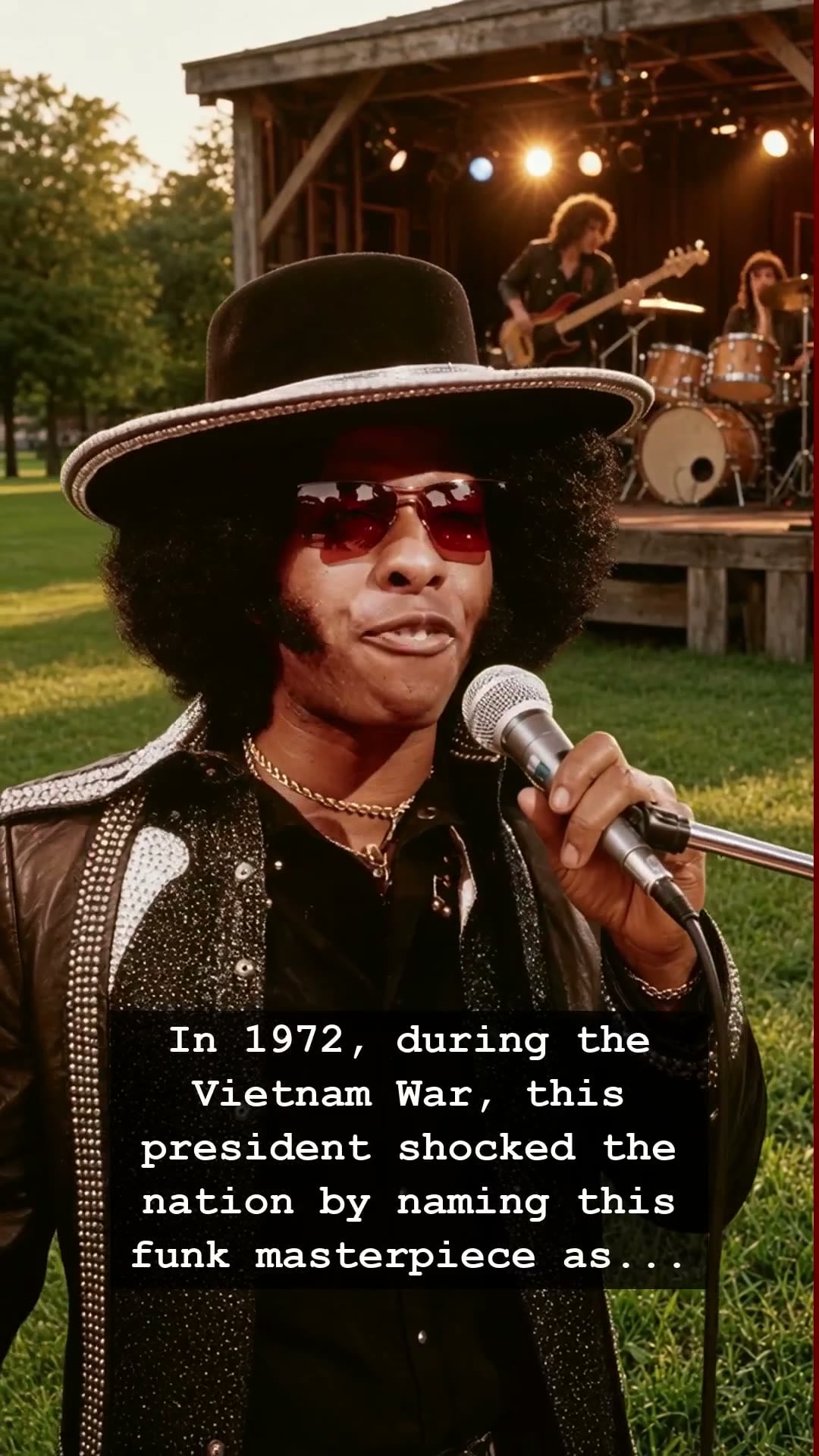
In 1972, the American landscape was fractured. The Vietnam War was tearing at the seams of society, leaving a nation exhausted and deeply divided. Amidst this backdrop of protest and uncertainty, a bizarre political paradox emerged that still baffles music historians today. President Richard Nixon, a man not typically associated with the counterculture revolution, shocked the public when he declared that his absolute favorite song was none other than the infectious, genre-bending masterpiece, Family Affair, by the legendary Sly and the Family Stone. It was a surreal moment where the rigid corridors of the White House collided with the kaleidoscopic energy of the psychedelic funk movement.
Sly and the Family Stone were the architects of a musical evolution that defied categorization. Led by the enigmatic Sly Stone, the band was a melting pot of race, gender, and genre, bringing together a revolutionary sound that merged soul, rock, and gospel into something entirely new. Their music was the heartbeat of a generation that frequented the dimly lit clubs of the era and felt the pulse of the changing times. By the time they hit the stage at Woodstock, they were already icons, but by 1972, the band was beginning to fray under the immense pressure of global fame and the heavy toll of the rock and roll lifestyle.
The inclusion of Family Affair in the President’s personal favorites remains a haunting historical footnote. It highlights the power of Sly and the Family Stone to transcend the barriers of their era. While the song itself is a melancholic meditation on fractured family relationships and the coldness of human connection, its adoption by the political establishment created a jarring juxtaposition. To those who were there, listening to the hit on a portable radio or a jukebox in a corner diner, the song represented the raw truth of the struggle. For Nixon to champion it was either a calculated attempt to appear culturally relevant or a genuine appreciation for the hypnotic, drum-machine-driven groove that had captivated the nation.
Yet, the glory of Sly and the Family Stone was often overshadowed by the shadows that followed them. Behind the upbeat, infectious rhythms lay a darker reality of internal friction and missed performances that became as infamous as their hits. The band’s descent into internal conflict mirrored the societal unrest of the 70s, proving that even the most brilliant constellations can burn out when the atmosphere becomes too thin. Despite the controversy, their contribution remains untouchable. They were the bridge between the idealism of the late sixties and the grittier, more cynical soul that defined the early seventies.
As we look back through the lens of nostalgia, the music of Sly and the Family Stone serves as a time capsule of an era defined by its contradictions. Whether you remember the song echoing from a crowded discotheque or a quiet bedroom, its impact on the cultural fabric is undeniable. The story of Nixon’s peculiar musical preference is just one chapter in the larger, storied life of a band that changed everything. Do you still remember where you were when those opening chords first pulled you into the funk?