
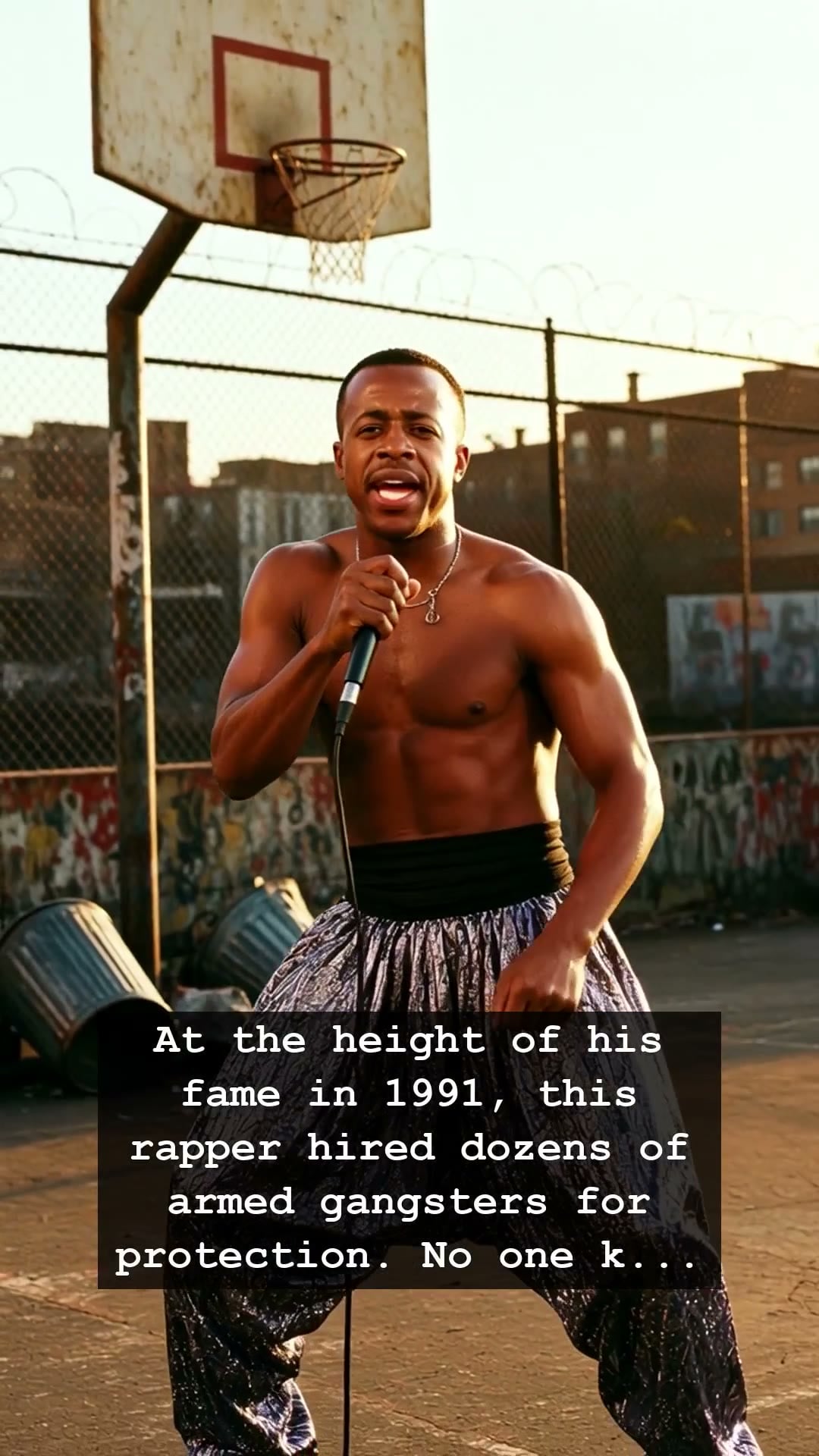
In 1991, the world belonged to MC Hammer. With his signature parachute pants and infectious dance moves, he wasn’t just a rapper; he was a global phenomenon who brought hip-hop to the mainstream living room. But behind the glitz of MTV rotations and sold-out arena tours, a darker, more desperate narrative was unfolding. At the absolute peak of his fame, the man who owned the charts was living in a state of constant, paranoid terror. Behind the scenes of his multi-million-dollar empire, MC Hammer had hired dozens of armed gangsters for his personal protection, a decision that signaled a man who knew his kingdom was built on shifting sand rather than solid rock.
The public saw the flash, the jewels, and the unstoppable momentum of his success, but they failed to see the rot spreading within his massive entourage. It was a time when the music industry operated like the Wild West, and MC Hammer was its most extravagant sheriff. He was spending money with the recklessness of a lottery winner, maintaining a payroll that would have bankrupted a small country. While the world danced to the beat of U Can’t Touch This, the rapper was quietly bleeding out, trapped in a cycle of excess that made his financial collapse inevitable. The irony is haunting; he had built a fortress of security, yet the real threat was not an outside enemy, but the staggering weight of his own unsustainable lifestyle.
To understand the fall of MC Hammer, one must look back at the early 90s, an era defined by extreme consumption. Walkmans were blasting his hits on every street corner, and the excess of the 80s had bled into a decade of bold, colorful, and often reckless pop culture. MC Hammer represented the ultimate dream of that era: the rags-to-riches story that fueled the American imagination. He brought a sense of spectacle that hadn’t been seen since the height of disco, transforming hip-hop into a high-production circus that demanded constant fueling. However, the costs were astronomical, and his attempts to maintain his image via an intimidating security force only highlighted his growing insecurity.
The decline was swift and unforgiving. When the bubble finally burst, it revealed a landscape of debt and broken promises. Looking back, the story of MC Hammer serves as a sobering reminder of the volatility inherent in the music industry. His journey from the top of the mountain to the reality of bankruptcy is a cautionary tale of how quickly the spotlight can shift. It reminds us that behind the glossy album covers and the energetic stage presence, artists are often human beings struggling against the crushing weight of their own personas.
Today, we look back at his music with a sense of warm, nostalgic fondness, remembering the man who made us all want to wear hammer pants. Yet, we cannot ignore the ghost of the man who walked in the shadows of his own success. The history of American music is filled with such highs and lows, but few stories capture the fragile nature of fame quite like this one. As the final notes of his classic tracks fade, we are left with a story that feels as dramatic and complex as the man himself. Next time you hear the beat drop, remember the complex soul beneath the glitter.