
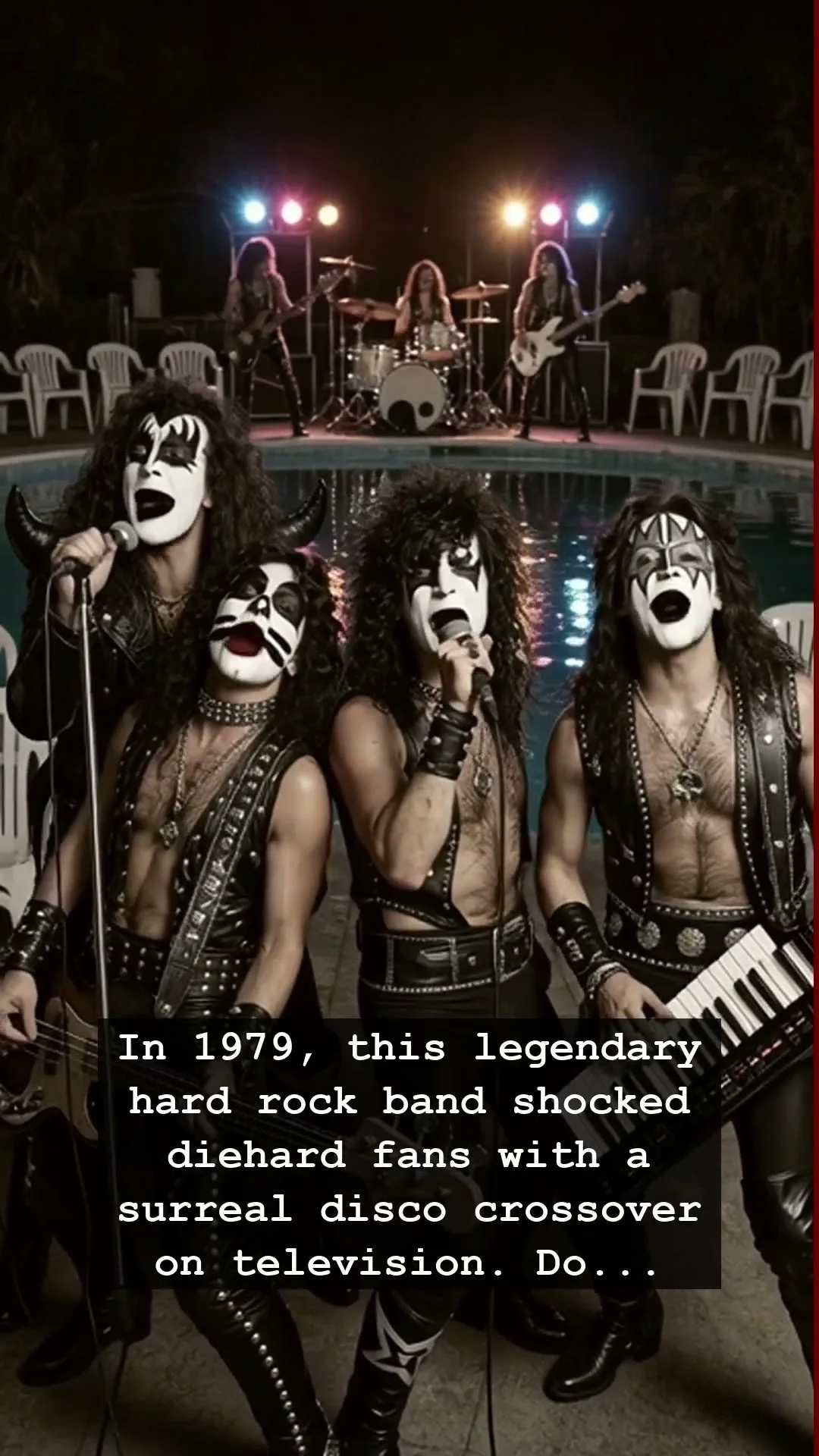
It was 1979, a year when the musical landscape of America felt like a battlefield. On one side, the neon-drenched glitter of Studio 54 demanded the world dance to a steady four-on-the-floor beat, and on the other, the thunderous, grit-filled power of hard rock reigned supreme. The fans of KISS were soldiers of the latter, worshippers of the face paint, the pyrotechnics, and the aggressive sonic assault that defined the band. So, when the leather-clad gods of hard rock appeared on European television that year, the shock was nothing short of seismic. It was a moment that felt like a betrayal to the purists, as KISS stepped away from their heavy metal roots to unleash a surreal disco crossover that left the rock world reeling.
Picture the scene: Paul Stanley, Gene Simmons, Ace Frehley, and Peter Criss, adorned in their iconic, menacing makeup and spiked leather armor, standing under the bright, sterile lights of a foreign television studio. They weren’t performing a high-octane anthem like Rock and Roll All Nite. Instead, they were delivering a groove that sounded suspiciously like the charts-topping dance music they had spent years mocking. The irony was suffocating. While the band maintained their intimidating visual persona, the music beneath it was a polished, infectious disco beat designed for the mirrored ball era. It was a bizarre, jarring juxtaposition that felt like a nightmare to the denim-and-leather crowd.
Behind the curtain, the decision to pivot toward disco was fueled by a mixture of commercial desperation and the undeniable cultural dominance of the genre at the time. With the rise of the Walkman and the shifting tastes of the late seventies, even the titans of arena rock felt the pressure to adapt or wither away. Gene Simmons would later reflect on the chaotic internal dynamics of the band, but at that moment, the move felt like a calculated gamble to keep KISS relevant in an industry that was rapidly changing. The fans did not see a masterclass in versatility; they saw a desperate grab for airplay, a blurring of lines that felt like a sacrilege to the true spirit of hard rock.
Looking back from our modern vantage point, this peculiar chapter serves as a quintessential artifact of the late seventies musical identity crisis. It represents the height of the friction between the rebellious grit of rock and the polished perfection of the discotheque. While it was mocked and derided at the time, it remains a fascinating study in the vulnerability of icons. Even the biggest bands, draped in layers of larger-than-life performance art, were not immune to the gravitational pull of the changing trends.
Today, the story of KISS venturing into the disco realm stands as a testament to the messy, complicated nature of fame and survival. It is a reminder that even the most cemented legacies are forged through trial, error, and the occasional public disaster. Whether you view that performance as a moment of artistic cowardice or a bold, experimental pivot, it remains an unforgettable slice of rock history that still gets us talking over four decades later. Do you remember where you were when you first heard the disco beat behind that legendary paint?