
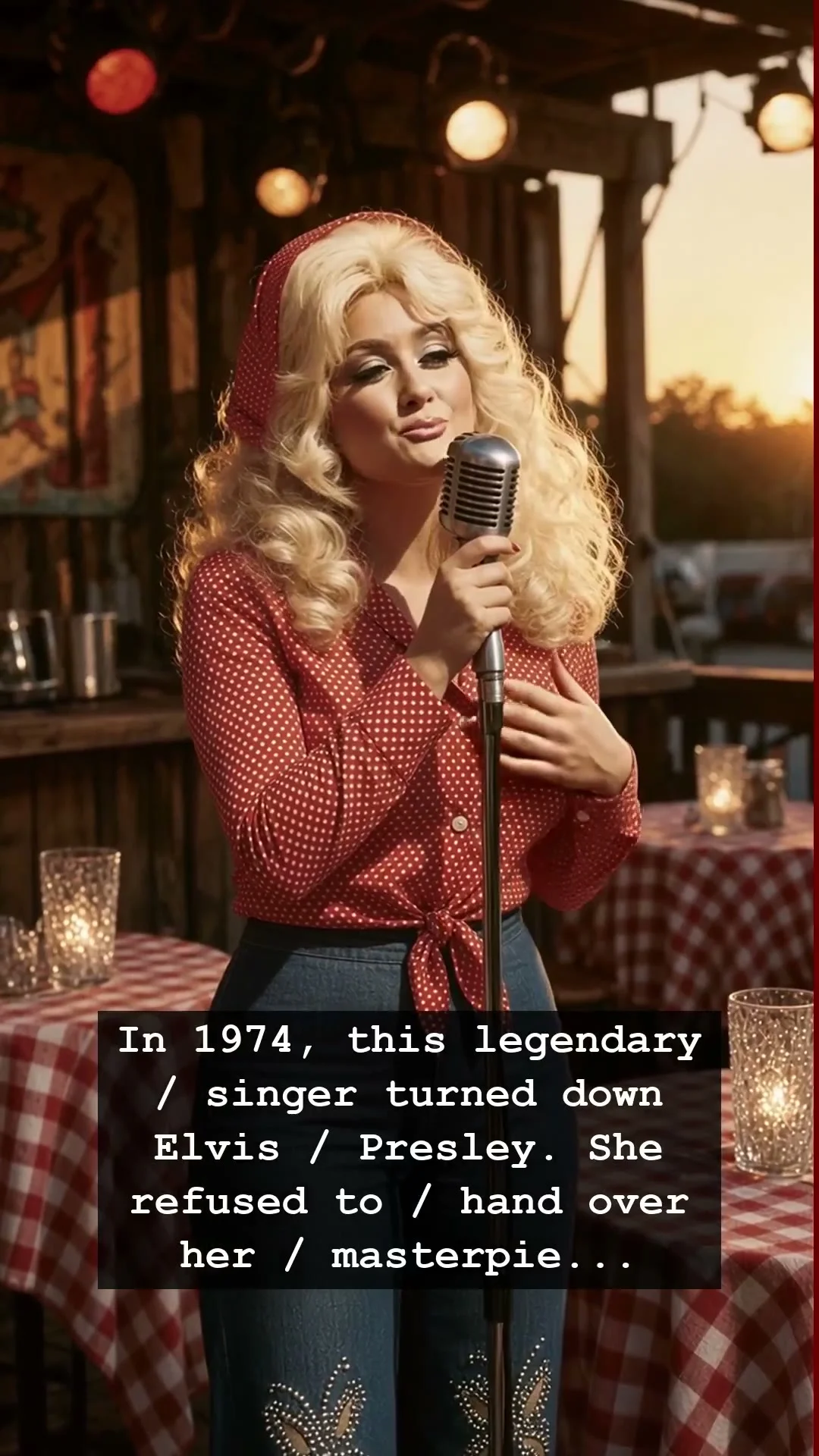
The year was 1974, and the air in the American music industry was electric with the hum of jukeboxes and the high-stakes negotiations of titans. At the center of this storm stood the King himself, Elvis Presley. He was a force of nature, a cultural earthquake who had already defined generations of sound. He wanted to record a cover of a new song that was beginning to capture hearts everywhere, a track written by a rising country star named Dolly Parton. The song was I Will Always Love You. It seemed like the ultimate golden ticket for any songwriter, a guaranteed path to the stratosphere of fame. But there was a catch, and it was a bitter pill that could have broken a lesser artist.
Elvis wanted to record the song, but his manager, Colonel Tom Parker, insisted on a standard industry practice at the time: Elvis would take half of the publishing rights. For Dolly Parton, this wasn’t just a business negotiation; it was a matter of survival and soul. She was a young woman trying to build a legacy, not just a career. Behind the glitz of the stage and the neon lights of the era, she understood the cold reality of the industry. She had worked too hard to let her most personal masterpiece slip away into the corporate machine that often swallowed artists whole. With a trembling voice but a heart of steel, she made the agonizing choice to say no to the King of Rock ‘n’ Roll.
Looking back at that moment, it feels like a scene from a classic Hollywood drama. Elvis was disappointed, and those around him were likely shocked that anyone would turn down the King. Yet, Dolly Parton knew that her song was her family’s future, a precious asset that she needed to protect. She chose to prioritize her long-term ownership over the short-term thrill of having a legend put his stamp on her work. It was a defiant act of creative independence in a decade where women were often told to be grateful for whatever crumbs the industry offered them.
History ultimately vindicated her choice in the most spectacular fashion. When Whitney Houston later transformed the song into a global anthem, the royalties flowed back to the woman who wrote it, securing her family’s prosperity for generations. That single decision in 1974 became a lesson in the power of holding your ground when the pressure to fold is at its peak. It highlights the stark difference between being a star and being an artist who truly owns their narrative.
Today, when we listen to that iconic track, we are not just hearing a melody; we are hearing the resolve of a woman who stood up to a giant. The story of Dolly Parton and Elvis Presley remains a haunting reminder of the grit required to survive the golden age of American music. It is a testament to the fact that sometimes, the most important music is the music we refuse to sell. Does this shift how you hear the song today?