
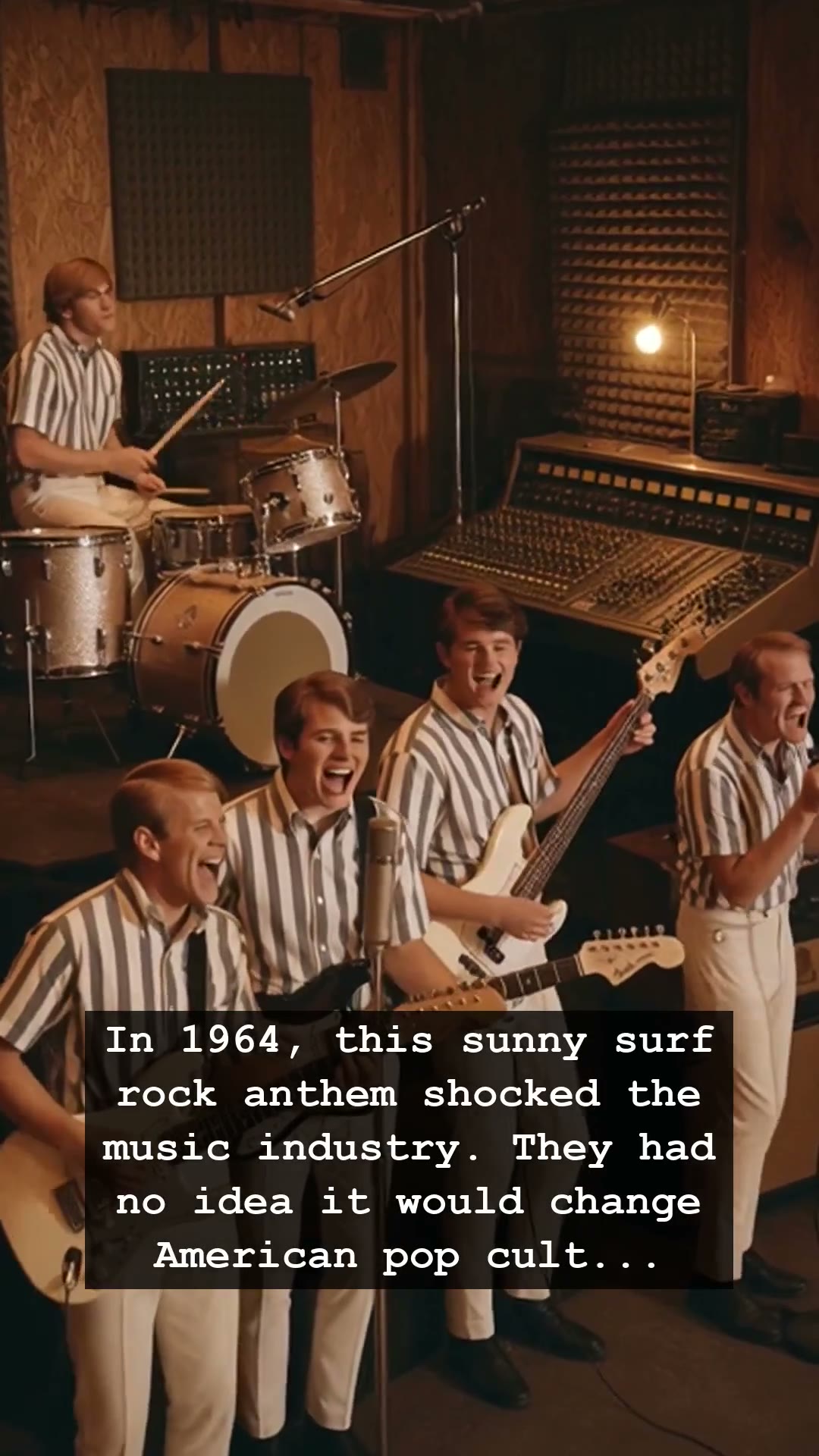
In 1964, the airwaves were dominated by the stiff, predictable rhythms of the post-war era, but then a seismic shift occurred. From every neon-lit jukebox in America, a sound erupted that felt like a splash of cold saltwater against a summer sky. It was I Get Around by The Beach Boys, a track that didn’t just top the Billboard charts; it shattered the glass ceiling of what pop music was allowed to be. Music executives, accustomed to safe melodies, watched in absolute terror and awe as this sunny surf rock anthem bypassed every rule in the industry handbook, signaling a new age for the American teenager.
At the center of this storm was Brian Wilson, the mastermind whose internal world was far more complex than the harmonies he crafted. While The Beach Boys were marketed as the quintessential California dream—complete with matching striped shirts and innocent smiles—the reality behind the studio glass was a masterclass in artistic obsession. Wilson treated the recording studio as his personal instrument, layering vocals and experimental production techniques that would eventually lead to the psychedelic genius of Pet Sounds. Yet, in 1964, the focus was on the raw, infectious energy of the surf rock sound that defined a generation.
The genius of The Beach Boys lay in their ability to translate the feeling of freedom into a three-minute pop song. For a generation gripped by the transition between the post-war domesticity and the impending social revolutions of the late sixties, the band provided an escape. They weren’t just singing about cars and surfing; they were singing about the ephemeral nature of youth. When you hear those iconic vocal harmonies today, you are instantly transported back to a time of Walkmans, open highways, and a sense of optimism that felt boundless, even if the shadow of fame was already beginning to loom over the band.
Behind the golden façade, however, the pressure of maintaining this sunny persona began to take its toll. The rivalry between band members and the constant demand for more hits fueled a cycle of anxiety and perfectionism. The Beach Boys lived through the era of Woodstock and the transition into a darker, more experimental musical landscape, yet they remained anchors of a specific, idealized American nostalgia. The friction between their public image of clean-cut boys next door and the deep, often turbulent emotional labor required to sustain that image remains one of the most compelling stories in rock history.
Decades later, the legacy of The Beach Boys remains etched into the bedrock of modern music. They proved that pop music could be both commercially dominant and artistically daring. Whether you are a fan who remembers the hum of a needle hitting a vinyl record or a new listener discovering the sophisticated layers of their arrangements, the magic is undeniable. These songs are more than just vintage artifacts; they are the soundtrack of a dream that, for better or worse, defined who we were. Next time you catch a glimpse of a summer sunset, listen closely for those harmonies—they are still changing the world.