
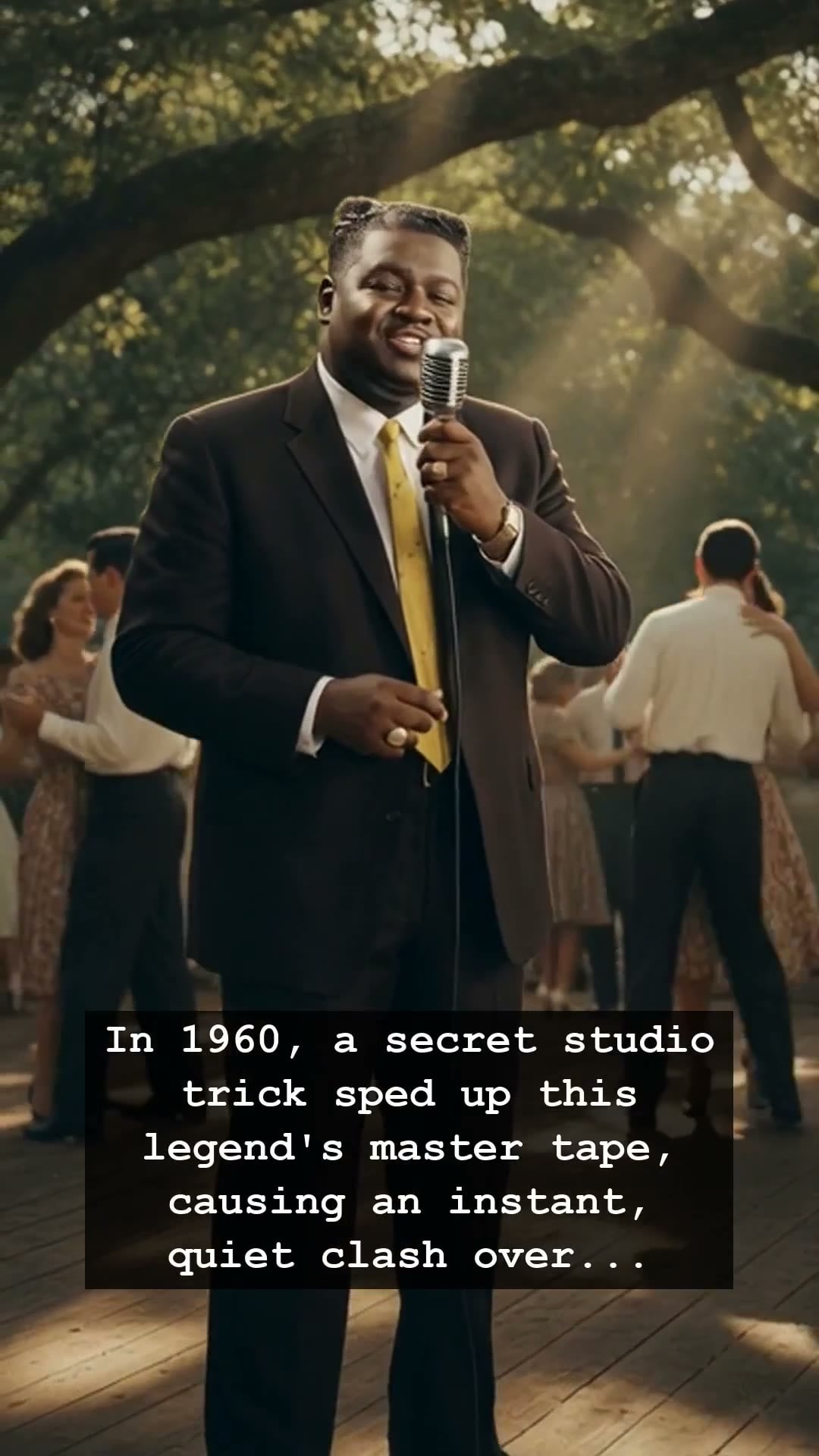
The year was 1960, and the American musical landscape was shifting beneath our feet. Rock ‘n’ Roll was moving from the smoky, intimate dance halls into the glossy, high-production era of the early sixties. Amidst this transition stood the legendary Fats Domino, a man whose gentle, rolling piano style had defined the rhythm of a decade. But behind the scenes, away from the warm glow of the Jukebox and the adoring crowds, a quiet storm was brewing inside the sterile walls of the recording studio. It was a secret manipulation of his master tapes that would trigger a clash between artistic soul and corporate ambition.
Fats Domino was never a man of ego; he was a man of rhythm. With his signature boogie-woogie piano and that inimitable, laid-back New Orleans vocal drawl, he had captured the hearts of millions. However, the executives at his label were growing restless. They were obsessed with the changing tides of radio—an era where pop-friendly, uptempo tracks were becoming the key to chart dominance. Without his knowledge, they decided that the signature sound of Fats Domino needed a desperate, artificial lift to keep pace with the evolving industry standards.
In a move that could only be described as a betrayal of the artist’s natural essence, studio engineers secretly sped up his master tapes during the mixing process. When Fats Domino first heard the final cut, he was confronted with a voice that didn’t sound quite like his own. It was unnaturally bright, sharper, and arguably frantic. The warmth that defined his classic recordings had been sacrificed for a brittle, high-frequency energy. This wasn’t just a technical adjustment; it was an attempt to remold an authentic legend into a product that fit the increasingly sterilized pop mold of the time.
This incident sparked a quiet but intense backstage clash. Fats Domino was a professional, but he was no fool. He recognized that the soul of his music lay in the gravity of his performance, not in the frantic tempo of a sped-up tape. The disagreement pitted his instinctive, blues-infused roots against the cold calculation of executives who prioritized marketability over the integrity of a musical icon. It was a tension felt by many artists during this era, as the transition from raw, live-energy performances to the era of polished radio hits created an inevitable rift between the studio and the stage.
Today, when we listen to the timeless catalog of Fats Domino, we are reminded of why his music still resonates. He was the bridge between the old-world swing and the explosive birth of rock. His struggle in 1960 serves as a poignant reminder of the price of fame and the constant battle to protect one’s creative spirit in an industry that rarely pauses to respect the artist’s vision. Even after all these decades, the name Fats Domino remains synonymous with the heart and soul of early American rock, a testament to an artist who survived the industry’s games to leave a legacy that no studio trick could ever truly diminish. Next time you hear one of his hits playing, take a moment to appreciate the man who fought to keep the soul in the sound.