
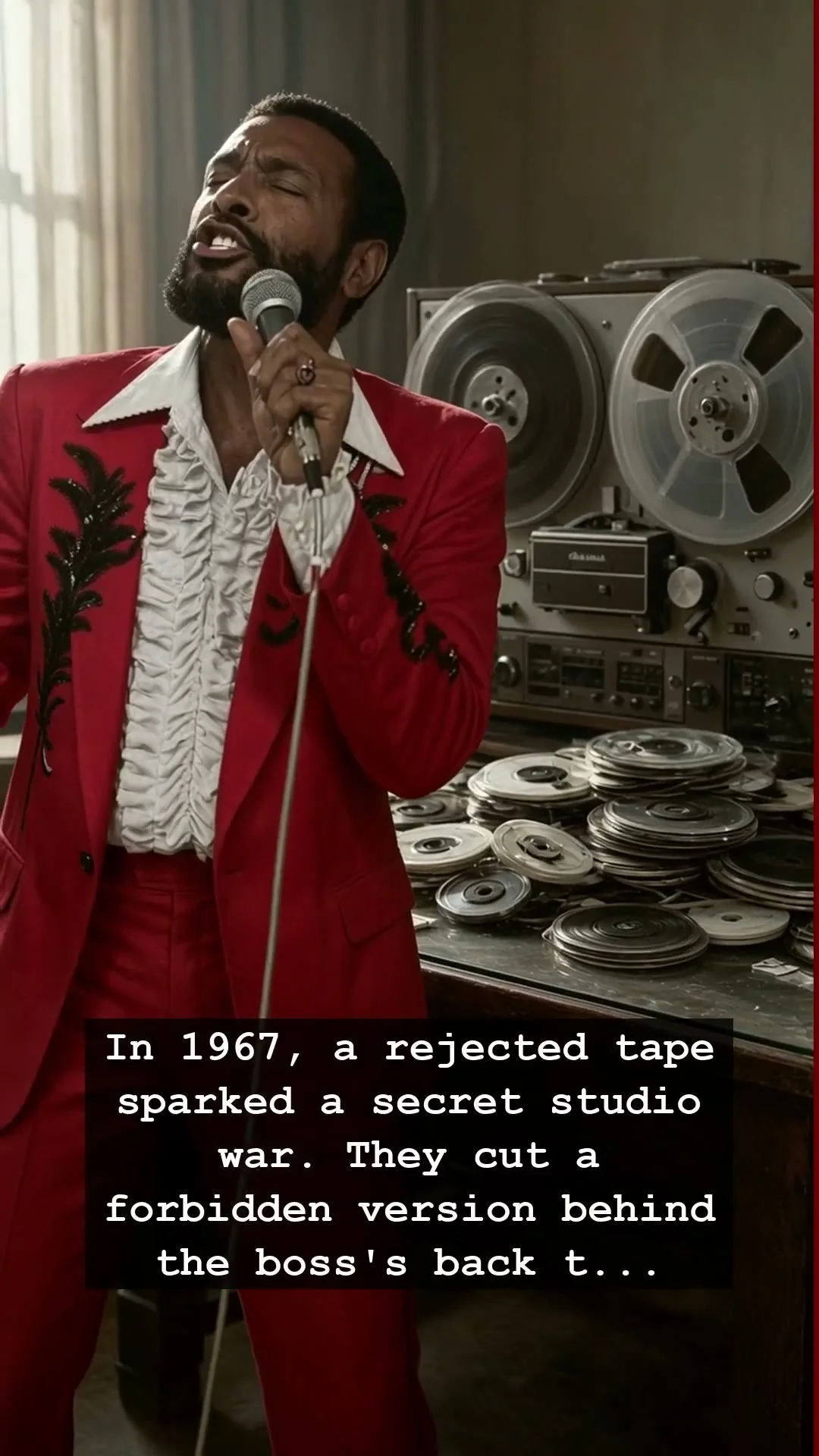
In the gilded hallways of Motown during the mid-sixties, everything was supposed to run like clockwork under the iron fist of Berry Gordy. Yet, 1967 became the year of the ultimate rebellion. It began with a rejected tape, a musical piece that the establishment deemed unsuitable for the charts, sparking a secret studio war that would forever alter the sound of American soul. While the public was busy dancing to the polished hits blasting from every Jukebox in the city, a quiet, clandestine defiance was brewing in the shadows of the studio, involving the legendary Marvin Gaye and the soulful powerhouse Gladys Knight.
At the time, Motown was a hit factory, but even geniuses faced rejection. Marvin Gaye, already a star with a voice like velvet, and Gladys Knight, whose grit and vocal range were unmatched, found themselves at the center of a corporate tug-of-war. The producers and label heads were looking for a specific, radio-friendly formula. When a certain track was discarded as a failure, it didn’t just disappear into the archives. Instead, a rogue producer—tired of the restrictive, factory-style demands—decided to take matters into his own hands. Behind the boss’s back, they retreated into the dark, soundproofed corners of the studio to recut the song into a radical, raw masterpiece.
The tension was palpable. Every time a tape machine whirred, there was the fear that Gordy would walk in and shut the session down. This wasn’t just about music; it was a battle for creative integrity against the stifling pressure of fame. Gladys Knight brought a visceral, bluesy ache to the vocal booth that complemented Marvin Gaye’s smooth, soaring range in ways the label had never dared to try before. They were experimenting with rhythms and textures that defied the traditional Motown polish, pushing the boundaries of what soul music could be in a pre-MTV, radio-dominated landscape.
When the final version was pressed and eventually hit the airwaves, it shattered expectations and climbed the charts with a ferocity that caught the executives off guard. The song became a testament to the fact that sometimes the best art is born from defiance. It captured the emotional turbulence of the era, resonating with listeners who felt the friction of a changing society. The success of this collaboration proved that Gladys Knight and Marvin Gaye were not just performers; they were artists who understood that a song needed more than just a melody—it needed a beating heart and a bit of scandal to truly endure.
Looking back today, the story of this secret session serves as a reminder of a time when music was physical, tactile, and born from human struggle. It was an era before digital perfection, when the warmth of an analog tape capture could hold the weight of a secret war. As we listen to those classic tracks now, we hear more than just notes; we hear the echoes of two legends risking their careers for the sake of a sound that felt honest. The music of the sixties still resonates because it was forged in the fire of genuine conflict. Do you remember the first time this masterpiece moved your soul?