
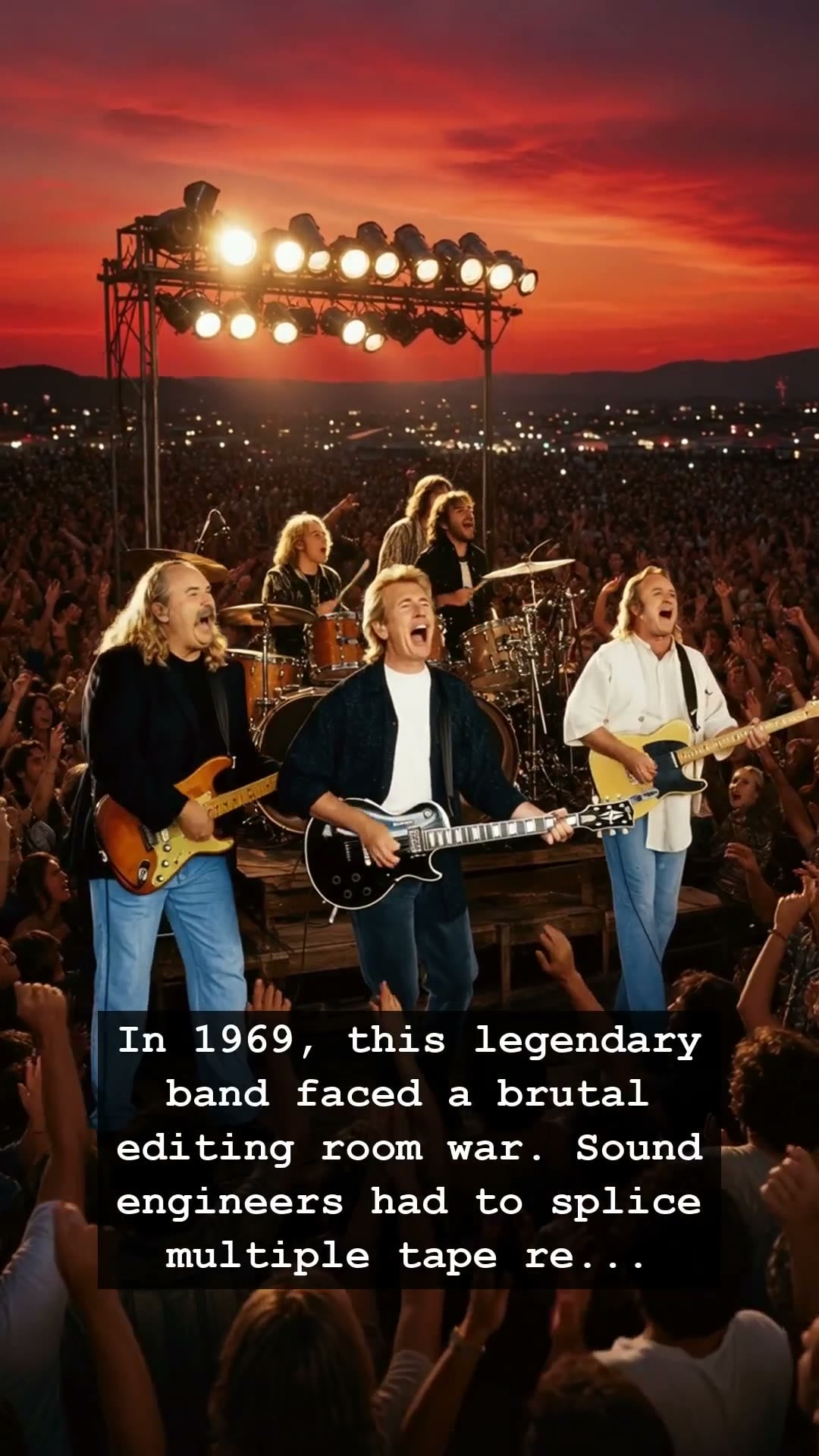
In the golden haze of 1969, the air in the recording studio was thick with both creative genius and mounting tension. Crosby Stills and Nash were at the precipice of musical immortality, yet they found themselves trapped in a desperate, late-night war inside the editing room. The target of this struggle was an epic seven-minute track, a sweeping harmony-driven masterpiece that the radio stations of the era deemed far too long and structurally complex for the pop charts. While the world outside was transitioning from the psychedelic ripples of Woodstock toward a new decade, these men were obsessing over every magnetic second of tape, knowing that one wrong snip could destroy the song’s delicate, ethereal soul.
To save the track from being relegated to radio obscurity, sound engineers were forced into a grueling process of splicing multiple tape reels together. It was a high-stakes puzzle of analog precision. The band, known for their perfectionism, stood over the engineers’ shoulders as blades met magnetic oxide, cutting and pasting sections to maintain the song’s emotional arc while shaving down the duration. This wasn’t just technical work; it was a surgical procedure on their own artistic vision. The atmosphere was stifling, fueled by cigarette smoke and the raw, unvarnished pressure that defined the era of legendary recording sessions where hits were forged in blood, sweat, and razor blades.
Crosby Stills and Nash were more than just a musical trio; they were the quintessential architects of the harmony-heavy sound that dominated the late sixties. Their music served as the soundtrack for a generation grappling with the Vietnam War, civil unrest, and the fading dreams of the Summer of Love. By the time their debut album hit the shelves, they had already become symbols of a cultural shift. Yet, the story of their editing room struggles reveals a darker side of fame. Beneath the shimmering vocal layers lay the constant threat of artistic compromise and the relentless demand from industry gatekeepers to standardize their sound for the masses.
This era, where the Walkman was still a dream and the jukebox was the primary judge of a song’s longevity, required a level of tactile commitment that modern digital production has largely discarded. The edit was ultimately a victory of grit over commercial convenience, cementing their place in history. Even decades later, listening to those flawless, soaring harmonies, one can almost hear the phantom hum of the splicing tape. It is a testament to the fact that their brilliance was not merely born in the light of performance but carved out in the shadows of the studio.
Today, the legacy of Crosby Stills and Nash remains an untouchable pillar of American rock. Their ability to fuse folk intimacy with rock ambition set a standard that few have matched since. As we look back, it is these small, dramatic moments of friction that give their music its enduring weight. Their songs weren’t just recorded; they were fought for. The next time you spin their classic vinyl, remember the tired hands and the sharp blades that saved a masterpiece from being lost to the cutting room floor, ensuring that those golden harmonies would echo through the decades for us to cherish.