
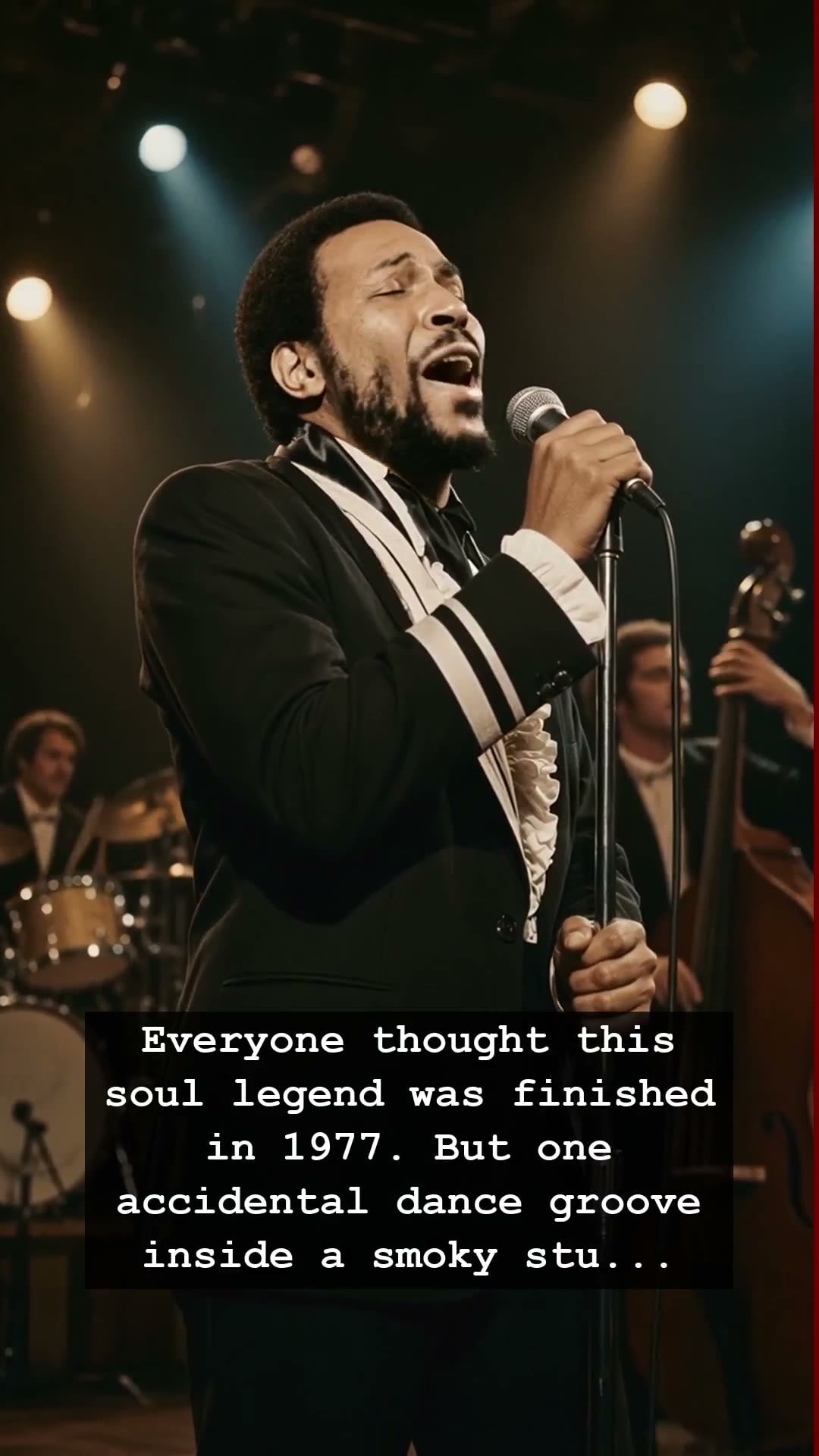
By 1977, the landscape of American music was shifting beneath the feet of its giants. Marvin Gaye, the velvet-voiced prince of Motown, found himself in a precarious position. The soulful crooner who had defined the sound of a generation with hits like What’s Going On was suddenly struggling to find his footing amidst the rapidly rising tide of the disco era. To many industry insiders, his career seemed to be quietly fading into the background of a changing musical landscape. The legendary performer was exhausted, creatively drained, and plagued by personal turbulence that threatened to silence his voice forever.
Then came the magic of a smoky studio session that would alter the course of music history. While many of his peers were reluctant to embrace the glittery, high-tempo sounds pulsating out of Studio 54, Marvin Gaye found himself experimenting with a rhythm that felt entirely new to his repertoire. It started as a casual, accidental groove—a spontaneous improvisation that captured the frenetic energy of the dance floor while maintaining that signature, sultry soulfulness only he could provide. This wasn’t just a track; it was a desperate, masterful reclamation of his own relevance.
That session birthed the infectious, undeniable sound of Got to Give It Up. Suddenly, the man who once sang songs of deep social protest was commanding the neon-lit dance floors across the nation. The song hit the airwaves like a lightning strike, proving that Marvin Gaye was not a relic of the past, but an artist capable of morphing into the future. It was a stunning transformation that left critics stunned and fans dancing in their living rooms, clutching their transistor radios as if the song were a lifeline to a better, groovier time.
Behind the polished sheen of the final record lay the classic struggle of a genius battling his own demons. The studio was often a sanctuary where Marvin Gaye could escape the crushing weight of public expectations and private failures. By leaning into the disco aesthetic, he managed to mask his internal shadows with a vibrant, rhythmic joy that resonated with millions. This anthem became more than a commercial success; it was a cultural pivot point, bridging the gap between classic soul and the synth-heavy, dance-oriented future of the early 1980s.
Today, the legacy of this comeback remains a testament to the resilience of true artistry. Whenever that iconic opening guitar lick starts to play, it instantly teleports us back to a time of shimmering disco balls, bell-bottom jeans, and the feeling that anything was possible on the dance floor. It reminds us that even at his lowest point, Marvin Gaye possessed the extraordinary talent to reinvent his narrative. Decades later, his music still echoes through the halls of time, proving that true legends never really fade away—they just find a new rhythm to captivate the world all over again.