
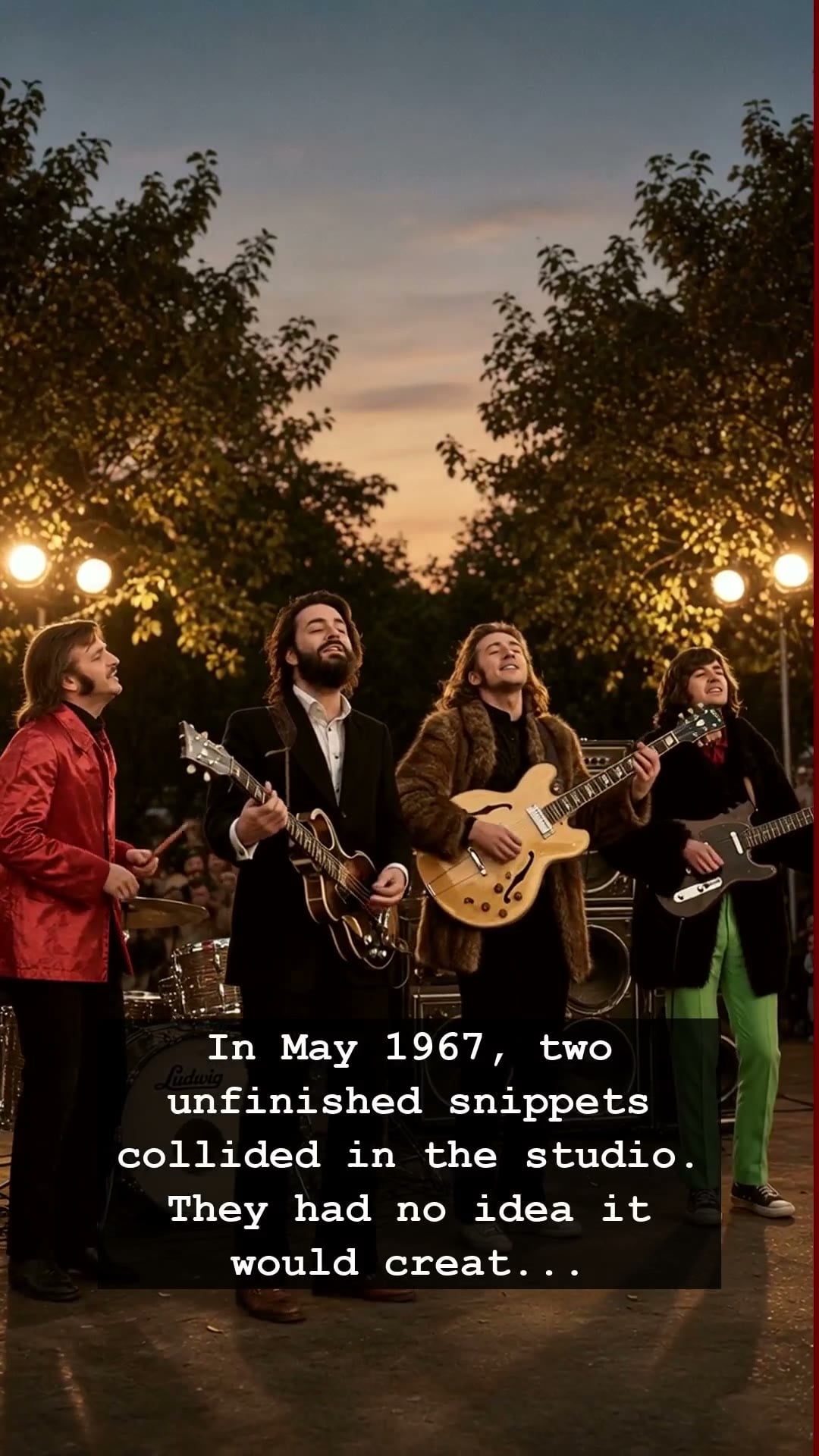
The year was 1967, and the world of music was shifting beneath our feet. As the Summer of Love bloomed in the streets, inside the sterile walls of Abbey Road Studios, the landscape of rock history was being permanently altered by four men from Liverpool. It began not as a grand vision, but as a desperate attempt to bridge two completely incompatible musical thoughts. The Beatles, exhausted by the hysteria of their touring years, had retreated into the sanctuary of the studio, where they dared to experiment with sounds that no one had ever attempted before.
John Lennon brought in a weary, melancholic verse about a local newspaper report, while Paul McCartney sat on a separate idea—a frantic, upbeat fragment about a morning routine. They were two unfinished snippets, two mismatched pieces of a puzzle that didn’t seem to belong together. Yet, in that smoke-filled London studio, something clicked. They decided to stitch these fragments together, bridging the gap with an avant-garde orchestral swell that sounded like the very fabric of reality tearing apart. The result was A Day in the Life, the final, haunting track of the legendary Sgt. Pepper’s Lonely Hearts Club Band album.
For those of us who remember the crackle of the needle hitting the vinyl, this song was more than just a melody; it was a portal into a new dimension. The Beatles were no longer just a pop act playing for screaming fans; they were sonic architects. During the recording sessions, the pressure to evolve was immense. John and Paul were pushing each other to the brink of artistic exhaustion, creating a tension that vibrated through every note. The dramatic, rising orchestral crescendo—an idea fueled by the desire to reach an apex of pure sound—stands as one of the most daring moments in the history of recording technology.
Looking back, the song serves as a perfect time capsule of the late sixties. It captures the transition from the innocence of early rock and roll to the complex, psychedelic experimentation that defined the era. The influence of the song is undeniable, proving that even a broken idea, when nurtured by true genius, can transcend its own limitations. It was an era defined by the crackle of the Jukebox, the rise of FM radio, and the feeling that music could actually change the world. The Beatles weren’t just making a record; they were documenting the fragmented psyche of a generation caught between the past and a rapidly approaching, uncertain future.
Decades later, the song still resonates with a haunting clarity. It reminds us of a time when the studio was a laboratory, and the four members of The Beatles were our mad scientists. As the final piano chord fades into silence, we are reminded of the power of creativity born from collaboration and conflict. Do you remember where you were the first time that final, lingering chord changed the way you listened to music forever?