
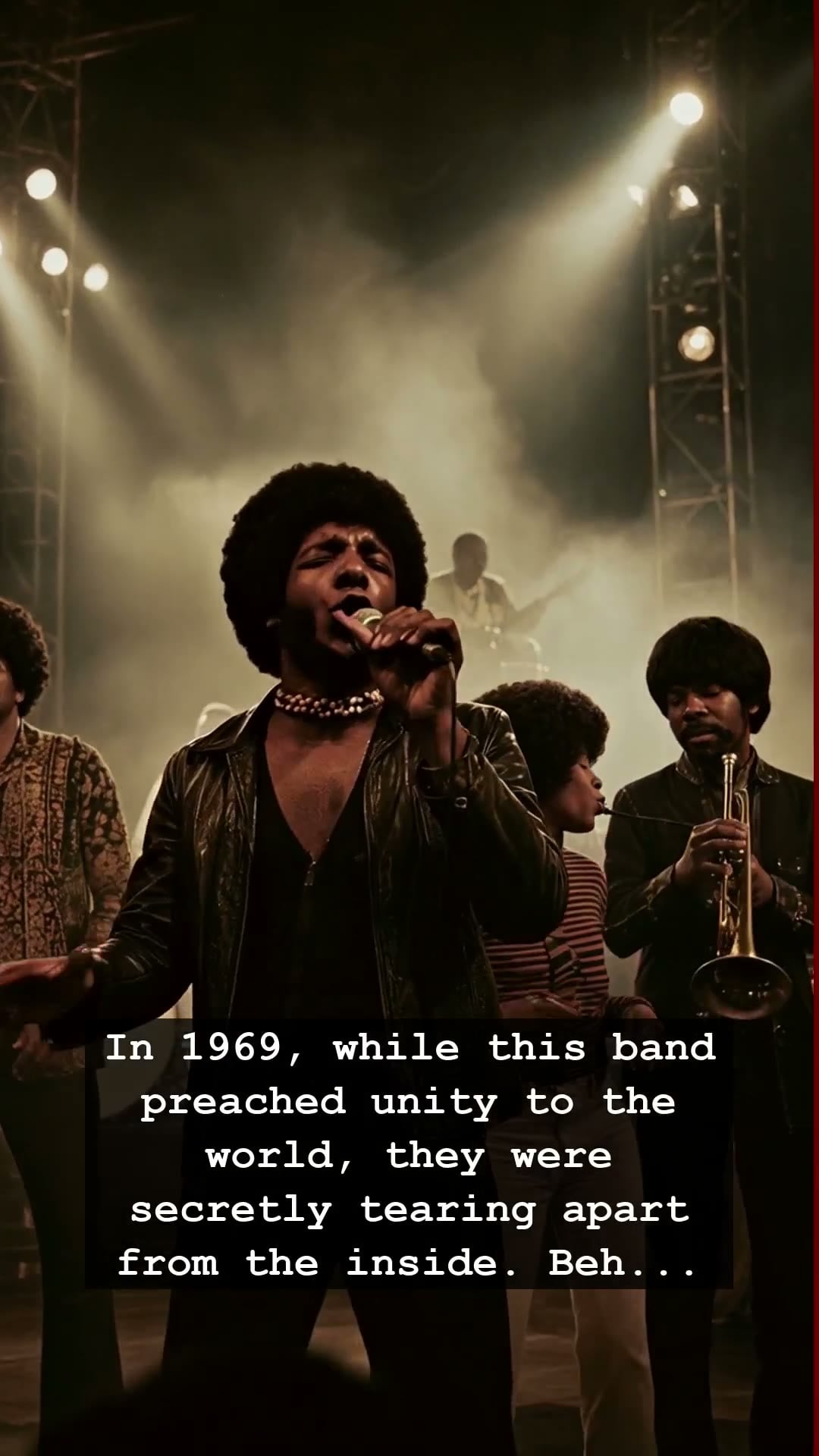
In the sweltering heat of August 1969, the world watched in awe as Sly and the Family Stone took the stage at Woodstock. They were the ultimate vision of radical unity, a kaleidoscopic blend of funk, soul, and rock that blurred racial and gender lines with an effortless, infectious groove. To the thousands in the audience and the millions listening at home, they were the sound of a new, peaceful dawn. But behind the shimmering stage lights and the joyous anthems of brotherhood, a darker reality was festering. While they preached harmony to the masses, the internal fabric of the band was rapidly unraveling, marked by mounting paranoia, ego-driven isolation, and a descent into the shadows of hard substance abuse that would soon silence their revolutionary spirit forever.
Sly Stone, the genius architect behind the madness, had once stood as a beacon of progressive music. He crafted a sound that felt like the future, a pulsating heartbeat that defined an era of societal change. Yet, as the band rose to unimaginable heights, the pressure of fame became a corrosive force. The tour bus, once a sanctuary for creative collaboration, turned into a claustrophobic cage of resentment. It is a haunting irony that the music of Sly and the Family Stone was built on the premise of collective consciousness and deep, rhythmic connection, yet the members grew increasingly alienated from one another as the seventies dawned.
By the early 1970s, the band’s unpredictable behavior began to overshadow their undeniable talent. Sly Stone himself became notorious for missing concerts, arriving hours late, or appearing in a state that made performance impossible. The once-tight musical unit began to crumble under the weight of missed rehearsals and broken promises. This wasn’t just a clash of creative visions; it was a total breakdown of trust. The studio, which had been the birthplace of masterpieces like Stand! and There’s a Riot Goin’ On, transformed into a graveyard of abandoned tracks and cold, distant recording sessions where the laughter of the sixties had been replaced by a heavy, suffocating silence.
The decline of Sly and the Family Stone serves as a cautionary tale of the dark side of American fame during that turbulent era. It mirrors the broader disillusionment that followed the optimism of the late sixties, moving from the sunshine of Woodstock into the gritty, disillusioned landscape of the seventies. Their music remains a powerful time capsule, capturing both the heights of human potential and the depths of personal destruction. Even decades later, listening to their records brings a bittersweet sting; we hear the brilliance, but we also recognize the cracks in the foundation.
Reflecting on their journey, we are reminded that the greatest art often comes at an impossible price. The legacy of Sly and the Family Stone is complex and contradictory, defined as much by their internal volatility as by their massive cultural impact. As we look back through the lens of nostalgia, we realize that their story is the ultimate tragedy of a band that could save the world’s mood but could not save itself from the encroaching shadows of the spotlight. Do you remember the first time their funk hit your soul?