
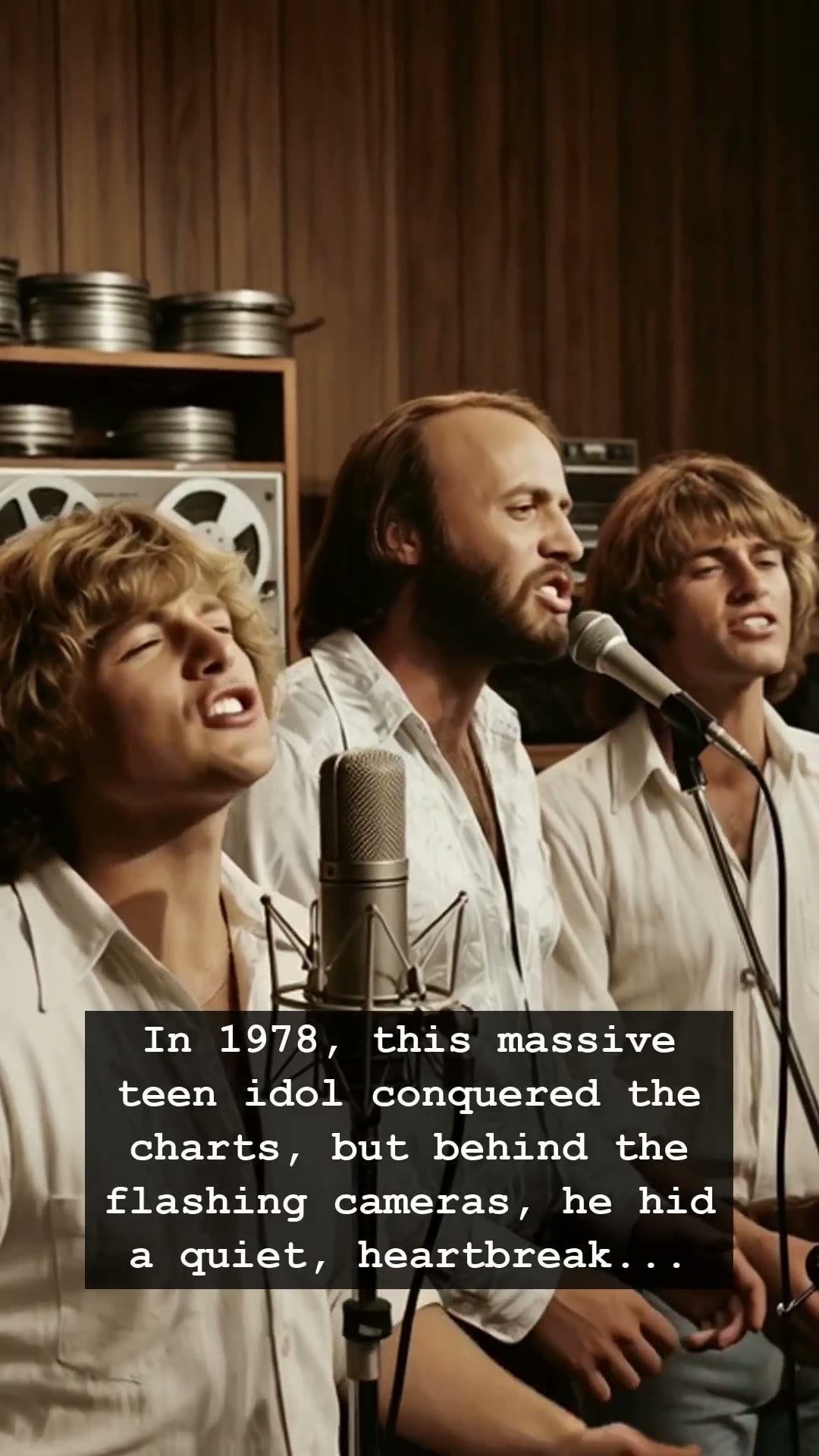
In 1978, the airwaves were saturated with the shimmering, infectious rhythms of the disco era, and standing at the very epicenter of this musical supernova was a boy with a million-dollar smile and hair that defined a generation. Andy Gibb was not just a pop star; he was the golden child of the Bee Gees dynasty, a teen idol who seemed to effortlessly command the charts while the world danced under the spinning glitter balls of Studio 54. Yet, beneath the veneer of perfectly pressed bell-bottoms and the roar of thousands of screaming fans, there was a profound, creeping silence. While the rest of the world saw a charmed life, Andy Gibb was battling a relentless, invisible storm that would eventually consume the very light he brought to the stage.
To understand the rise of Andy Gibb is to understand the frantic pace of the late seventies, a time when the Walkman was just beginning to change how we consumed music and the pressure to replicate a sibling’s global success was immense. Andy was the younger brother of Barry, Maurice, and Robin, and while he possessed an undeniable, breezy talent that captured the hearts of millions, the shadow cast by his brothers was long and heavy. He achieved three consecutive number-one singles in the United States, a feat that cemented his status as a legitimate musical force. However, the industry was a meat grinder in the seventies, one that demanded constant reinvention and fueled the insecurities of a young man who was thrust into the spotlight before he had the chance to find his own footing.
Behind the flashing cameras and the glossy magazine covers, the reality of his existence was far more fragile. As the eighties dawned and the disco bubble burst, Andy found himself caught in the crossfire of changing musical tides and a grueling, unsustainable lifestyle. The glamour of the tour bus and the endless hotel rooms began to replace the genuine connection he craved, leading him down a dark path of dependency. It is a heartbreaking reminder that the high-octane life of a superstar often requires a sacrifice that few can survive. Andy Gibb was trapped in the middle of a shifting cultural landscape, one where the authenticity of his craft was often buried under the weight of celebrity scandals and the crushing expectations of a public that only ever wanted to see him smile.
His story remains a haunting melody from a bygone era, echoing the tragedies of many who found themselves burnt out by the cold machinery of fame. When we look back at the late 1970s and the early 1980s, we remember the hits, but we must also acknowledge the hollow space left behind by those who struggled to cope with the transition from idolized icon to human being. Andy Gibb’s life serves as a somber anchor to the human cost behind the music we still love to play today. Even now, when his voice drifts through the radio, it brings with it a mix of nostalgia and melancholy, reminding us of the fleeting nature of gold and the enduring, fragile humanity of the stars we once held so close.