
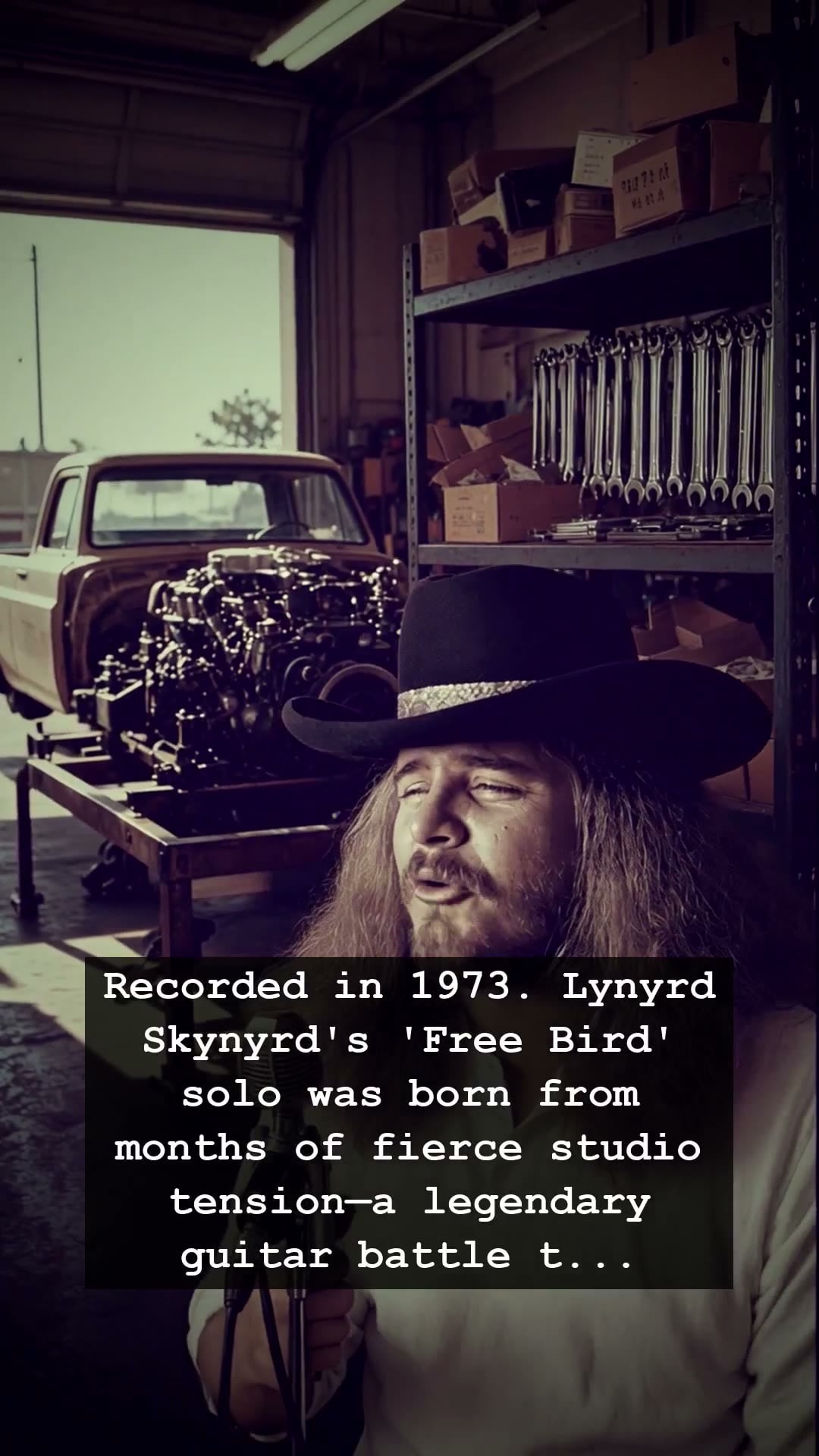
It was 1973, a time when the Jukebox in every dive bar was dominated by the rising tide of Southern Rock. Inside the studio, however, the atmosphere was far from harmonious. The members of Lynyrd Skynyrd were locked in a creative stranglehold, specifically over a sprawling, multi-layered track that would eventually become the definitive anthem of a generation: Free Bird. While fans today see it as a masterpiece of improvised excess, the song was actually born from months of fierce tension and a guitar duel that very nearly tore the band apart before it even began.
At the center of this firestorm was the legendary Allen Collins. When he sat down to record that blistering, high-octane solo, he played a melody so intricate and demanding that lead singer Ronnie Van Zant famously balked. Van Zant, the heart and soul of the group, initially thought the arrangement was far too much, clashing with the gritty, blues-soaked rhythm the band had built their reputation on. The studio air was thick with the scent of cheap cigarettes and the pressure of a debut album that needed to cement their legacy. It was a classic clash of artistic egos, where the line between genius and total collapse was razor-thin.
But that grueling studio battle is precisely why the solo remains immortal. Collins pushed back, demanding the space to let the guitar scream, eventually forcing Van Zant to yield. What emerged was a nine-minute odyssey that redefined what a rock song could be. It was more than just a sequence of notes; it was a testament to the sweat, the infighting, and the raw, untamed ambition that defined the 1970s rock scene. Without that conflict, Free Bird might have been just another decent track, but the internal friction turned it into a cultural monolith.
Today, when you hear those first opening chords, you are hearing the sound of a band fighting to prove their existence. Lynyrd Skynyrd was not just making music; they were capturing the volatility of their era, mirroring the societal restlessness that pulsed through the country. The iconic solo became the ultimate test of endurance for guitarists worldwide, a rite of passage that solidified their spot in the pantheon of legends. It represents the darker, more visceral side of the recording process—a place where egos burned hot and brilliance was forged in the heat of confrontation.
Looking back at that era, it is easy to romanticize the sound of Lynyrd Skynyrd, but it is the imperfections and the brutal behind-the-scenes struggles that make the music feel so authentically human. The tragedy that followed the band in later years makes these moments of triumph even more poignant. The next time you find yourself turning up the volume on that legendary finale, remember the grit and the fury that birthed it, and consider the sheer willpower it took for that melody to survive the studio floor.