
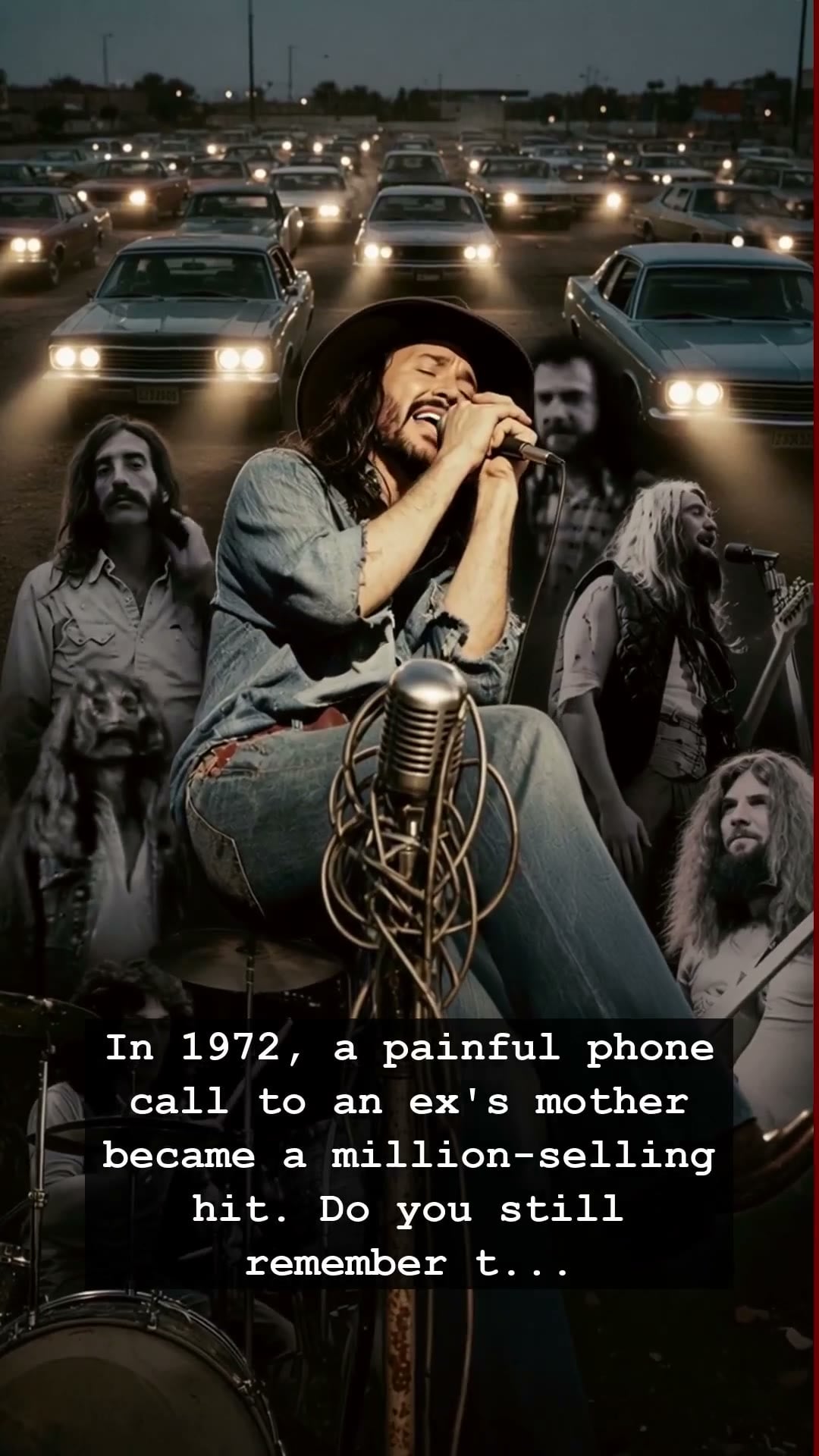
In the golden age of the jukebox, where every spinning vinyl seemed to hold a piece of someone’s soul, one song cut deeper than the rest. It was 1972, and the airwaves were flooded with the raw, acoustic ache of Dr. Hook and the Medicine Show. While the world was dancing to the glitter-soaked tunes of the emerging disco era, a different kind of reality was playing out in the charts. That song was Sylvia’s Mother, a track that didn’t just climb the charts; it tore through the hearts of millions of listeners who had all, at some point, felt the jagged edge of a final, desperate plea for a love that was slipping away forever.
The genius behind this agonizing anthem was Shel Silverstein, the eccentric songwriter who famously penned the lyrics based on a real-life, excruciating phone call. As the story goes, the call was not a fictional construct but a genuine attempt to win back a woman named Sylvia. Dennis Locorriere, the voice behind Dr. Hook, delivered those lines with a trembling authenticity that made the listener feel like a voyeur eavesdropping on a private tragedy. When he pleaded, Please Mrs. Avery, I just gotta talk to her, the static on the line felt real. It was the sound of a man standing in a phone booth, perhaps near a flickering neon sign, watching his last chance at reconciliation crumble in real-time as a mother firmly stood in the way.
This song resonated so profoundly because it captured the universal helplessness of young love during a time when communication was far more difficult. In 1972, there was no digital paper trail, no instant messaging, and no easy way to undo a breakup once the receiver was slammed down. You had to physically stand there, trapped by the ticking meter of a payphone, begging for a chance that was never going to come. Dr. Hook managed to turn that singular, agonizing moment into a million-selling record that became a staple on radio stations across America, proving that heartache was the most profitable currency of the decade.
The brilliance of Dr. Hook lay in their ability to strip away the artifice of the rock star persona. While their contemporaries were busy cultivating wild, psychedelic images or performing in oversized arena tours, the band leaned into the grit of everyday human failure. They took the domestic drama of a disappointed mother and turned it into a rock ballad that felt like a confession. It remains a masterclass in songwriting, reminding us that the most enduring hits are often those that speak to the quiet, devastating moments we are all too afraid to voice out loud.
Even today, decades after the song first hit the airwaves, hearing those opening piano chords transports us back to a time of rotary phones and smoke-filled living rooms. It serves as a haunting reminder of how fragile connections were in the pre-digital era, where one conversation could define the trajectory of a lifetime. Whether you first heard it on a transistor radio or rediscovered it years later, Sylvia’s Mother remains a timeless testament to the power of a broken heart. When was the last time a song made you stop in your tracks and remember someone you lost?