
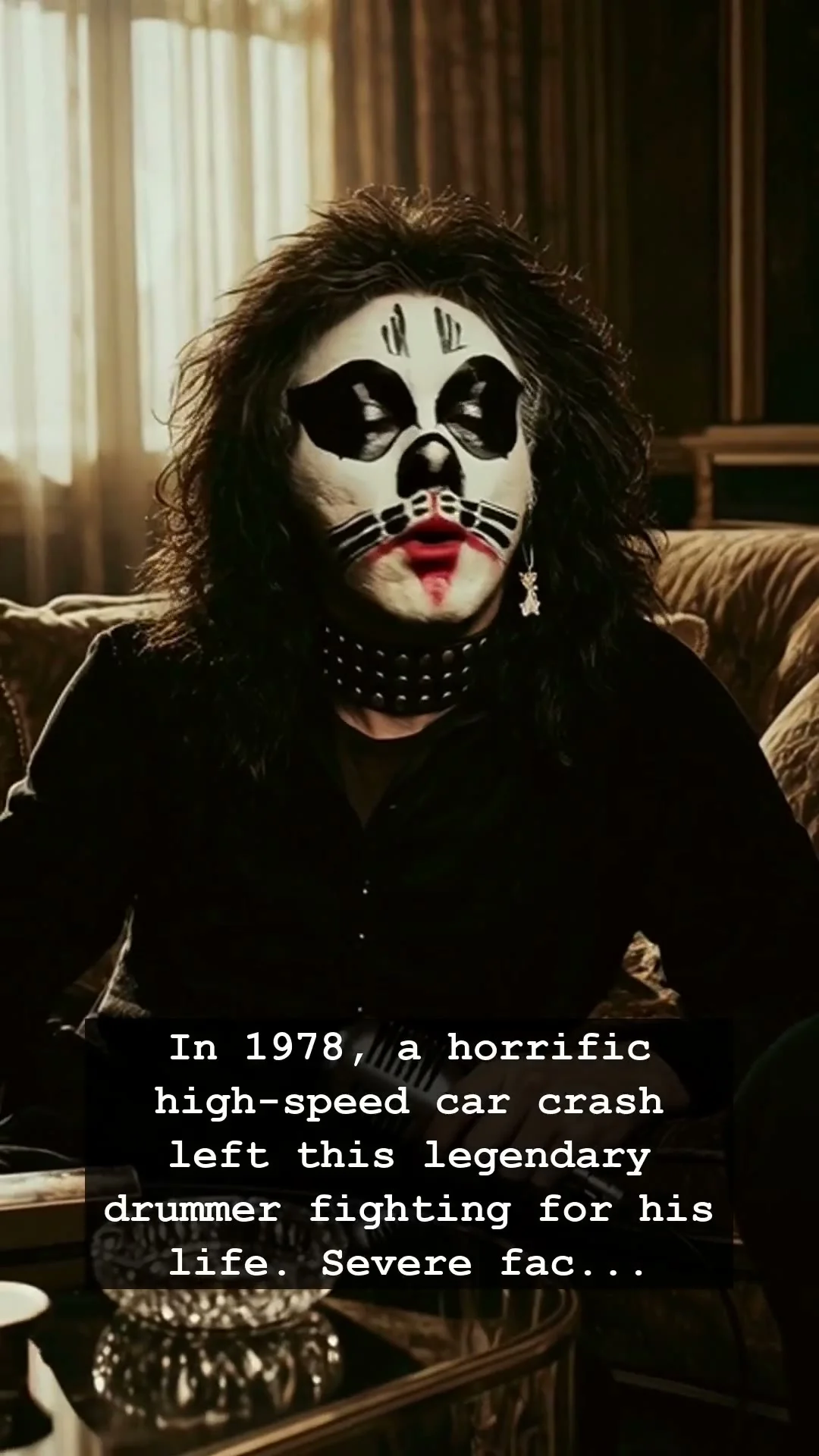
In 1978, the world of rock and roll was at the mercy of the KISS phenomenon. The makeup, the pyrotechnics, and the sheer excess of the era defined a generation that grew up glued to their record players and MTV pioneers. But behind the larger-than-life persona of the Catman, Peter Criss was living on a knife-edge. On a dark, rain-slicked night that year, the high-octane lifestyle of a rock star turned into a nightmare when his Porsche spun out of control in a horrific high-speed crash. For a moment, the thundering beat that powered hits like Beth seemed destined to fall silent forever.
As the twisted metal was pulled from the wreckage, the medical prognosis was grim. Peter Criss suffered severe facial injuries that threatened not only his career but the very identity he had spent years crafting behind the iconic cat mask. In an era where image was everything, the thought of the Catman facing permanent disfigurement sent shockwaves through the rock community. It was a stark reminder of the fragile line between the blinding lights of fame and the brutal reality of the road. While the public saw a god on stage, the man behind the drums was fighting a desperate battle for recovery and survival.
This incident marked a turning point in the history of the band. Following the accident, the internal dynamics of KISS began to shift, leading to a period of intense artistic friction and personal decay that would eventually tear the original lineup apart. The pressures of constant touring, combined with the haze of the disco era and the heavy toll of fame, meant that Peter Criss was navigating a treacherous path. His recovery was not just physical; it was an emotional odyssey that mirrored the volatile nature of the late seventies, a time when rock stars lived fast and often crashed harder than anyone else.
Despite the odds, Peter Criss returned to the stage, though the scars—both visible and invisible—would remain. His drumming, characterized by a raw, soulful swing that set him apart from the technical precision of his peers, carried a new weight in the years that followed. When you listen to the steady, heartbeat rhythm of his contributions to the KISS catalog today, you are hearing the resilience of a man who looked death in the eyes and refused to let the music fade. It is a testament to an era of unbridled passion and the cost of maintaining a legacy that larger-than-life icons created.
Today, the memory of Peter Criss and his survival story serves as a bridge to a bygone age. It reminds us of a time before the digital perfection of modern production, when the human element of music was messy, dangerous, and profoundly authentic. As we look back at the glory days of the seventies, we see more than just the makeup and the stage shows; we see the fragile, driven individuals who fueled our teenage dreams. The next time you drop the needle on a classic track, listen closely to the drums and remember the man who played through the pain, forever cementing his place in the pantheon of rock history.