
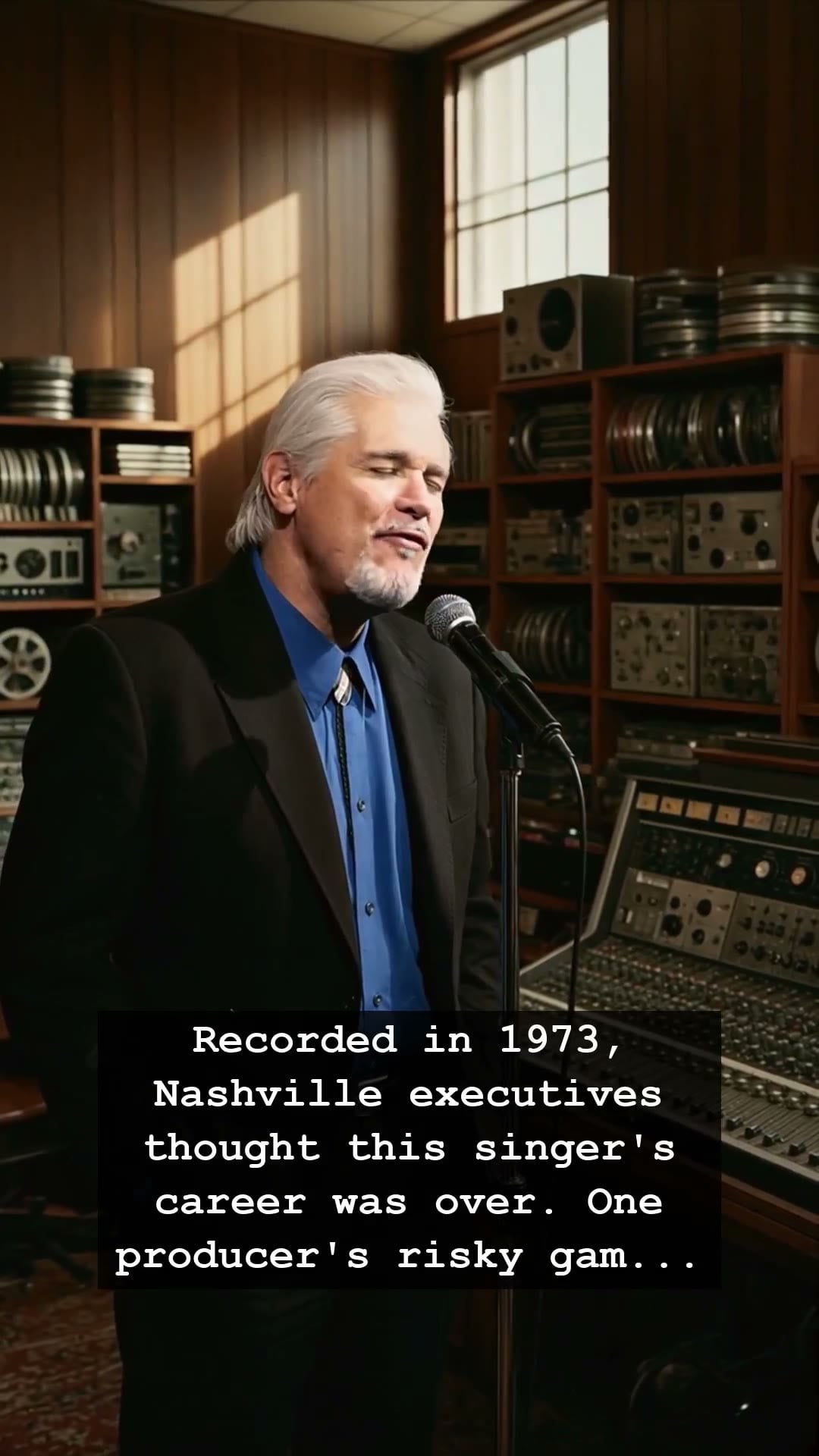
By 1973, the Nashville establishment had largely written off Charlie Rich. To the industry suits, he was a relic of the past, a talented but inconsistent artist whose time in the sun had long since faded into the flickering neon of forgotten jukeboxes. He had spent years drifting through the fringes of the industry, his potential buried under layers of corporate skepticism and the rigid expectations of the country music machine. But in the smoky, dimly lit corners of a Nashville studio, producer Billy Sherrill saw something that others ignored: a raw, aching soul that refused to be silenced by the boundaries of genre.
Billy Sherrill was a man known for his meticulous, sometimes controversial, sonic architecture. He understood that music was not just about the notes played but about the atmosphere created. When he brought Charlie Rich into the studio to record the haunting ballad Behind Closed Doors, he wasn’t just making a record; he was crafting a risky, soulful crossover masterpiece. Nashville executives warned him that the track was too smooth, too pop-oriented, and far too risky for the purists who dominated the charts. Yet, Sherrill, with his signature rebellious flair, ignored the suits and pushed the song forward, betting his reputation on the deep, gravelly vulnerability of Rich’s voice.
The result was an seismic shift in the cultural landscape of the era. The song didn’t just top the country charts; it invaded the mainstream, echoing through suburban living rooms and across the airwaves that were rapidly changing as the decade progressed. It was a moment of pure musical alchemy where the grit of the South met the polished production of a new era. This wasn’t just a hit song; it was a testament to the power of artistic conviction in an industry that constantly favored safety over soul. For Charlie Rich, it was the ultimate vindication, a sudden rise from the ashes that proved that talent, when paired with the right visionary, could defy any executive’s decree.
Looking back, this 1973 collaboration remains one of the most pivotal chapters in country music history. It bridged the gap between traditional storytelling and the lush, expansive soundscapes that would come to define the mid-seventies. The relationship between Charlie Rich and Billy Sherrill highlights the delicate tension that defined Nashville’s golden age—the struggle between the commercial mandate and the artist’s inner truth. It reminds us of a time when the recording studio was a place of high-stakes gambling, where one bold decision could propel a forgotten singer into the stratosphere of legend.
Even decades later, the success of Charlie Rich under the guidance of Billy Sherrill resonates as a masterclass in risk-taking. It captures the essence of a bygone era where the music was etched onto vinyl and every note had to fight for its place in the world. As we look back at the records that shaped our lives, let us never forget that sometimes, it only takes one producer with a hunch and one singer with a broken heart to change the course of music history forever.