
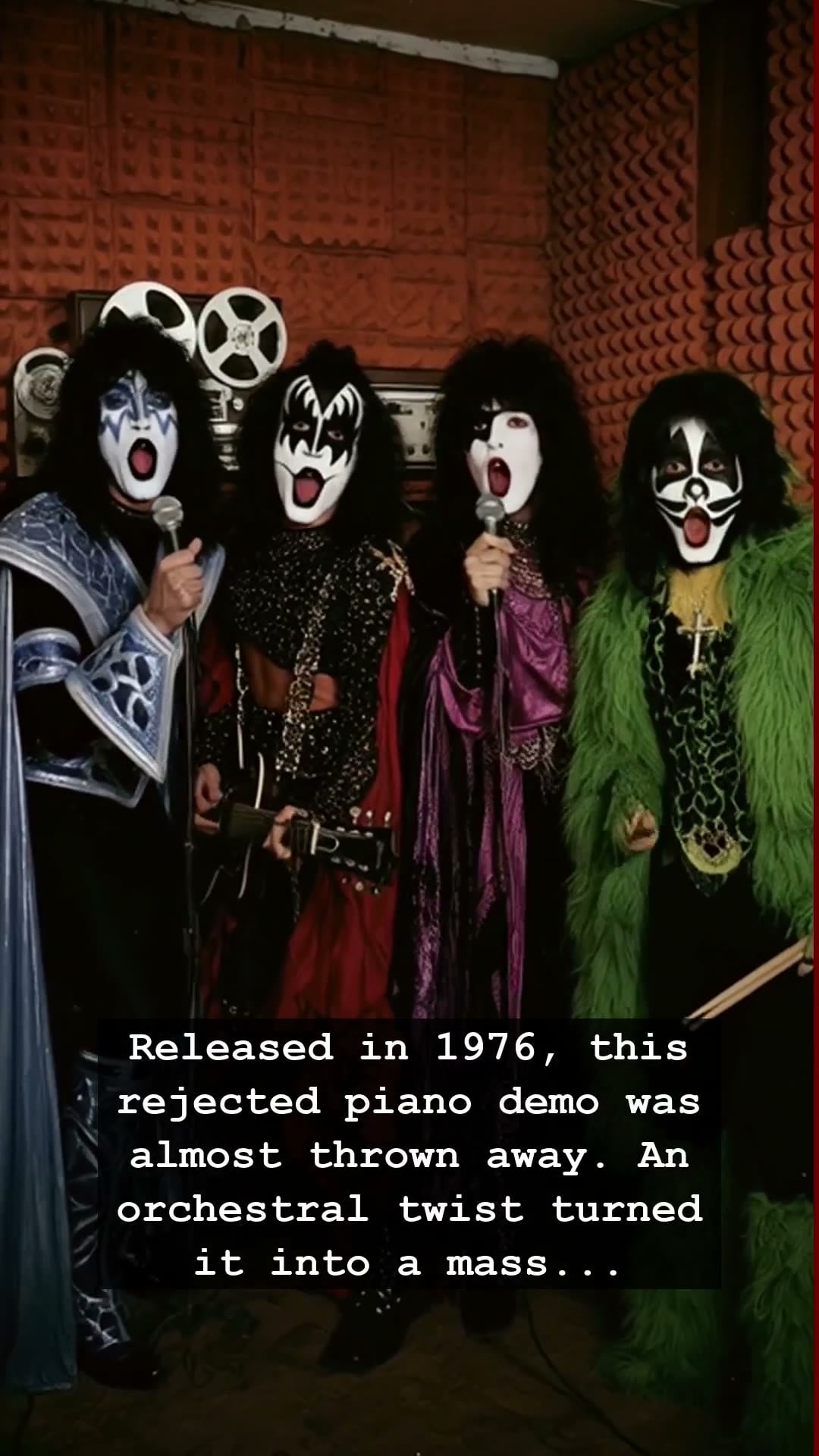
In 1976, the world knew KISS as the fire-breathing, face-painted gods of arena rock who defined the excess of the decade. Their leather-clad, pyrotechnic-heavy concerts were the stuff of legend, leaving teenage fans in a frenzy at every stop on their tour. Yet, amidst the distortion and the grit of their hard-rock image, a quiet, vulnerable piano demo was sitting in a trash can, nearly lost to history forever. This track, sung by the band’s original drummer, Peter Criss, was the antithesis of everything the group stood for. It was raw, it was personal, and it was almost never released.
The song, of course, was Beth. Before it became the power ballad that defined a generation, it was a discarded fragment of Peter Criss’s past, a melancholy reflection of the loneliness that came with life on the road. The band was hesitant, fearing that a soft, piano-driven melody would betray the heavy metal persona they had so carefully cultivated. In an era dominated by the glitz of the disco movement and the raw power of stadium rock, a ballad seemed like a gamble that could alienate their hardcore fan base. It took a last-minute decision to add an orchestral arrangement to finally bring the song to life, transforming it from a rejected demo into a crossover smash that invaded every home with a radio.
When Beth finally hit the airwaves, it shattered the expectations of critics and skeptics alike. It was a bizarre, beautiful anomaly in the KISS discography. For Peter Criss, the success was bittersweet. While it propelled the band to new heights and solidified their presence in the mainstream, it also created a fracture within the group. The internal dynamics were already strained by the pressure of fame and the relentless grind of touring, and the massive popularity of the song fueled egos and resentment. The glitter of success often masks the decay of personal relationships, and the story of this song is no exception to the dark side of rock and roll fame.
Looking back, the success of Beth feels like a time capsule from an age where music was the heartbeat of culture. It captures that specific feeling of waiting for a loved one to call, a sentiment that resonated deeply in the era of landlines and jukeboxes. It serves as a reminder that even the loudest icons have a quiet, fragile side that longs to be heard. For those of us who grew up with the static of analog radio and the tactile joy of vinyl, Peter Criss and his soulful performance on this record remain an indelible part of the soundtrack of our youth.
Today, the legend of that rejected demo continues to echo through rock history, proving that the most vulnerable moments are often the ones that stand the test of time. It wasn’t just a hit song; it was a moment of humanity in an era defined by masks and showmanship. Do you remember where you were the first time those opening piano notes drifted from your speakers, turning a hard-rock band into household names?