
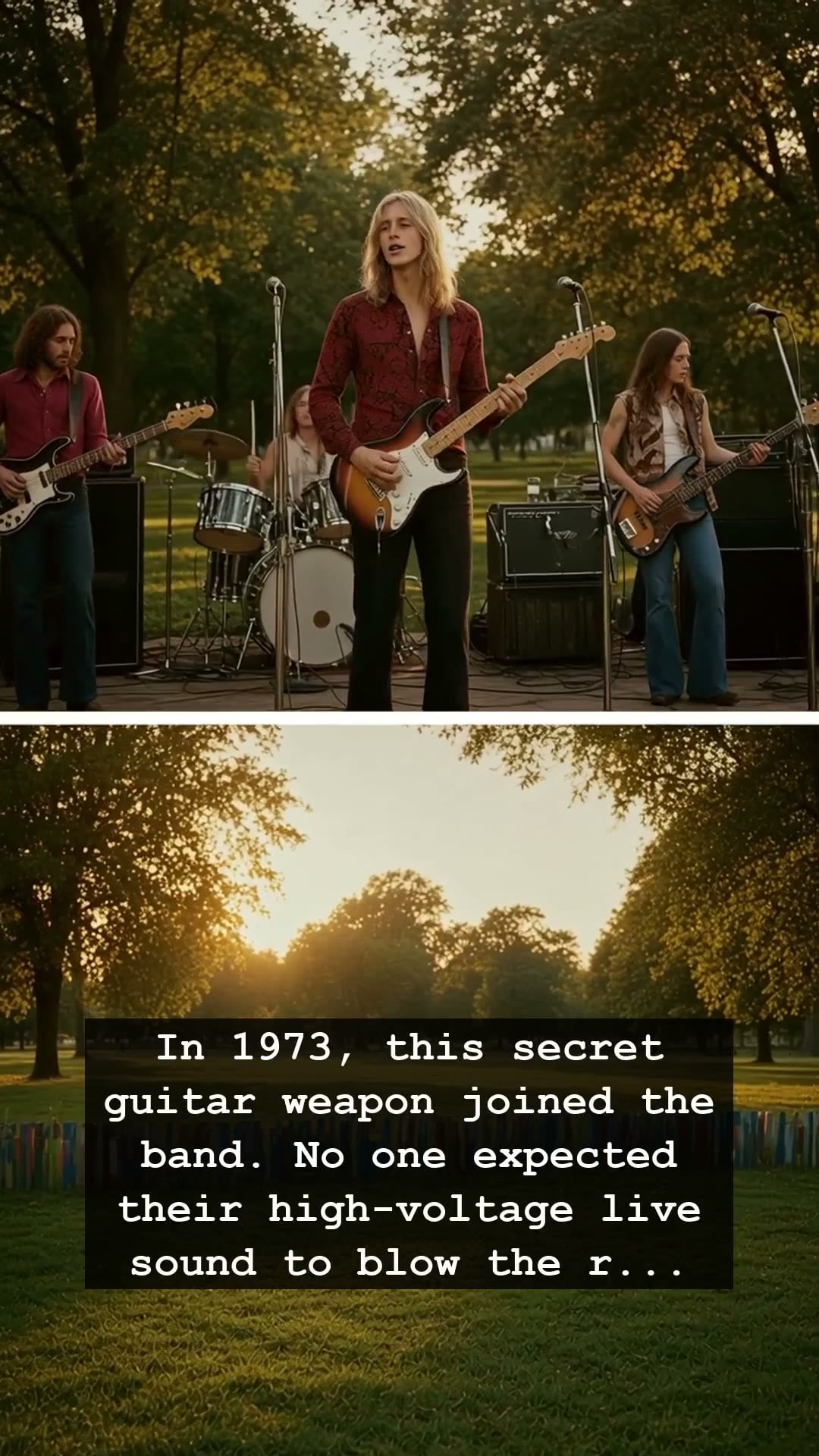
It was 1973, a year when the air felt thick with the static of revolution and the rumble of massive stadium amplifiers. The rock scene was changing, shifting from the introspective acoustic ballads of the late sixties toward something harder, faster, and infinitely more electric. In the middle of this sonic transformation, The Edgar Winter Group unleashed a sound that felt less like a band playing on a stage and more like an unstoppable freight train of pure rock power. At the heart of this high-voltage explosion was a secret guitar weapon that nobody saw coming, a man who would turn their live sets into legendary, roof-blowing experiences that defined the era.
Edgar Winter was already a known force of nature, a keyboard pioneer who played with an intensity that defied the conventions of his time. But when he brought guitarist Ronnie Montrose into the fold, the chemistry shifted. This wasn’t just a collaboration; it was a collision of egos and talents that produced the iconic album They Only Come Out at Night. For those who remember that era, the sound of the era was dominated by the gritty, overdriven riffs that defined the genre. The band became a staple of the burgeoning arena rock culture, where teenagers huddled around record players and dreamed of the day they could stand in a massive amphitheater, feeling the bass vibrate through the concrete floor.
The drama behind the scenes was as thick as the feedback from their amplifiers. While the public saw a tight-knit unit delivering hit after hit like Frankenstein, the internal tension was a constant undercurrent. Success in the early seventies was a double-edged sword, fueled by the relentless pressure of touring, the constant demand for new material, and the volatile personalities that come with true artistic genius. The Edgar Winter Group was a microcosm of this rock and roll dichotomy, where the joy of creation frequently collided with the ego-driven conflicts that eventually tore the lineup apart. It was a classic tale of brilliance struggling to contain itself within the confines of a band structure.
Yet, despite the turbulence, the music remains frozen in time, capturing the electricity of an age before digital polish took over. Think of the scratch of a vinyl needle, the smell of cigarette smoke in a crowded club, and the feeling of hearing a blistering guitar solo for the first time on a portable cassette deck. The Edgar Winter Group managed to bridge the gap between soulful blues roots and the technical, polished aggression of later heavy metal. They were the architects of a sound that filled the massive arenas of the seventies, turning every concert into a pilgrimage for fans seeking the visceral thrill of live rock.
When we look back at 1973, we aren’t just remembering a song or a band; we are remembering the raw, unadulterated energy of a generation that lived for the roar of the crowd. The Edgar Winter Group stood at the center of that whirlwind, reminding us that rock music is most dangerous, and most beautiful, when it is teetering on the edge of chaos. Their legacy is not just in the hits, but in the way they taught us how to listen. Does the crunch of those legendary guitar riffs still send a shiver down your spine?