
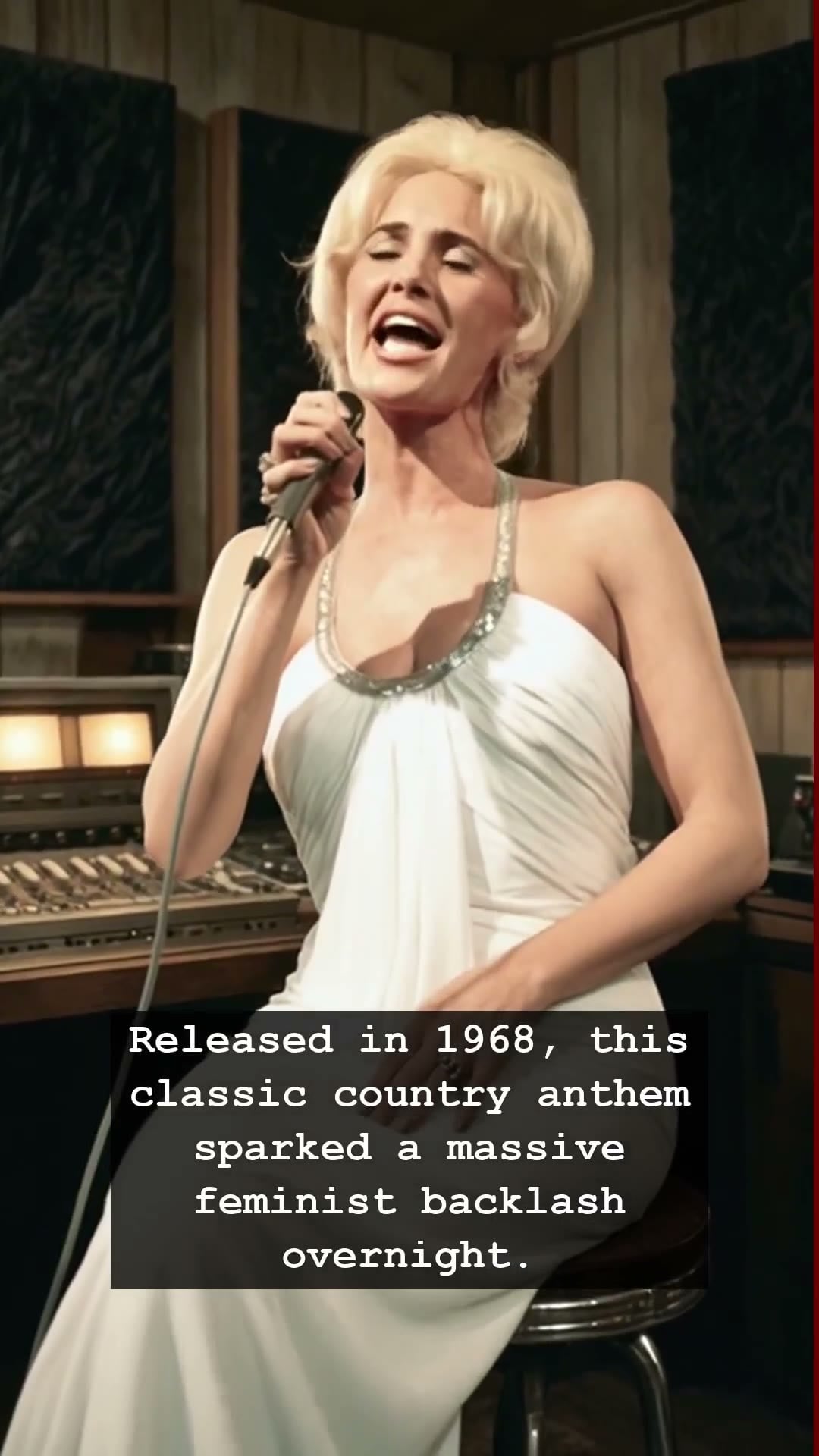
It was 1968, a year defined by social upheaval, the neon glow of a flickering television, and the scratchy, comforting warmth of a jukebox in a roadside diner. Amidst the cultural noise, Tammy Wynette released a track that would cement her legacy as the First Lady of Country Music, yet it also transformed her into a lightning rod for national controversy. That song, Stand by Your Man, was intended as an anthem of unconditional love and devotion. Instead, it triggered an instant, vitriolic feminist backlash that haunted the singer for the rest of her storied career. To understand the friction of the late sixties, one must look at how a simple ballad became a battleground for the changing roles of American women.
Critics at the time didn’t just dislike the song; they viewed it as a dangerous manifesto. To many, Tammy Wynette was not just a singer; she was a symbol of total female submission. The lyrics, which urged women to forgive their partners regardless of the pain caused, felt like an affront to the burgeoning women’s liberation movement that was gaining steam across college campuses and city streets. The public discourse became so aggressive that Tammy Wynette was forced to spend years defending her life’s work under the harsh lights of television interviews, explaining that she was merely singing about the reality of human frailty, not endorsing subservience.
Behind the polish of her stage persona, Tammy Wynette’s personal life was a tapestry of raw human emotion and professional exhaustion. She often found herself caught between the traditional Southern values she grew up with and the rapidly modernizing world that demanded she justify her artistic choices. While the rest of the world was dancing in Studio 54 or losing themselves in the psychedelic haze of the late sixties, the country music establishment expected their stars to be pillars of stability. The pressure to maintain this image while navigating the scrutiny of the media contributed to a life marked by both immense success and deep, hidden turbulence.
What makes the story of Tammy Wynette so compelling decades later is the haunting authenticity she brought to every note. She wasn’t an academic or a political activist; she was a woman telling stories that resonated with the daily struggles of millions. When you listen to the crackle of her voice on an old vinyl record today, you hear a woman who stood her ground in the face of intense public condemnation. The song remains a masterclass in emotional delivery, transcending the politics of the era to touch something universal about the nature of commitment and heartache.
As the golden age of country music recedes further into the rearview mirror, we gain a clearer perspective on the storm she navigated. The backlash against Tammy Wynette was a symptom of a nation in transition, a country struggling to reconcile its past traditions with an unpredictable future. Today, we remember her not for the controversy, but for the indelible mark she left on the American songbook. Pull up a chair, put on a vintage record, and let her voice take you back to a time when every lyric had the power to change the world.