
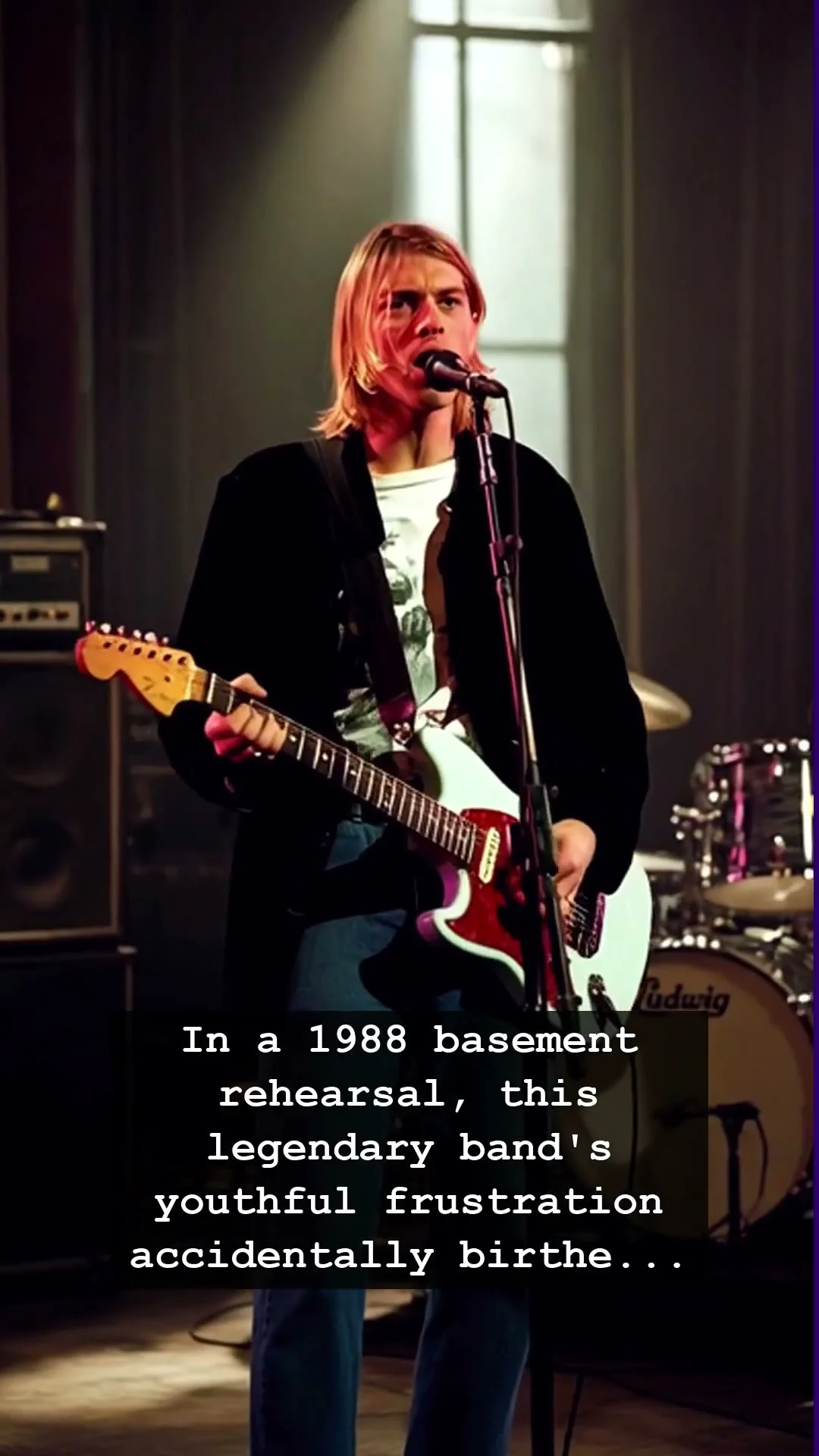
It was 1988, a time when the music industry was polished to a mirror shine, obsessed with the hair-sprayed perfection of synth-pop and the calculated glamour of the MTV era. Deep in a damp, dimly lit basement in Aberdeen, Washington, three young men were nursing a different kind of fire. This was long before the global dominance of Nevermind, before the flannel shirts became a uniform for a generation, and before Kurt Cobain became the reluctant voice of a decade. In that cramped space, amidst the smell of stale beer and feedback-drenched amplifiers, Nirvana was not yet a household name—they were merely a group of frustrated outsiders channeling the apathy of a forgotten industrial town into something dangerously loud.
During one particularly grueling rehearsal, the pent-up tension boiled over. The equipment, already battered and barely functional, seemed to reflect the band’s internal turmoil. In a moment of pure, unadulterated aggression, a guitar was slammed against the floorboards. It was not a choreographed stunt or a planned marketing ploy; it was a spontaneous outburst of youthful fury. That splintering of wood and the subsequent death-shriek of a feedback-loop became the spark that ignited a legendary stage tradition. Nirvana had accidentally discovered that rock and roll was not just about the notes played; it was about the physical release of the soul.
As the band rose from the Aberdeen underground to become the titans of Grunge, that basement tradition followed them onto the grandest stages of the world. Audiences who had been raised on the pristine, predictable performances of the eighties were suddenly confronted with the raw, nihilistic destruction of a Nirvana set. It was shocking, it was violent, and for many, it felt like the first honest thing they had seen on television. The act of smashing an instrument became an extension of the music itself—a chaotic, cathartic scream against the pressures of fame and the artificiality of the modern music machine.
This visceral style of performance defined the early nineties, turning concerts into unpredictable war zones. Fans at the time felt a strange, shared electricity whenever the guitars started to tilt toward the stage floor. It was a stark departure from the polished choreography of Studio 54 or the spectacle of arena rock tours. With Nirvana, the performance was life-or-death, mirroring the internal struggles that Kurt, Krist, and Dave were navigating as they were thrust into the unforgiving spotlight. The destruction was the message: everything eventually breaks, and there is a strange, dark beauty in watching the pieces fall.
Decades later, the memory of those smashed instruments still resonates because it symbolizes an era when rock music was allowed to be dangerous. While the industry today is perfectly curated, that basement moment serves as a reminder of a time when the art was fueled by blood, sweat, and unfiltered frustration. Does the raw intensity of Nirvana still echo in your mind, reminding you of a time when music felt like a revolution rather than a commodity? Even now, the sound of splintering wood tells the story of a band that refused to play by the rules.