
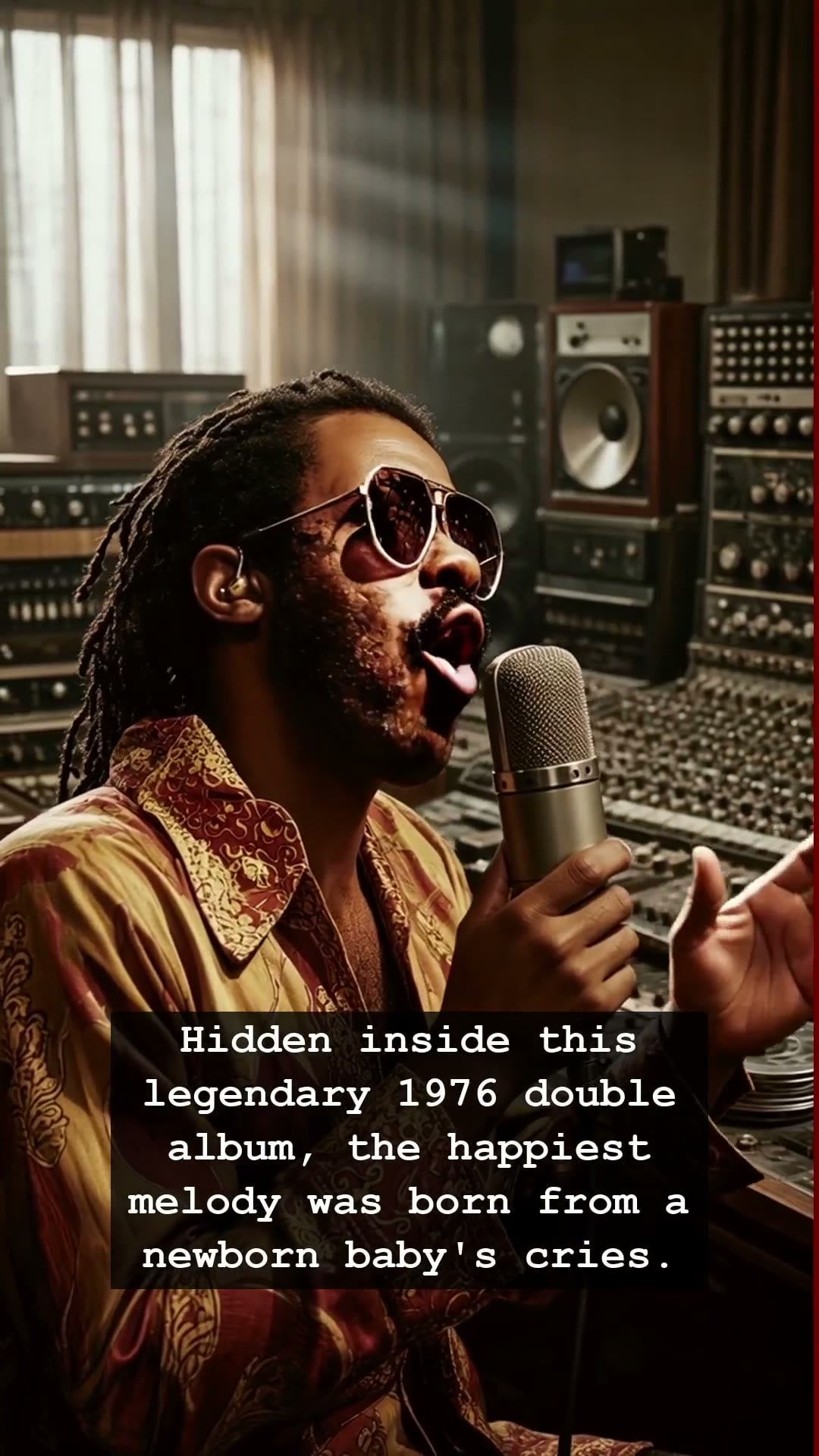
In the golden era of the 1970s, amidst the hazy glow of analog studios and the rhythmic pulse of vinyl, one artist stood above the rest as a creative force of nature. In 1976, Stevie Wonder released what many consider his magnum opus, a double album that defined the decade. Yet, hidden behind the smooth production and sophisticated arrangements of this legendary record lay a deeply personal, human moment that would change the trajectory of music history. While the world was dancing to the infectious beats of the time, the happiest melody on the album was actually pulled straight from the raw, unfiltered sound of a newborn baby’s first cry.
Stevie Wonder was already a musical prodigy, a blind genius who navigated the complexities of jazz, funk, and soul with a vision sharper than those with sight. By 1976, his creative process had become legendary for its meticulous attention to detail and his ability to capture emotion in its purest form. He was constantly experimenting with new synthesisers and studio technologies, pushing the boundaries of what pop music could achieve. However, beneath the professional facade of the chart-topping legend was a man deeply moved by the miracle of new life, specifically the birth of his daughter, Aisha.
To capture that ephemeral, life-affirming joy, Stevie Wonder did something unprecedented for a studio recording. He didn’t just sing about the wonder of life; he integrated the literal sound of life into the fabric of the song. When his daughter let out those first cries, he ensured the tape was rolling. That vulnerable moment, raw and unscripted, was woven into a track that remains one of the most uplifting anthems in American history. It turned the studio into a sanctuary where reality and art blurred, creating an emotional resonance that listeners could feel deep in their bones, even if they didn’t know the exact story behind the sound.
This era was defined by the transition from the communal vibes of the 1960s to the introspective, polished production of the mid-70s. While peers were often chasing trends or succumbing to the pressures of excess and fame, Stevie Wonder was busy layering humanity into his music. He treated his synthesizers like instruments of the soul, ensuring that every pulse and frequency served a purpose. The result was a sound that felt like an evolution of Motown, refined by the sophisticated tastes of a mature artist who understood that true music must mirror life’s highest peaks and deepest valleys.
Decades later, when we hear those familiar notes, we are transported back to a time of Walkmans and deep, rich studio production. The story of Stevie Wonder and that newborn cry serves as a poignant reminder that the best music is born from truth. It is this authentic, dramatic, and intensely personal connection that keeps us listening to his records today. As the needle drops and the music begins to play, we aren’t just listening to a hit song; we are witnessing a father’s love immortalized in sound, a masterpiece that continues to echo through the halls of time.